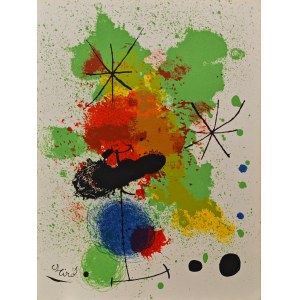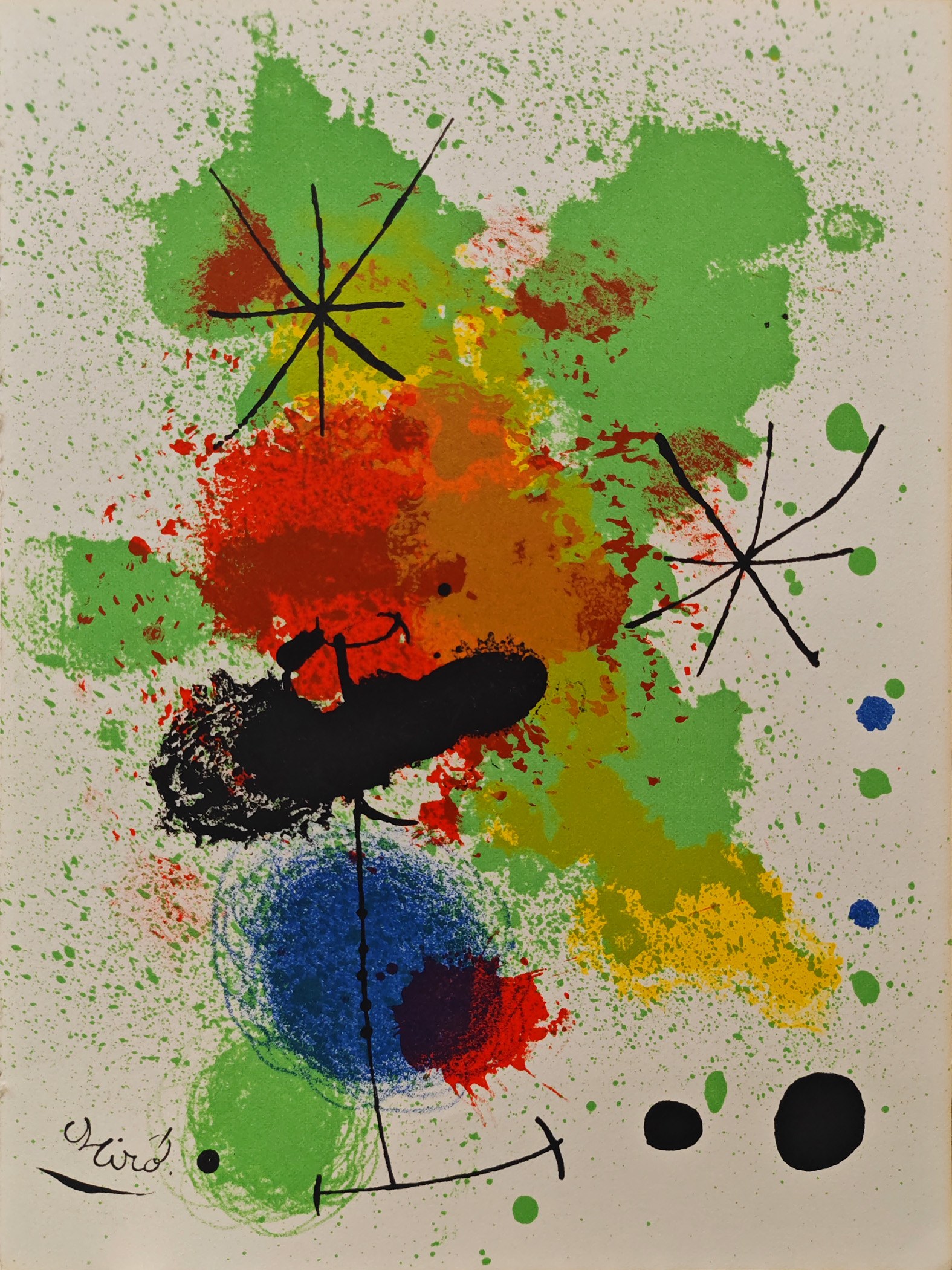
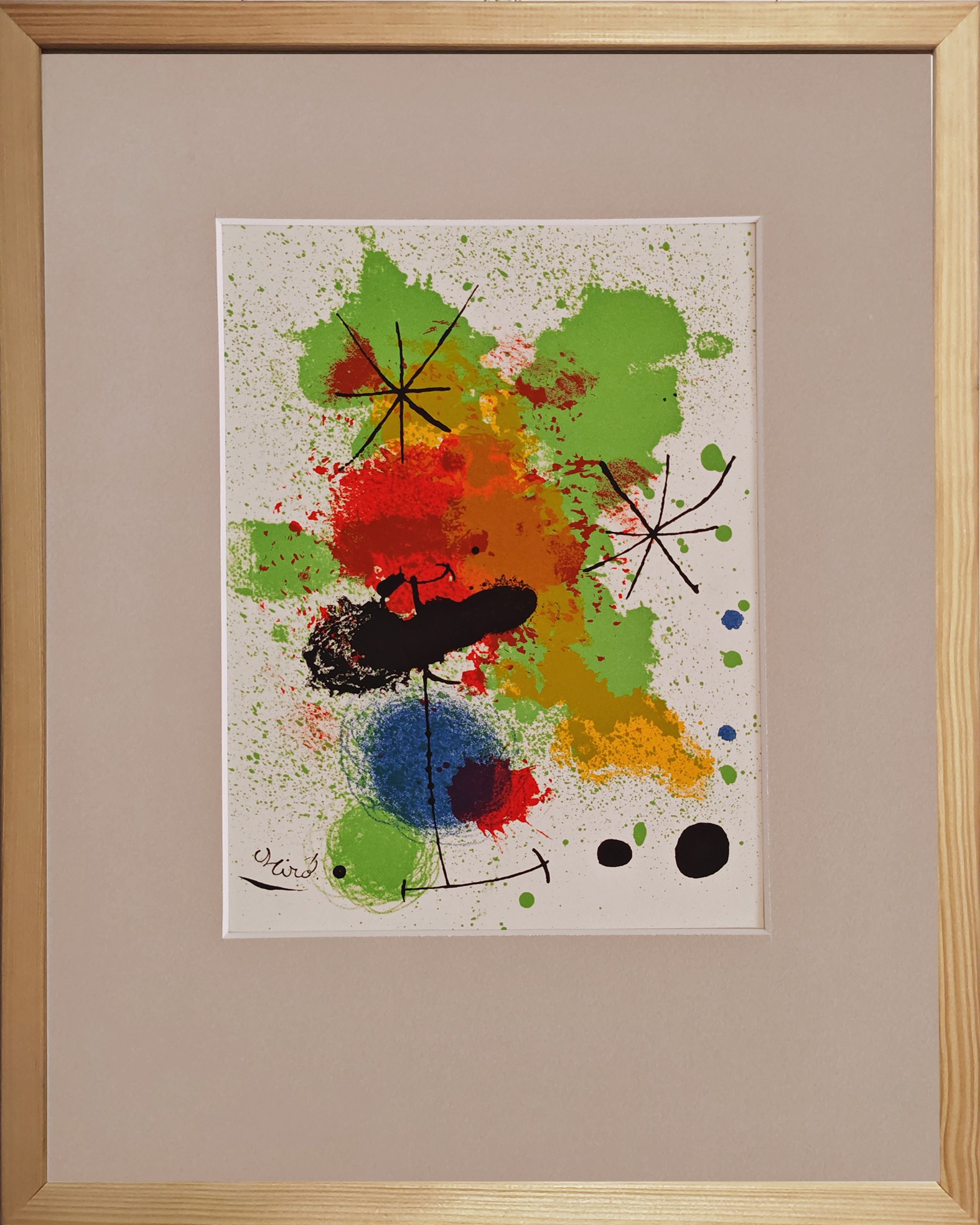
After moving to Paris, his work became more dreamlike, reflecting the main currents of the Surrealist movement, to which he was closely associated. In numerous interviews and writings from the 1930s, Miró expressed a desire to abandon conventional painting methods in order to—as he put it—“kill them, murder them, or rape them,” thereby promoting a contemporary form of expression. He refused to conform to any requirements—neither those of aesthetics and its methods nor those of Surrealism.
The Joan Miró Foundation was established in Barcelona in 1975 in his honor. It is a cultural and artistic center dedicated to presenting new trends in contemporary art. It was initially funded by a large endowment provided by his teacher. Other institutions hold important collections of Miró’s works, such as the Pilar and Joan Miró Foundation in Palma de Mallorca, the Musée National d’Art Moderne in Paris, the Musée d’Art Moderne in Lille, and the Museum of Modern Art in New York.