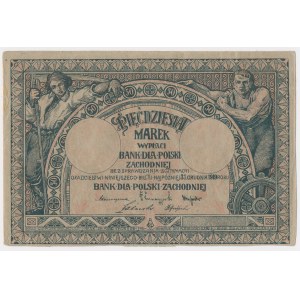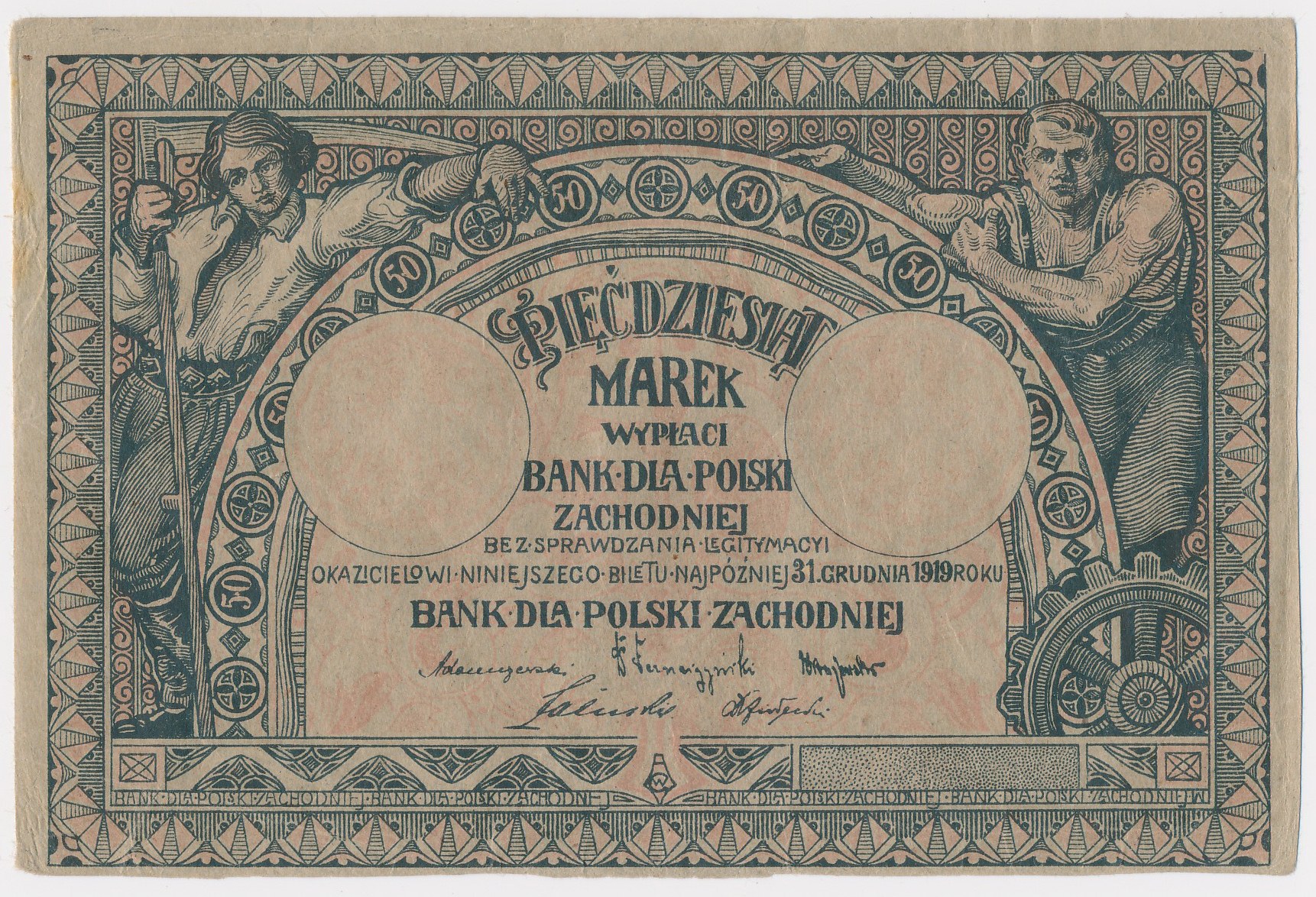
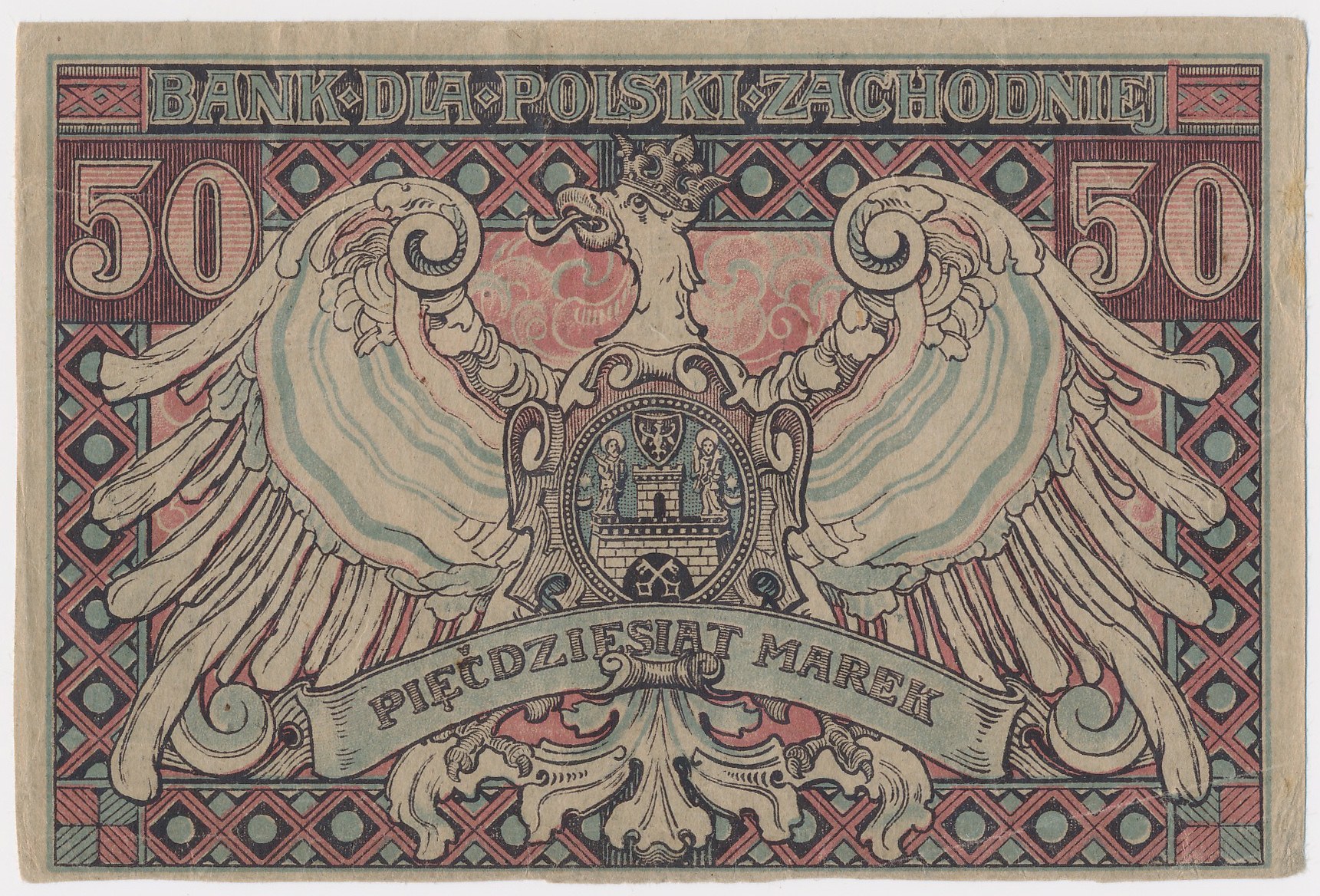
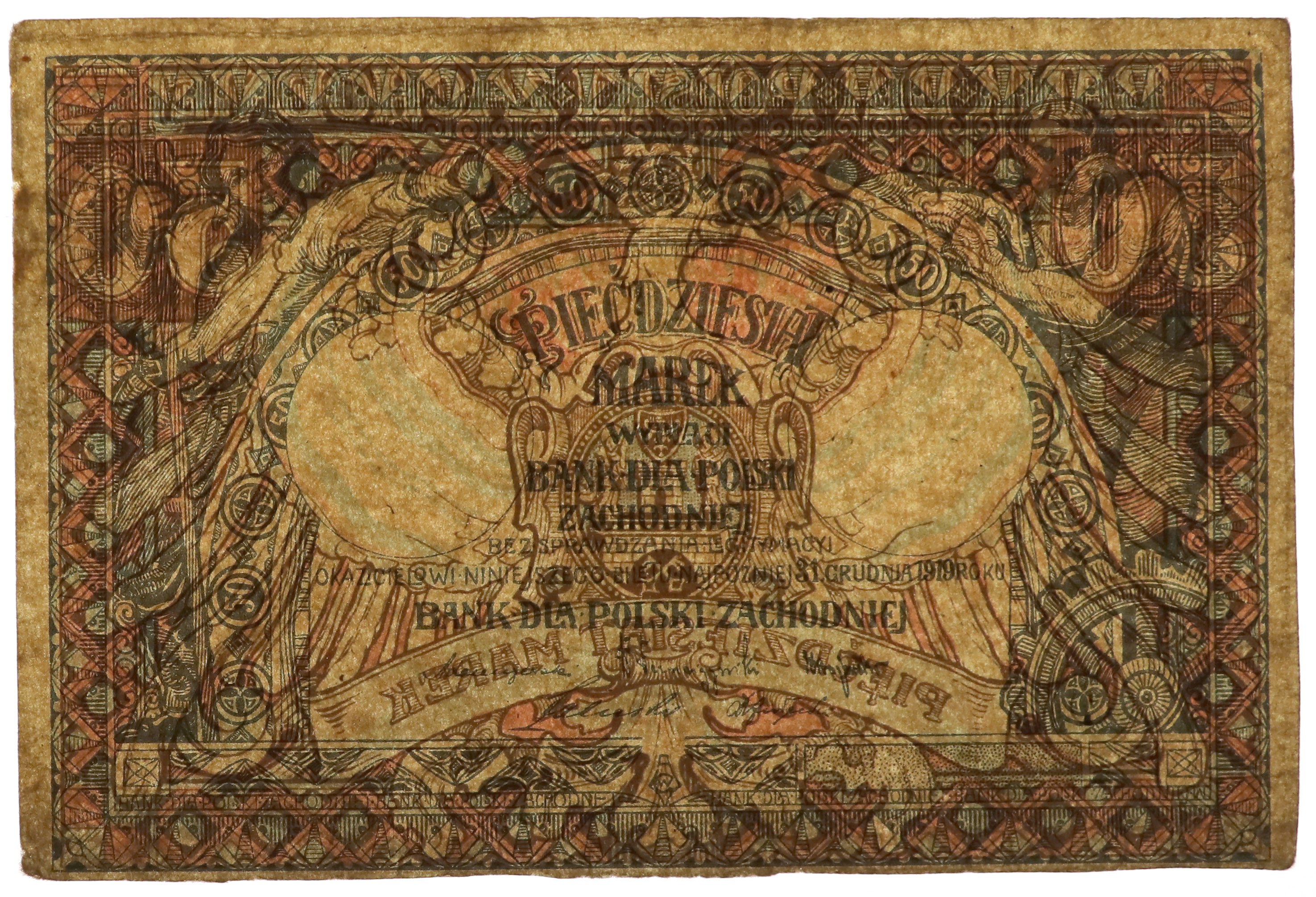
We will never know how big the issue was to be prepared, what the denominations were. The printed banknotes went to the paper mill for milling.... Only three 50-mark pieces survived.... (T. Kalkowski)
And although today we know that more than three of these banknotes survived, it is still a rare issue, only incidentally appearing on the auction market. And at the same time very interesting historically, as colorfully described by the aforementioned Tadeusz Kalkowski in"A Thousand Years of Polish Coinage".
"After the outbreak of the Greater Poland Uprising on December 27, 1918, the rule in the liberated district was taken over by the Supreme People's Council. In view of the large economic differences with Congress Poland and Lesser Poland, sharp separatist tendencies became apparent in the Council. It was decided to maintain the inter-district customs border and establish a district issuing bank under the name "Bank for Western Poland." A banknote issue was prepared on the spot (...) It soon became apparent that the economic separation of the Greater Poland district could not be maintained. Only one nationwide money could be in circulation throughout the country. The Bank for Western Poland never began its activities..."
It is worth mentioning that the designer of the banknote was Wiktor Gosieniecki, who wove his initials into the banknote's graphics (in the central part, on the lower frame).
Although it was not an official government issue, it was a money design by design with a fairly large range. The issue designed a whole series of denominations, while only the 50-mark denomination has survived to our time - in few pieces. Other denominations are not even known images.