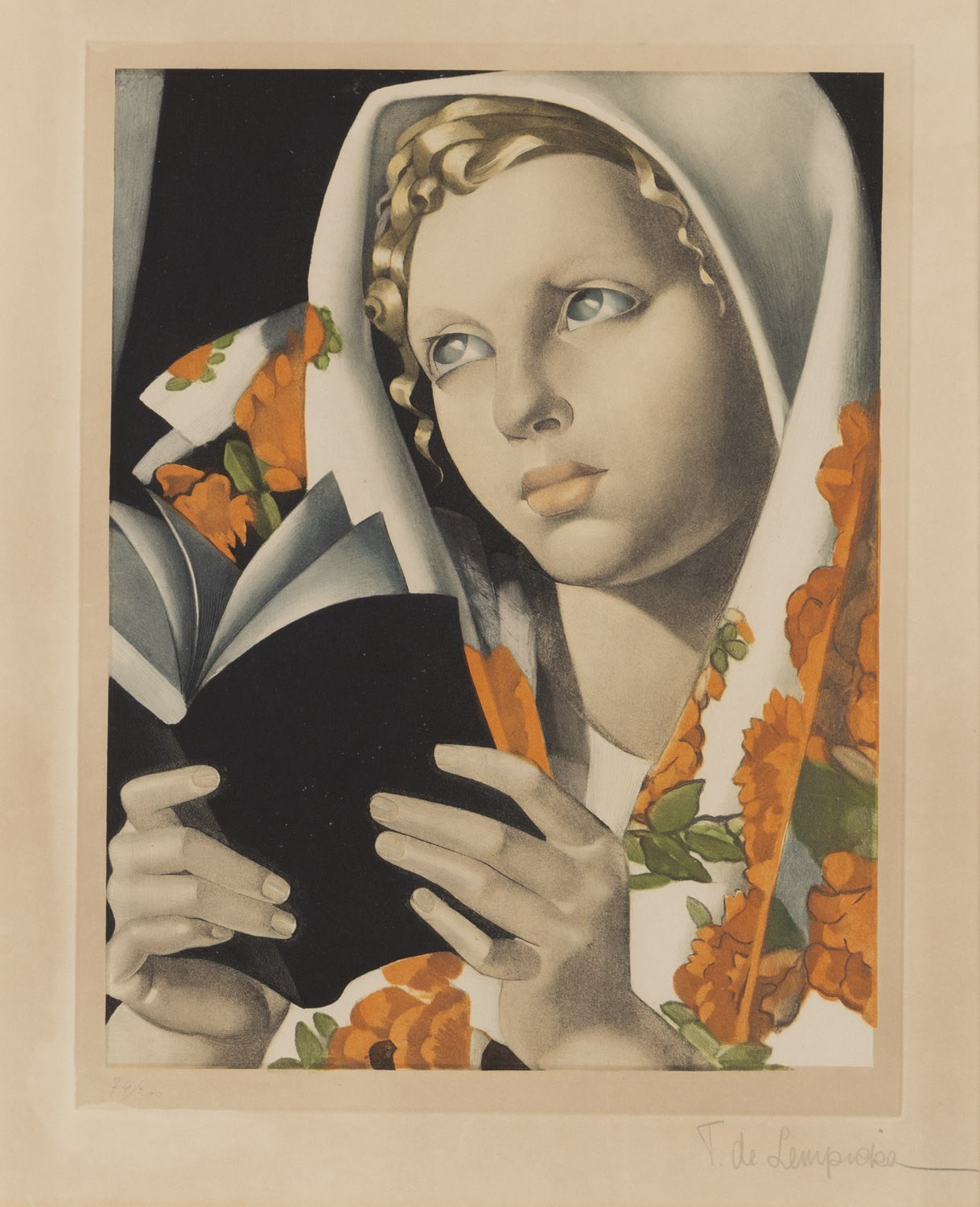
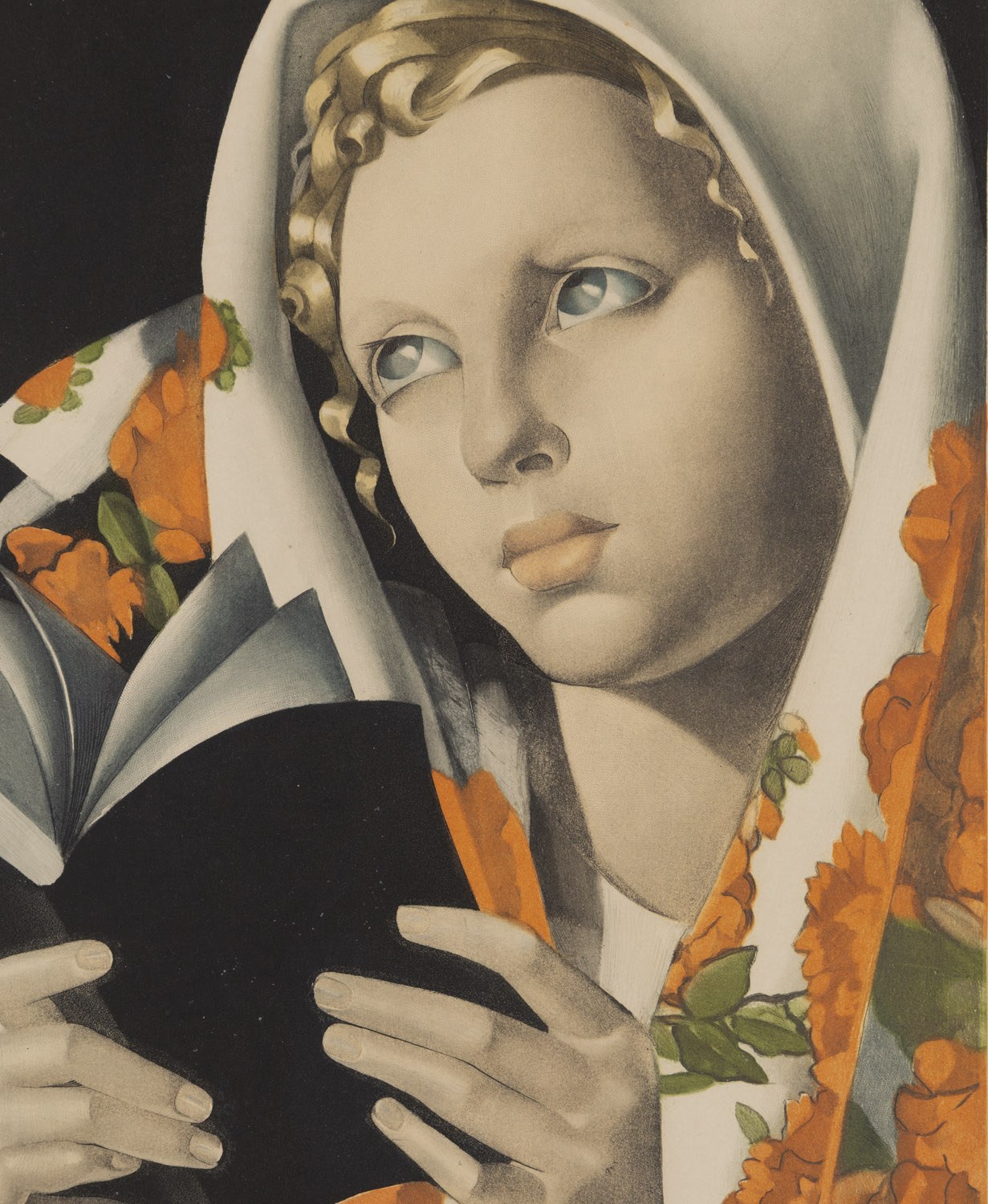
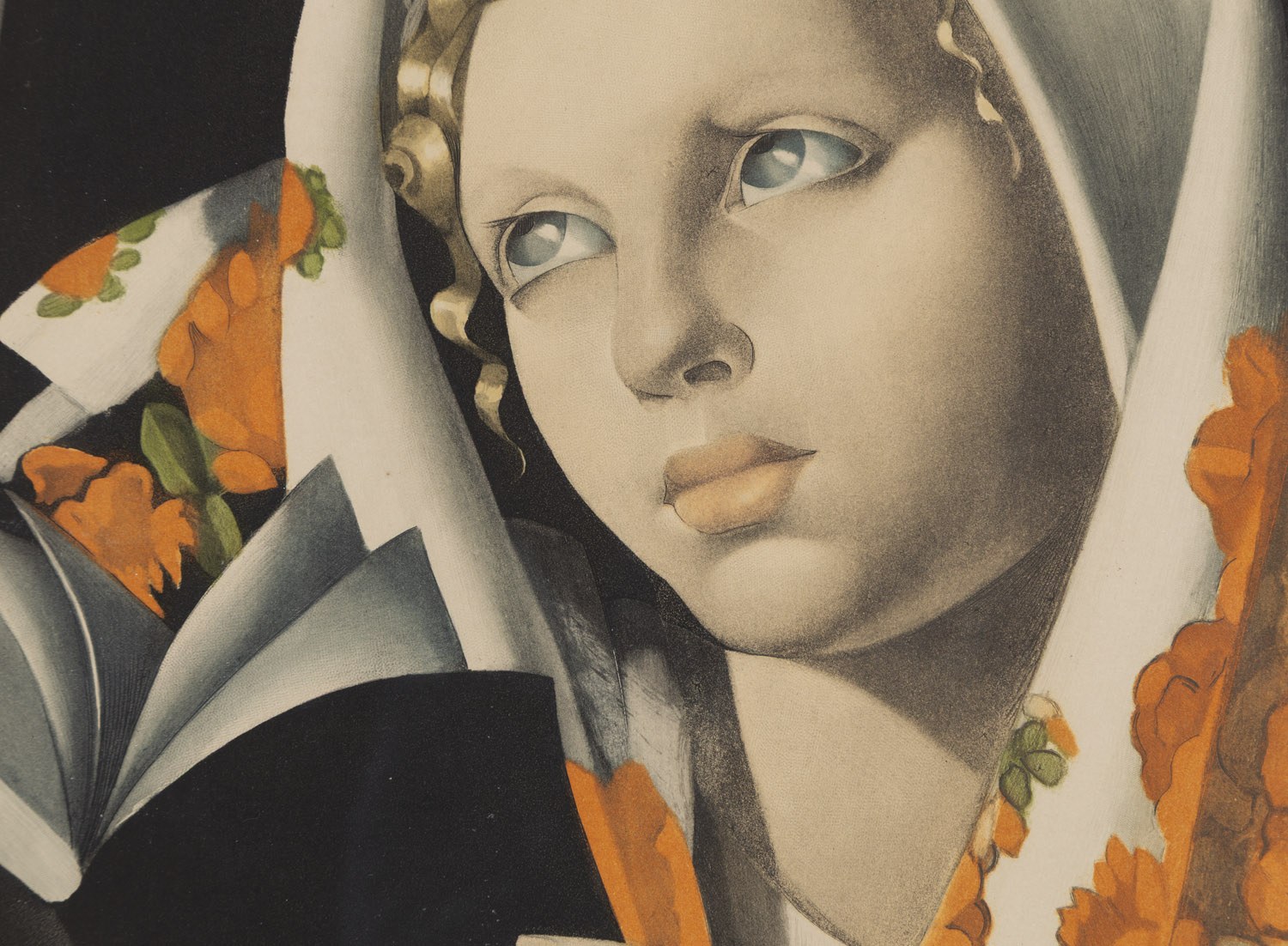
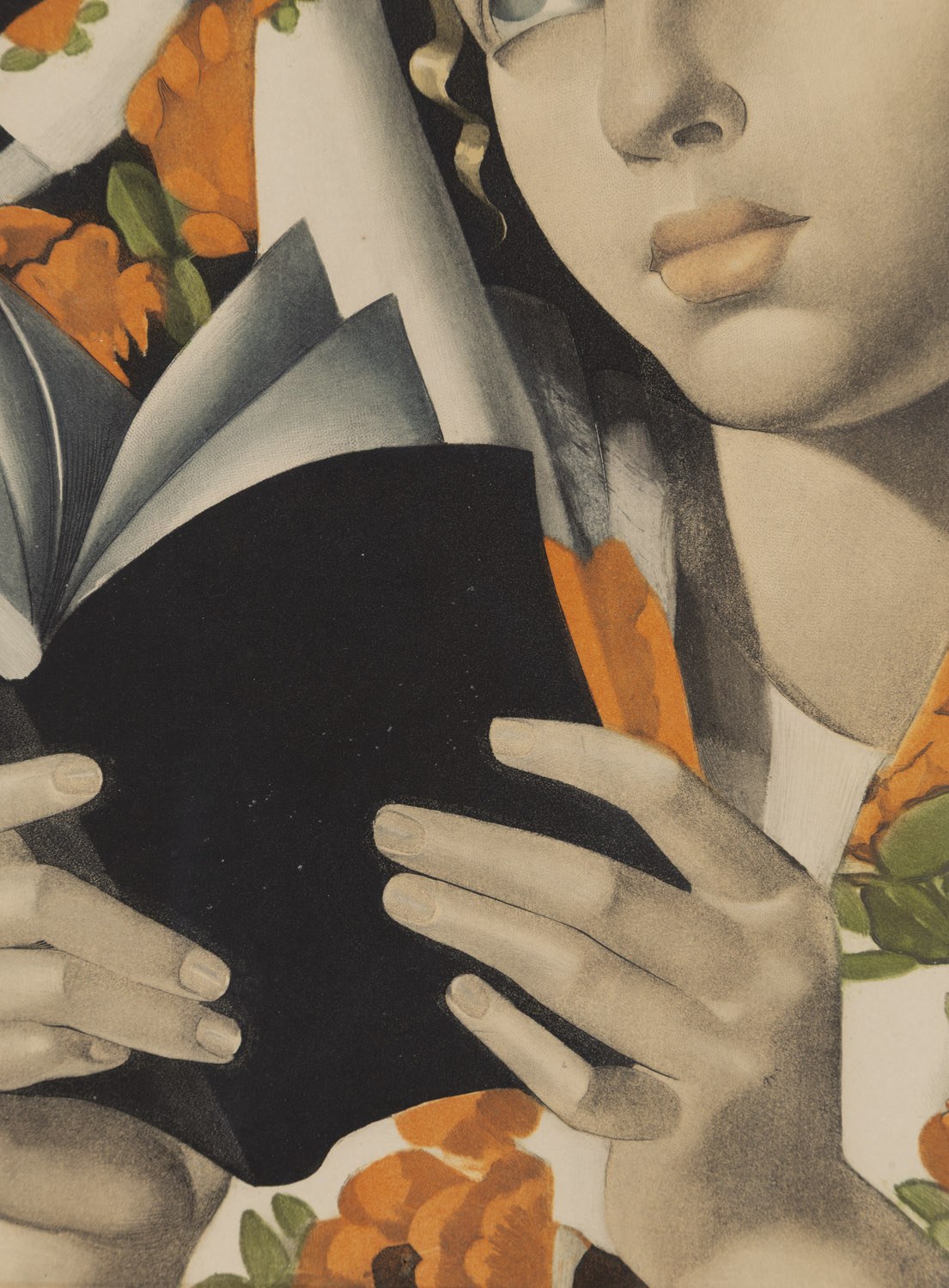
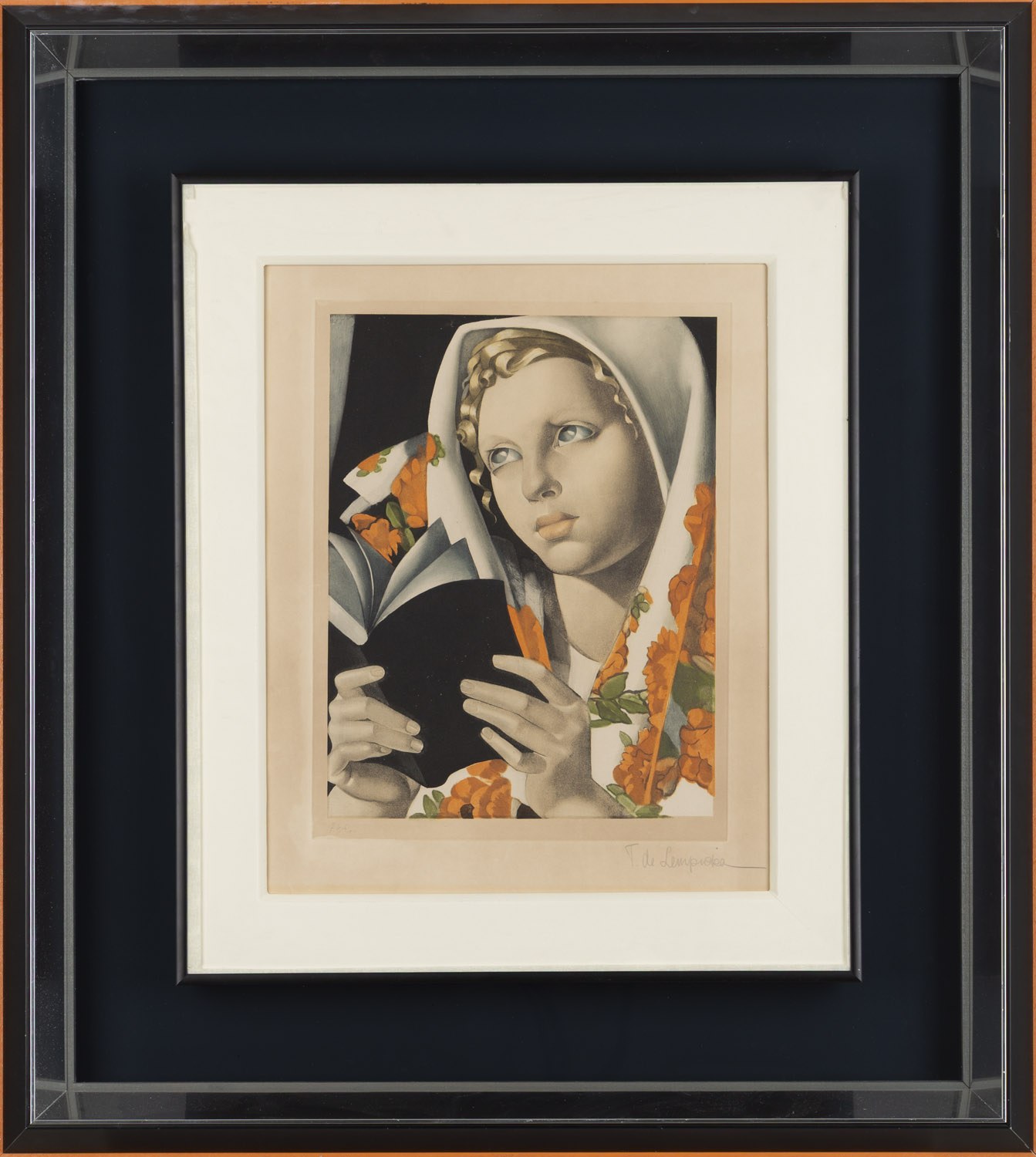
Dimensions: 51 x 42 cm
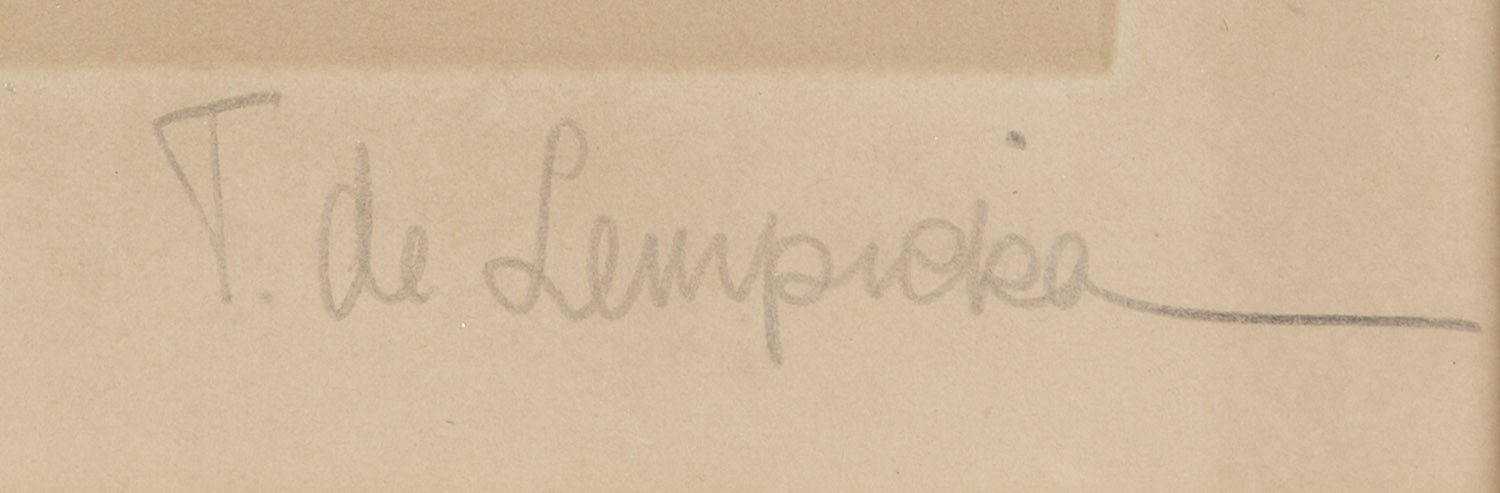
signed in pencil lower right: 'T. de Lempicka', numbered lower left: '74/200'
Bibliography
Alain Blondel, Tamara de Lempicka, Catalogue Raisonné 1921–1979, Lausanne 1999, cat. no. A151
Gioia Mori, Talara de Lempicka, La Reine de l'Art Déco, Paris 2013, p. 472, no. 85
Biography
A Polish painter whose work is cited as the quintessence of the Art Deco style in painting. As a young, wealthy girl, she attended a boarding school in Lausanne, from where she traveled to Italy—visiting Rome, Florence, and Venice—where she became fascinated by the paintings of the Renaissance masters. During World War I, she lived in St. Petersburg, where she married a young lawyer, Tadeusz Łempicki. In 1918, the couple settled in Paris. Łempicka then began studying painting at the Académie de la Grande Chaumière and at the Académie Ranson under Maurice Denis and André Lothe. She exhibited her paintings at salons and in Parisian galleries. She painted primarily portraits and nudes, mostly of wealthy or beautiful people. In 1928, she visited Warsaw three times, where an exhibition of her works was held at the Zachęta in Warsaw; she also displayed two of her paintings at the General National Exhibition in Poznań. In 1939, she left for the United States and settled in New York; she spent the last years of her life in Mexico. “Łempicka’s portraits, nudes, and still lifes are a perfect embodiment of the Art Deco style: the model’s type, attire, hairstyle, and pose are all subordinated to it, as are all the background props and, finally, the painting technique. Post-Cubist stylization: the use of line and light to emphasize the three-dimensionality and hardness of forms, the sharpness of color, the smoothness of metallic, gleaming surfaces, monumentalization, the mannered composition of the shots, and the enamel-like precision of the finish all contribute to Łempicka’s style, which fits perfectly into the aesthetics of the 1920s”—Agnieszka Morawińska