


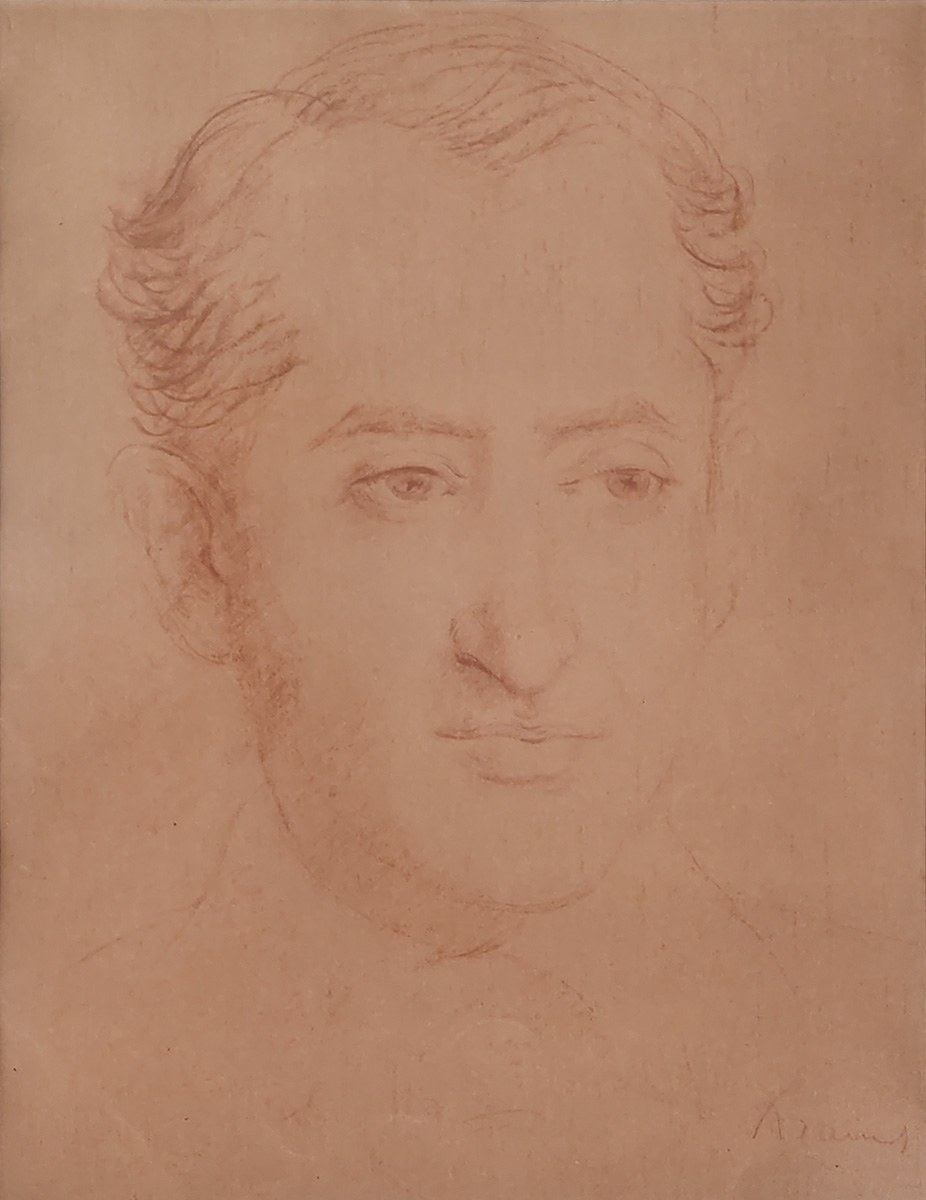
Roman Kramsztyk (1885-1942) - Portrait of a man
Sanguine / paper
Dimensions: w św. p-p: 35 x 26.5 cm, 53.5 x 45 cm
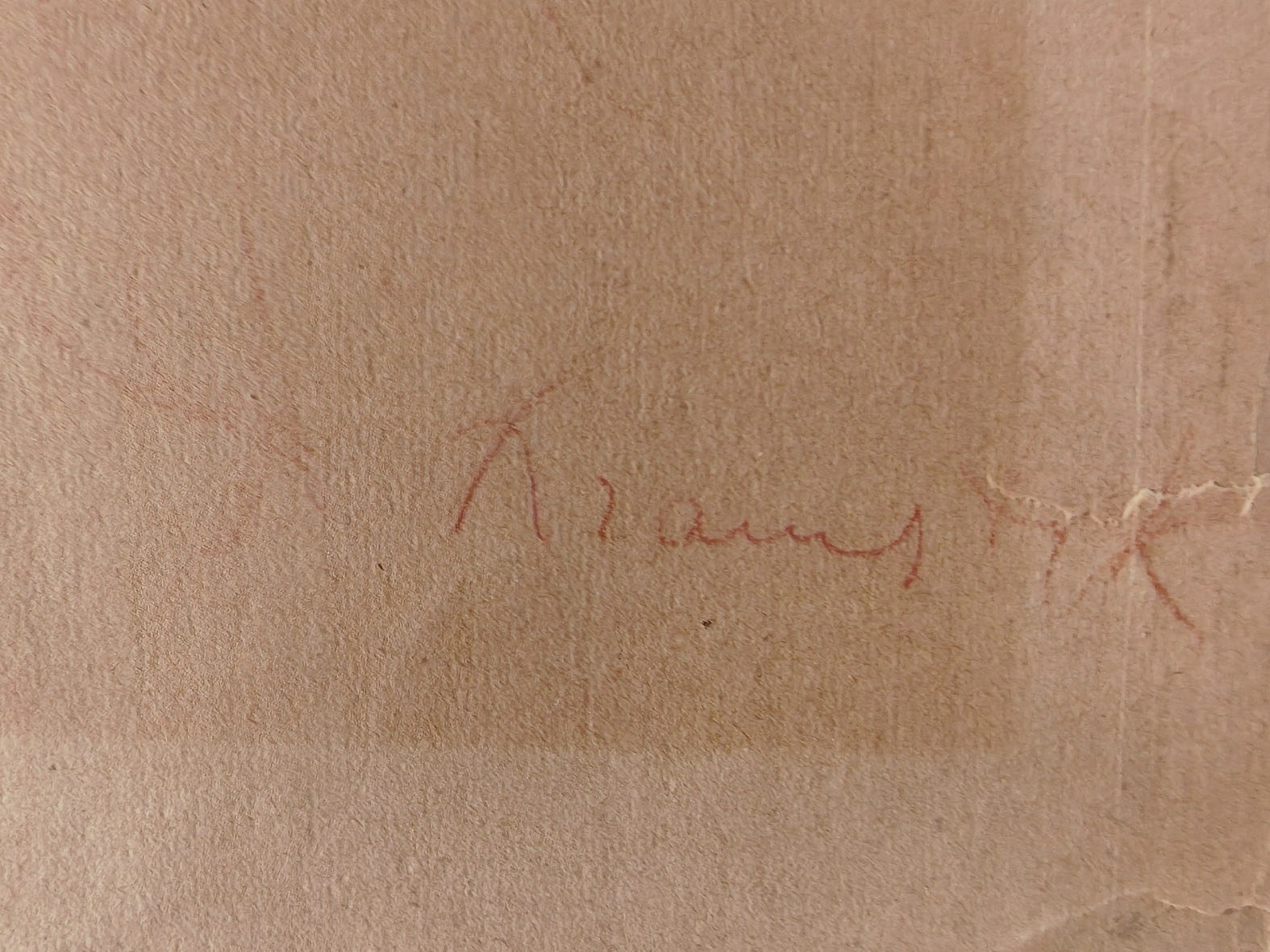
Signed p.d.: Kramsztyk
Condition: Dirt, discoloration.
Subtle portrait study of a man framed in a slight turn, executed in sanguine on paper. Kramsztyk operates here with a very sparing, almost fading drawing, concentrating attention on the modeling of the face, the line of the nose, mouth, eyes and hair. The portrait has a studio, intimate character, close to a psychological sketch - without an elaborate background, without decorativeness, with emphasis on the model's concentrated facial expression.
The work is part of an important trend in Kramsztyk's work, which, especially since the 1930s, focused on portraits and nudes. The artist created images of representatives of artistic, literary and intellectual circles, combining the classicizing discipline of drawing with soft, chiaroscuro modeling of form.
Roman Kramsztyk was one of the most important Polish painters and draftsmen associated with the École de Paris circle. He was born in Warsaw to an assimilated Jewish family. He learned drawing and painting in Warsaw, then studied at the Academy of Fine Arts in Cracow under Jozef Mehoffer and in Munich. In 1910 he moved to Paris, where he became associated with the Montparnasse community; from 1922 he lived there permanently, but maintained lively contacts with Poland. He was a co-founder of the Association of Polish Artists "Rhythm" and participated in numerous national and international exhibitions.
He created portraits, nudes, still lifes and landscapes. His work shows inspiration from Cézanne, classicism and ancient art, but at the same time his own muted form of realism. During World War II, he was in the Warsaw Ghetto, where he created dramatic drawings documenting the life and tragedy of its inhabitants. He died on August 6, 1942, during a major liquidation operation in the Warsaw Ghetto.










