


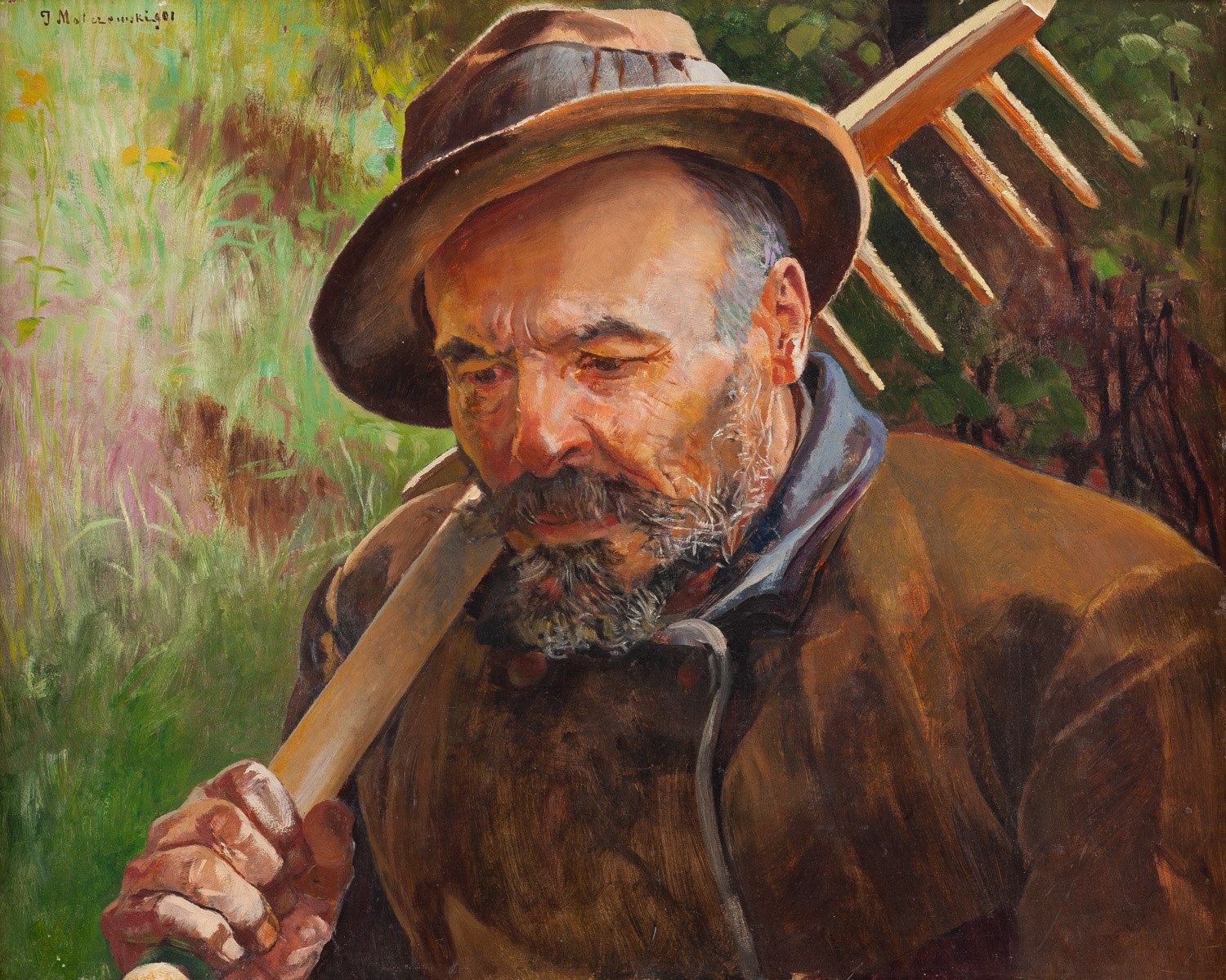
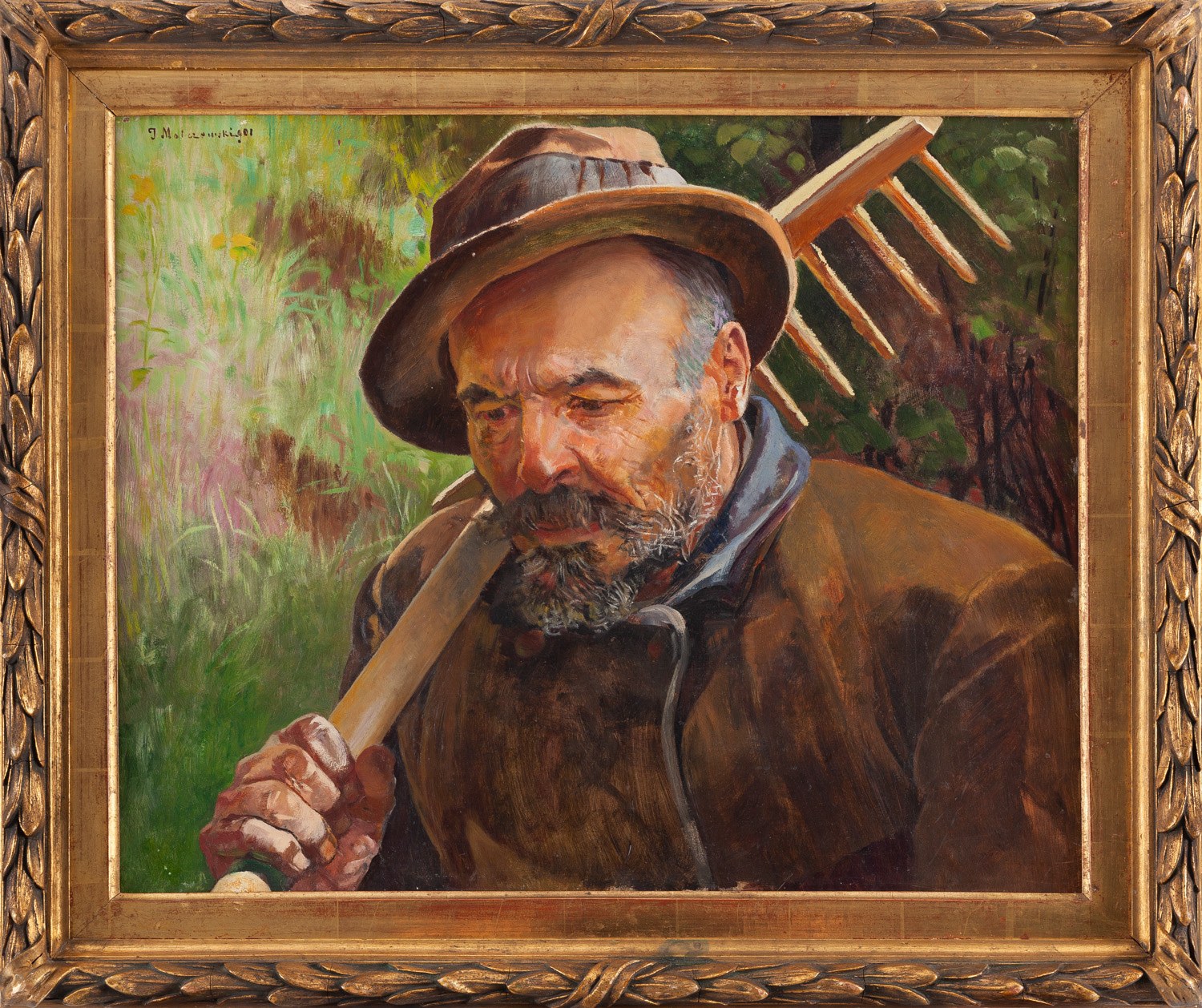
Dimensions: 45 x 56 cm
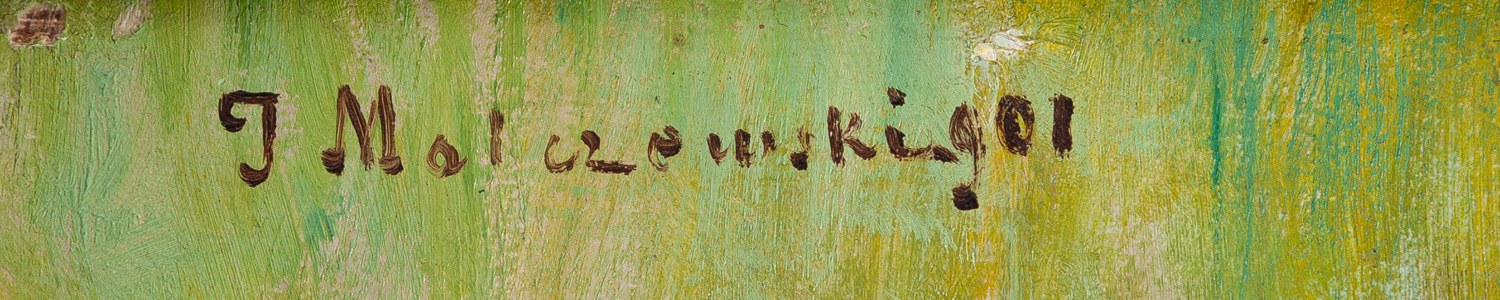
Signed and dated lower left: 'J Malczewski 901'
Inscribed in pencil on the reverse lower left: '7 (illegible)', stamped with the number: '180'; auction labels on the reverse and on the frame
Provenance
private collection, Poland (purchased directly from the artist)
Sotheby’s, London, June 2007
Private collection, United Kingdom
private collection, Poland
Biography
From 1872 to 1875 and from 1877 to 1879, he studied at the School of Fine Arts in Kraków under, among others, Władysław Łuszczkiewicz and Jan Matejko, and from 1876–77 under Henri Ernest Lehman at the School of Fine Arts in Paris. The artist’s development was influenced by numerous trips to Paris, Munich, Vienna, Italy, Greece, and Turkey. Malczewski drew significant inspiration from his native folklore, Polish literature and history, as well as biblical and mythological traditions. He consistently explored patriotic and messianic themes, as well as existential and autobiographical subjects and the dilemmas of artistic creation. Recognized as the most outstanding representative of Polish Symbolist painting, he also became renowned as an exceptional educator. He taught painting at the Academy of Fine Arts in Kraków (1896–1900 and 1910–1921), and served as its rector from 1912 to 1914. In 1897, he became a founding member of the “Sztuka” Society of Polish Artists. Malczewski’s work was frequently exhibited abroad, where it was recognized and awarded, including medals at international exhibitions in Munich (1892), Berlin (1891), and Paris (1900).










