


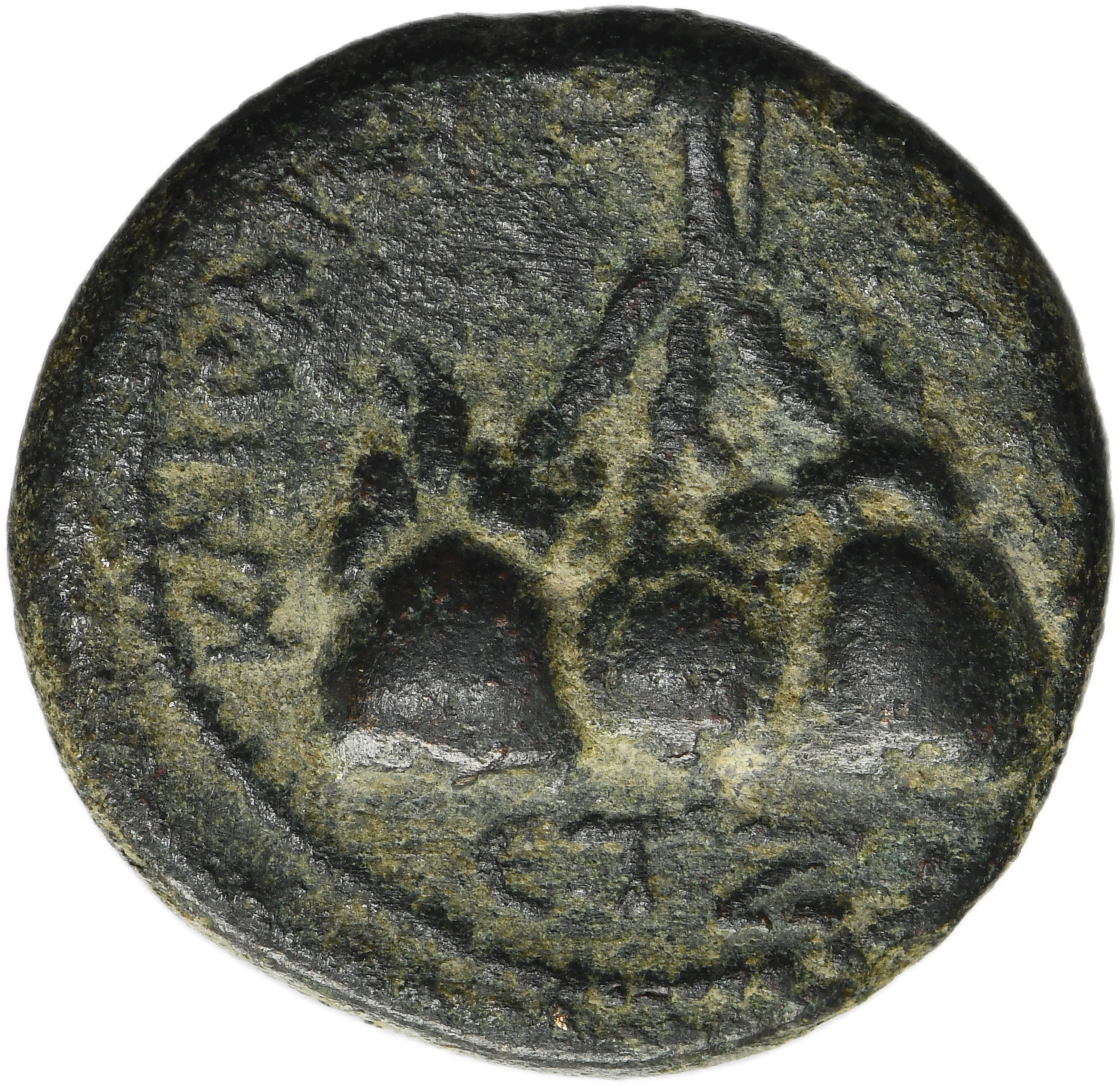


Provincial bronze issue of Antoninus Pius (AD 138–161), struck at Caesarea in Cappadocia, belongs to the civic coinage produced within the monetary system of the Roman Empire in Asia Minor.
Caesarea, formerly known as Mazaca, served as the capital of the province of Cappadocia and was one of the principal administrative and minting centers of the region, as confirmed by both ancient literary sources and extensive numismatic evidence.
The obverse presents the laureate head of the emperor facing right with the Greek legend ΑΥΤ ΚΑΙϹΑΡ ΑΝΤΩΝΙΝΟϹ, identifying Antoninus Pius as imperator and Caesar. The use of the Greek language is characteristic of provincial coinage in the eastern provinces and reflects the local cultural and administrative environment.
The reverse depicts Mount Argaeus (modern Erciyes Dağı), a distinctive and frequently recurring motif in the coinage of Caesarea, with the legend ΚΑΙϹΑΡΕΩΝ ΤΩΝ ΤΩ ΑΡΓ ΕΤ Ζ, referring to the community of the Caesareans and a local dating system (year 7). Representations of Argaeus are well attested in Cappadocian numismatics and constitute one of the most recognizable civic symbols of the city. The mountain held not only geographical but also religious significance; in ancient sources, notably in Strabo, it is described as a dominant feature of the regional landscape and a key point of reference in the depiction of Cappadocia.
Roman Provincial
Cappadocia, Caesarea, Antoninus Pius (138-161), AE
Obverse: laureate head right
ΑΥΤ ΚΑΙϹΑΡ ΑΝΤΩΝΙΝΟϹ
Reverse: Mount Argaeus
ΚΑΙϹΑΡΕΩΝ ΤΩΝ ΤΩ ΑΡΓ ΕΤ Ζ
Diameter 23 mm, weight 12.23 g











