


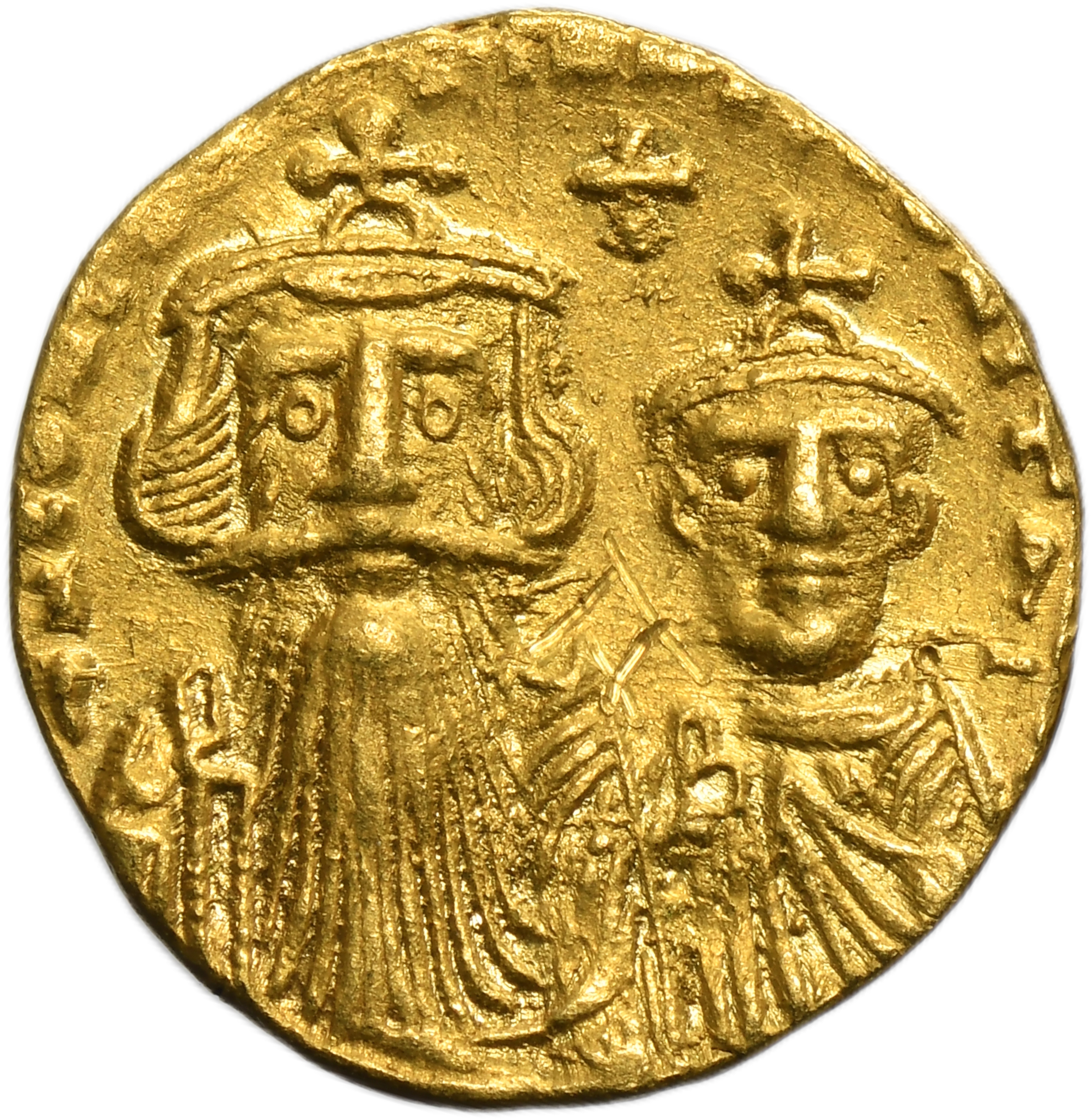
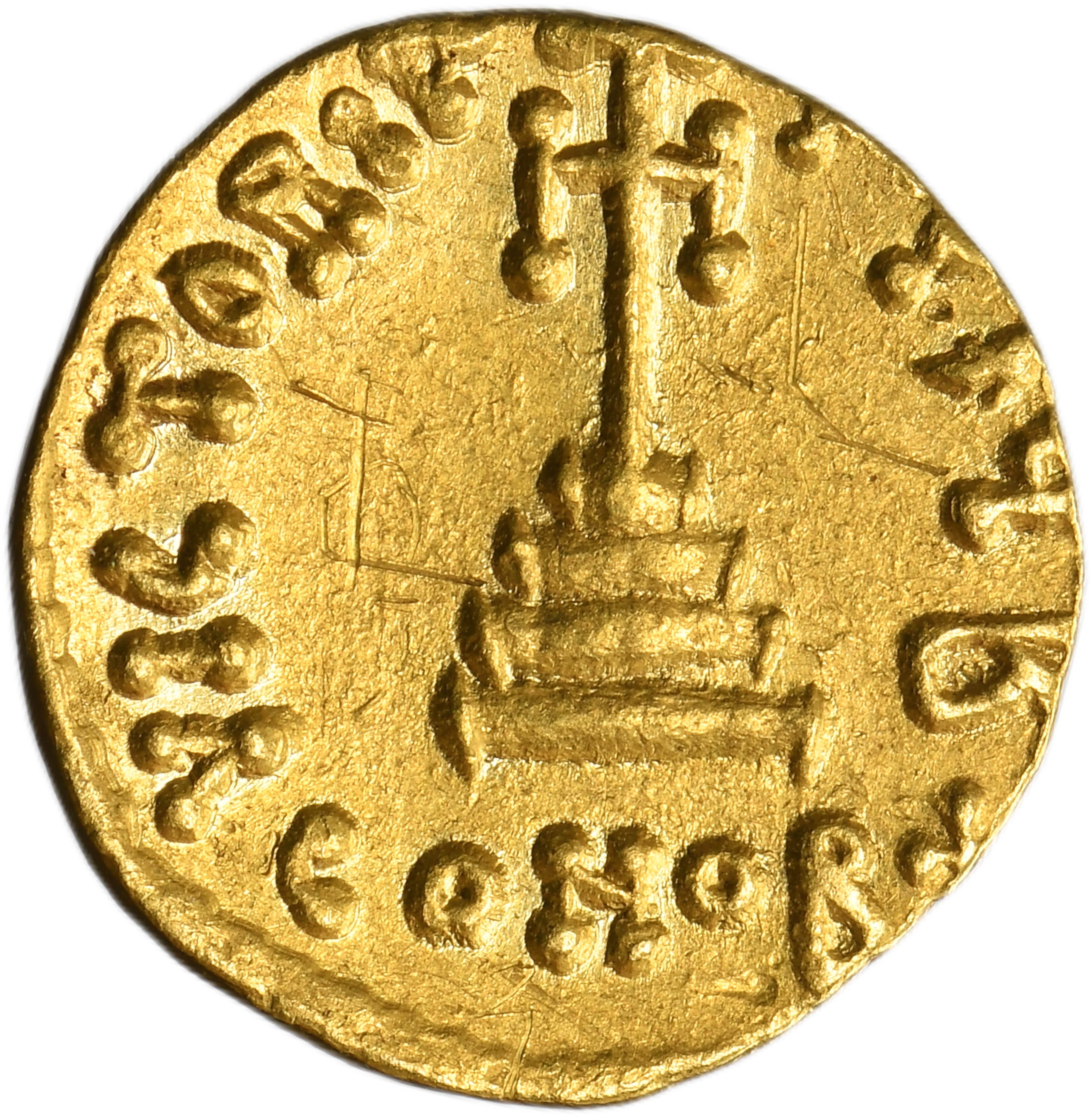


Gold solidus of Constans II with his co-ruling son Constantine IV (AD 641–668), struck at the mint of Constantinople between AD 654 and 659, belonging to issues of the Heraclian dynasty during the period of joint rule. Coins of this type are important evidence of dynastic succession and imperial stability in the Byzantine Empire.
The obverse features facing busts of both emperors wearing crowns, with the legend d N CONStANtINЧS C CONStAN. This arrangement emphasizes co-rule and dynastic continuity, presenting both the reigning emperor and his successor.
The reverse shows a cross on three steps, with the legend VICTORIA AVGVSTORVM and the exergue mark CONOB+. The cross, as a central symbol of Christianity, highlights the religious nature of imperial authority and divine protection over the empire.
The legend VICTORIA AVGVSTORVM refers to the victory of the emperors, forming a standard element of Byzantine propaganda that combines the idea of triumph with a religious dimension. The mark CONOB indicates the mint of Constantinople.
Scratched.
Byzantine Empire
Constans II with Constantine IV (641-668), Solidus 654-659, Constantinople mint
Obverse: busts of Constans II and Constantine IV in crowns straight ahead
d N CONStANtINЧS C CONStAN
Reverse: Cross potent set on three steps, CONOB+ in exerque
VICTORIA AVςЧ B
Gold, diameter 19 mm, weight 4.5 g











