


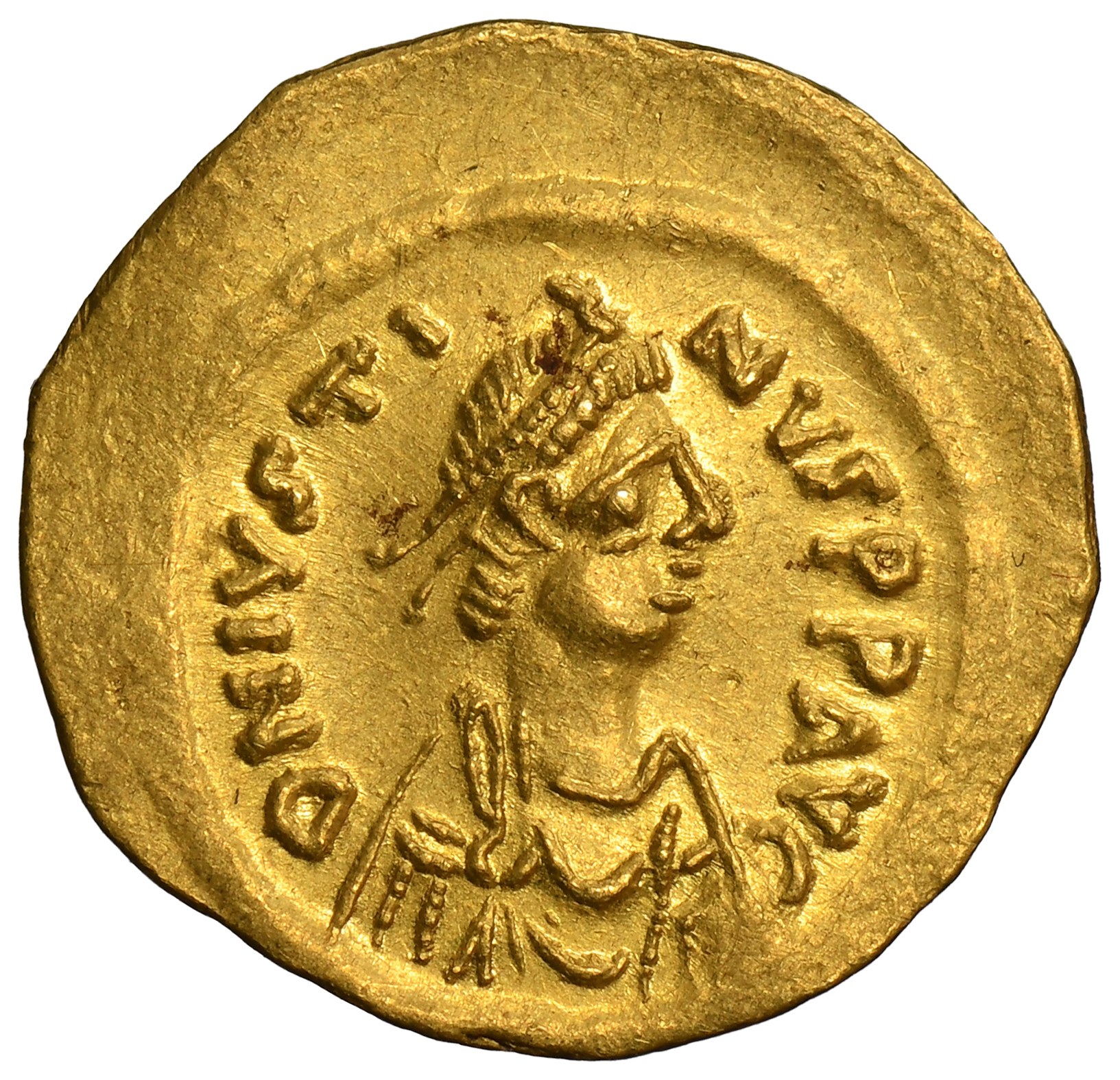
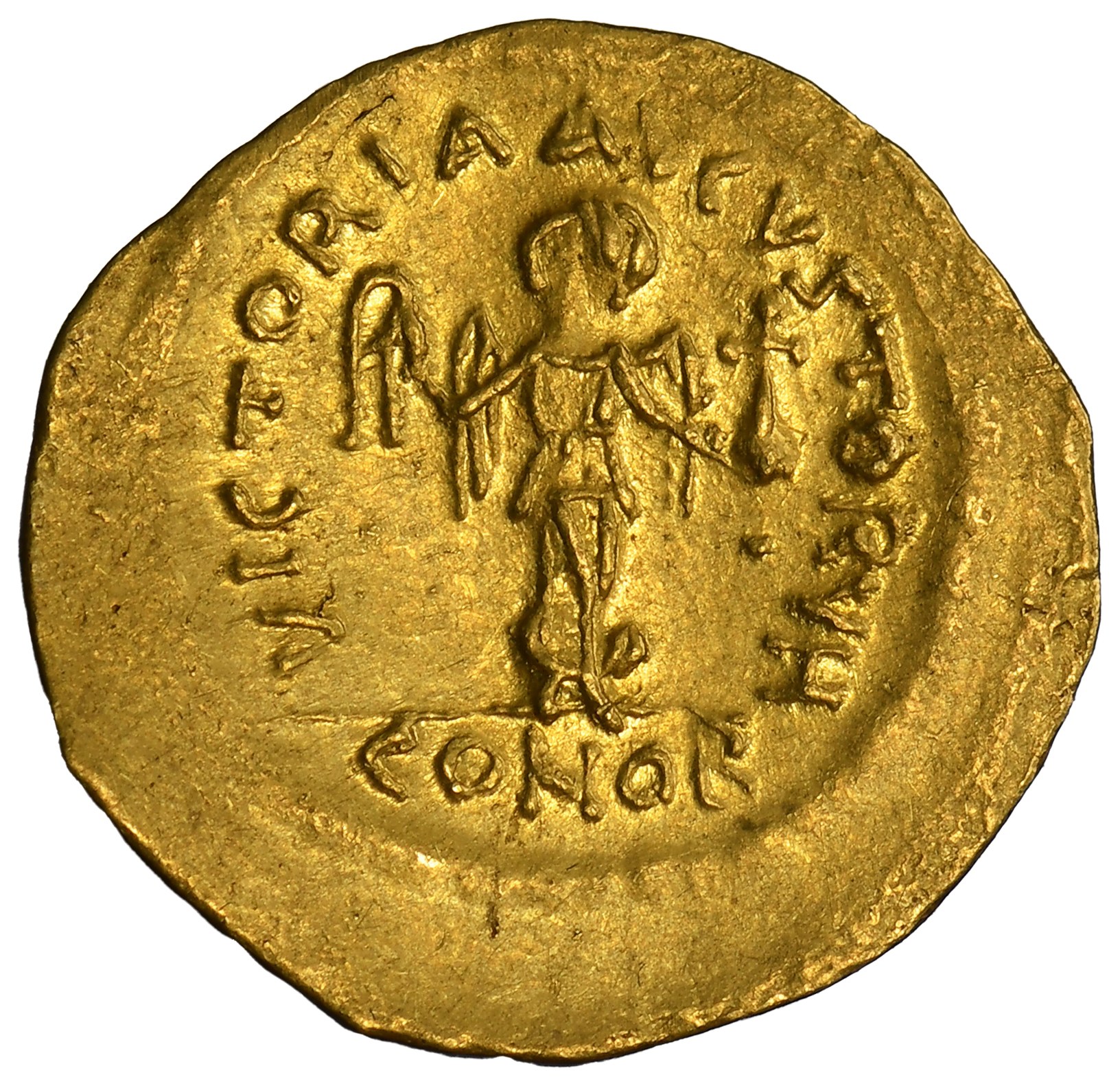
An interesting gold tremissis of Justin II, continuing the Late Roman iconographic tradition with the personification of Victory on the reverse.
Justin II ascended the throne in AD 565 following the death of his uncle, Justinian I the Great. His reign coincided with a period of growing military and political challenges for the Empire, including warfare against Sasanian Persia and increasing pressure from the Lombards in Italy. The coinage of Justin II retained many designs established under his predecessors, particularly evident in the gold issues.
The tremissis represented one-third of a solidus and was one of the principal gold denominations of the Late Roman and Early Byzantine monetary systems.
The obverse depicts the bust of the emperor right, wearing a diadem and imperial attire. The legend D N IVSTINVS P P AVG expands the traditional imperial titulature Dominus Noster Iustinus Perpetuus Augustus, “Our Lord Justin, Perpetual Augustus”.
The reverse depicts Victory advancing right, holding a wreath and a globus cruciger. The star in the field is a characteristic feature of this type. The legend VICTORIA AVGVSTORVM, “Victory of the Augusti”, refers to the traditional Roman symbolism of triumph, which continued to appear on the coinage of the Eastern Empire despite the increasing Christianization of its imagery. The CONOB mark in the exergue indicates Constantinople and the high standard of purity of the gold coinage.
An example with a clearly legible portrait of the emperor and a well-defined reverse design.
An interesting tremissis of Justin II, illustrating the continuation of Late Roman monetary and iconographic traditions in Early Byzantine coinage.
Byzantine Empire
Justin II (565–578), Tremissis, Constantinople mint
Obverse: the bust of the emperor straight ahead
D N IVSTINVS PP AVG
Reverse: Victory advancing to right, head to left, holding wreath and globus cruciger, star in right field, CONOB in exergue
VICTORIA AVGVSTORVM
Gold, diameter 17 mm, weight 1.49 g











