


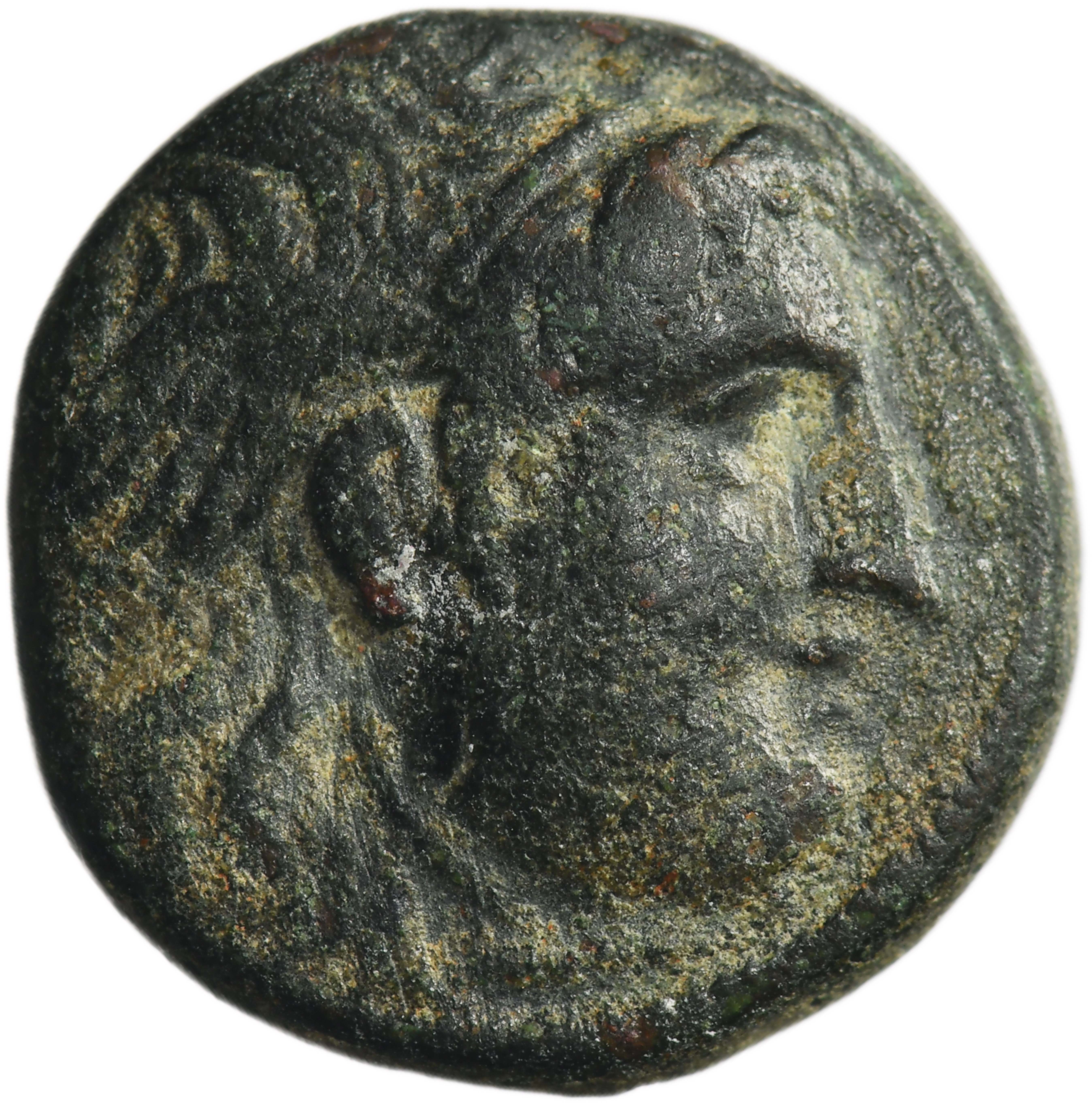
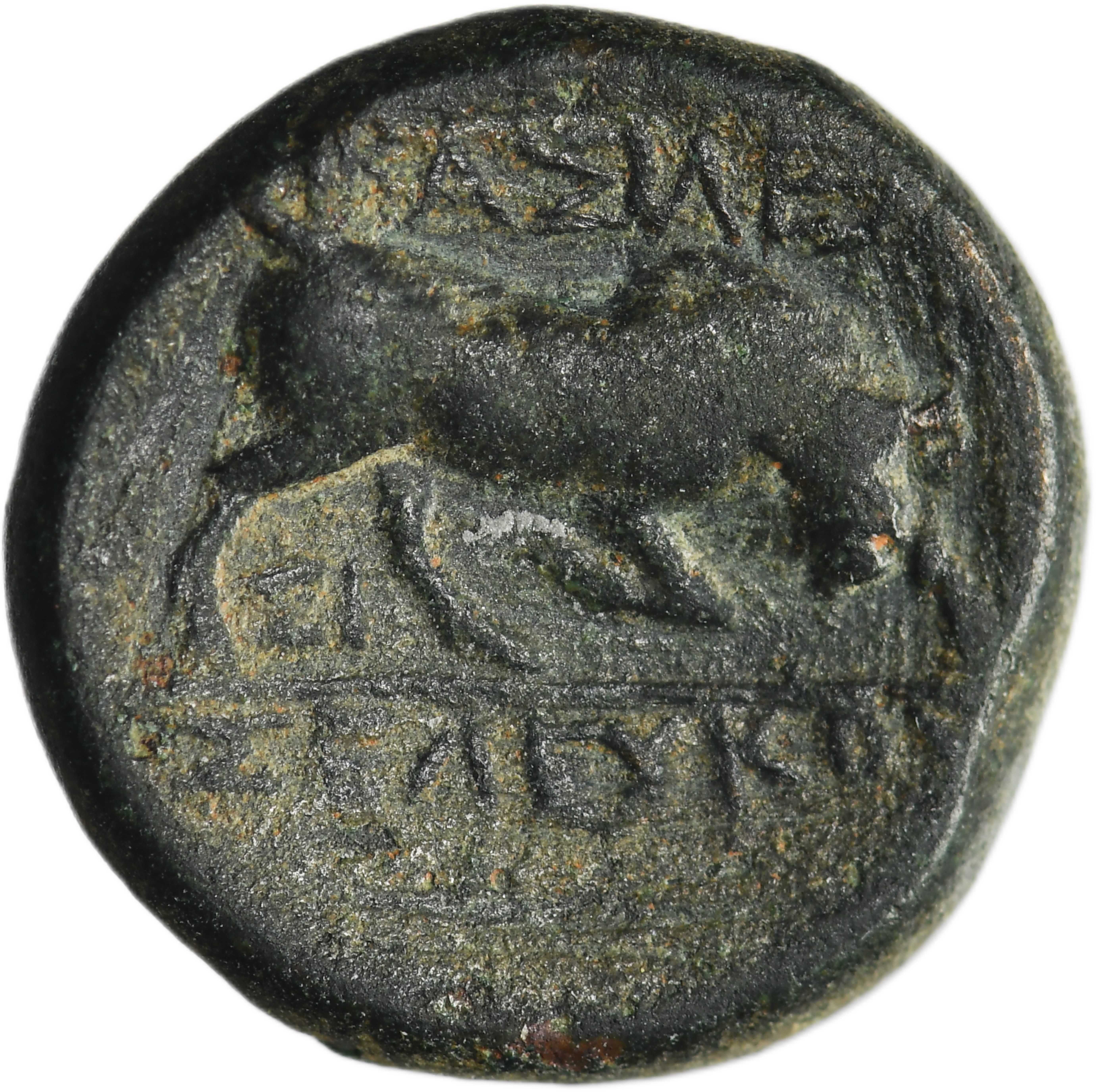


Bronze issue of Seleucus I Nicator (312–280 BC) struck at the mint of Sardis in Lydia, belonging to the earliest phase of the Seleucid state formed after the breakup of Alexander the Great’s empire.
Seleucus I, one of the most prominent of the Diadochi, initially ruled as satrap of Babylonia and later succeeded in establishing a vast kingdom extending across much of Asia. His activity and expansion are well documented in ancient sources, including Appian and Diodorus Siculus, while the extensive coin production of his reign constitutes one of the principal sources for studying the administrative and economic organization of the early Seleucid realm.
The obverse shows the head of Medusa facing right. The image of the Gorgon was widely used in the Greek world as an apotropaic motif intended to provide protection and appears frequently in both Greek art and coinage. The reverse depicts a charging bull facing right with the legend ΒΑΣΙΛΕΩΣ ΣΕΛΕΥΚΟΥ. The bull is a motif encountered on several issues of Seleucus I and in numismatic scholarship is often associated with symbols of royal power as well as with iconographic traditions of Asia Minor.
Grecja
Seleukos I Nikator (312-280 BC), AE, Sardes mint
Obverse: head of Medusa to right
Reverse: bull butting right
ΒΑΣΙΛΕΩΣ ΣΕΛΕΥΚΟΥ
Diameter 13 mm, weight 2.86 g











