


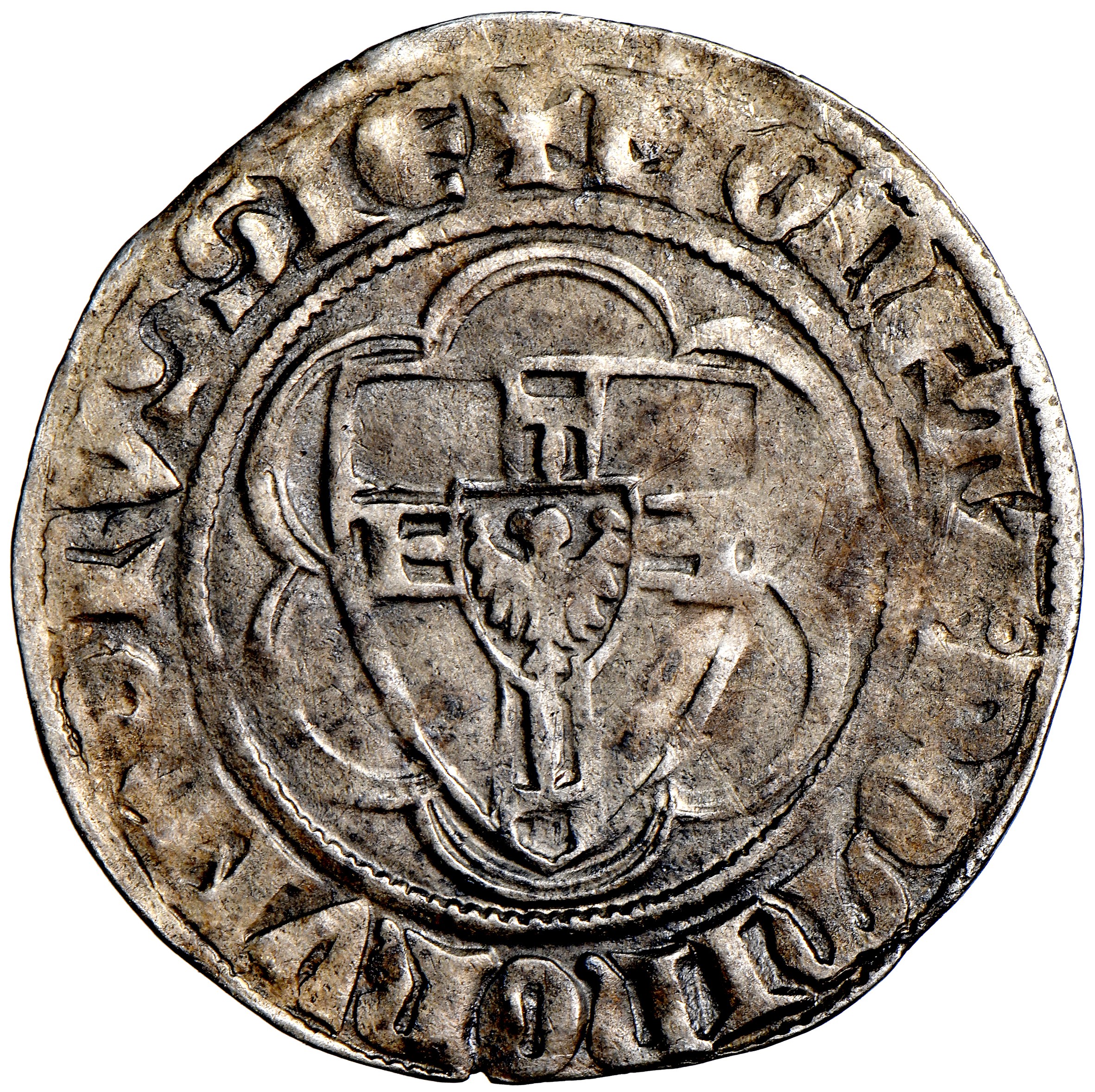
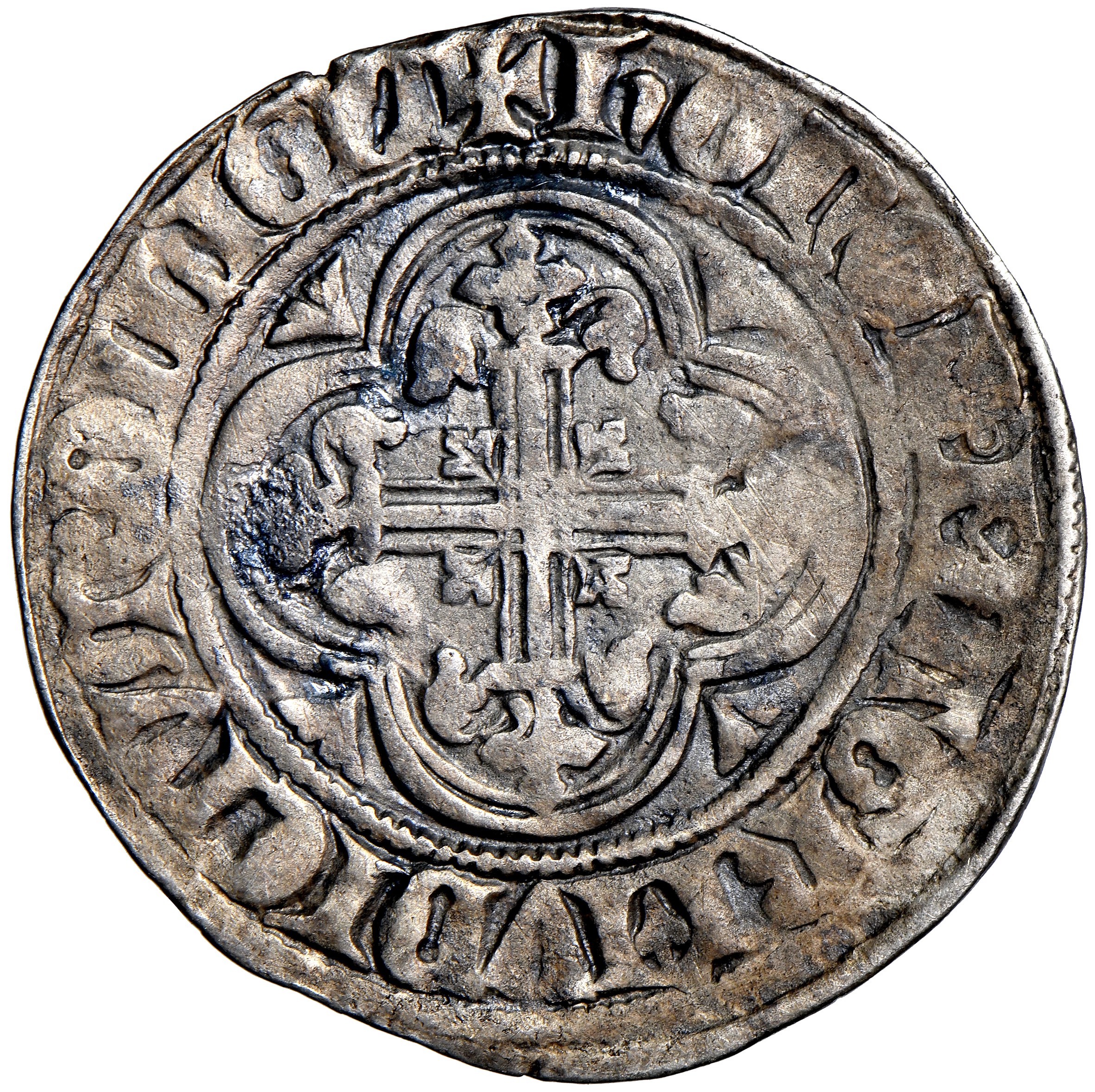
Prussia, Teutonic Order, Winrych of Kniprode, half-jewel c. 1360-1380, mens. Torun.
Av. +MONETA⦂DOMINORVM↑PRVSSIE.
Rv. +hONOR◦MAGRI↓IVDICIVM⦂DILIGIT.
Silver, 2.976 g, 26.7 mm. Vossberg 113.
Condition III+, old patina, slightly deficient but fully legible, exceptionally nice for this type of coin.
The first penny-type coin minted by the Teutonic Order in Prussia appeared under unknown conditions around 1359-1360 and was initially called a shekel. This was because with it, the credit rate of the pfennig was to be stabilized, replacing the Order's profit from the renovation of the coin, which had been abandoned. The rate of the large coin, however, quickly rose to 15 fenigs (half of a skojce), which made it called a half skojce, and later even 16. Thus, the former shekel became known as a half skojce, and the value of a half skojce and one fenig. These large, handsome coins were modeled on Neapolitan carlini pennies, from where the legend (a travesty of a quote from a psalm) was also taken. The interword marks on the half-scores often coincide with those of the Cracow pennies of Casimir the Great, presumably indicating that the same specialists were employed in both monetary reforms. In 1380, the issue of half-scores was replaced by an issue of small shekels bearing the name of Grand Master Winrych of Kniproda, but the coins remained in circulation until the monetary crisis following the Teutonic defeat at Grunwald.








Nesen skatītās
Piesakies, lai redzētu lotu sarakstu
Iecienītākie
Piesakies, lai redzētu lotu sarakstu