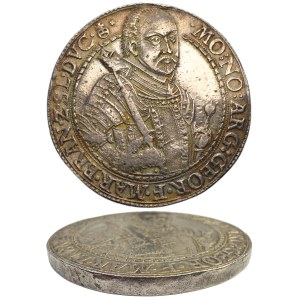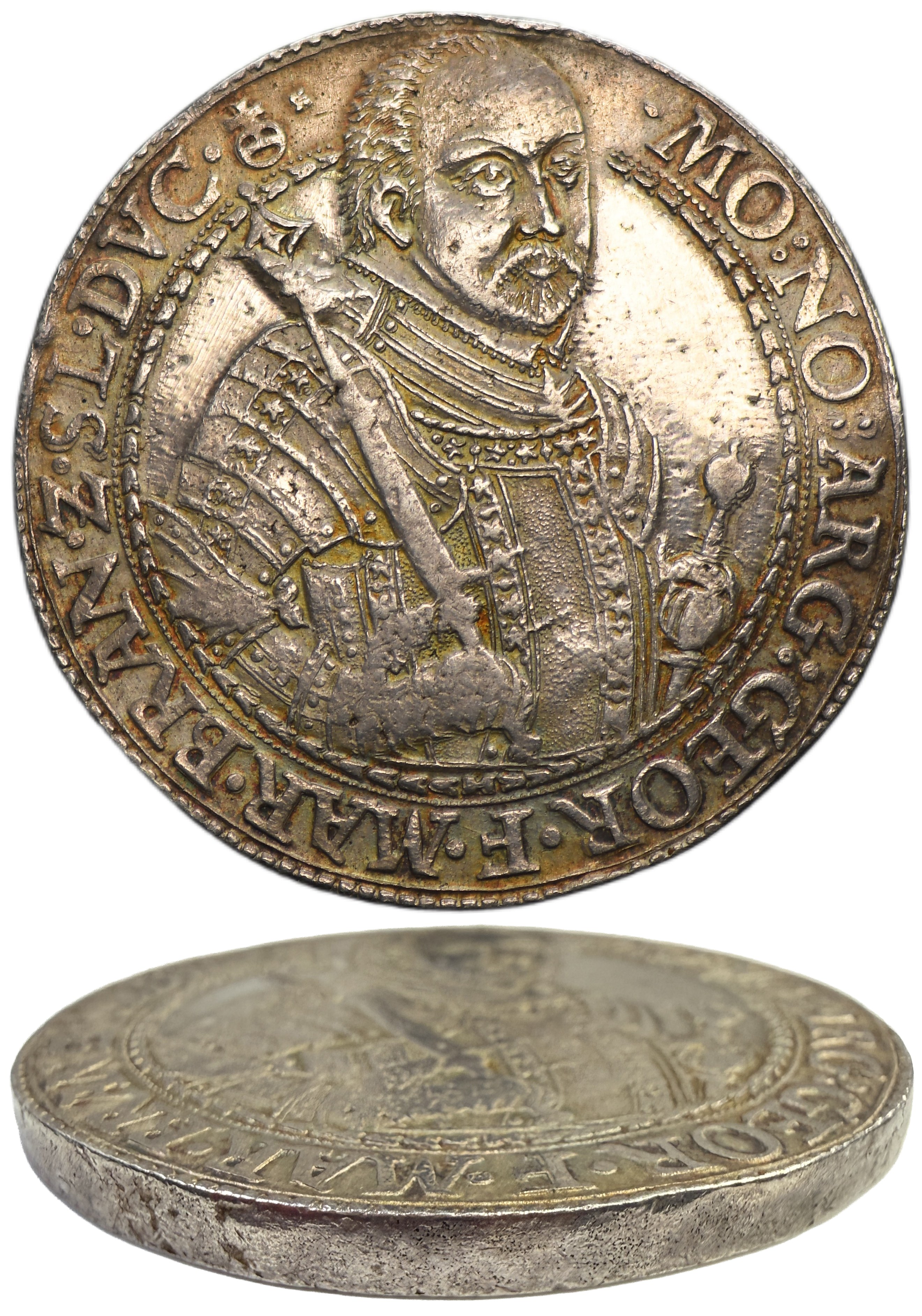
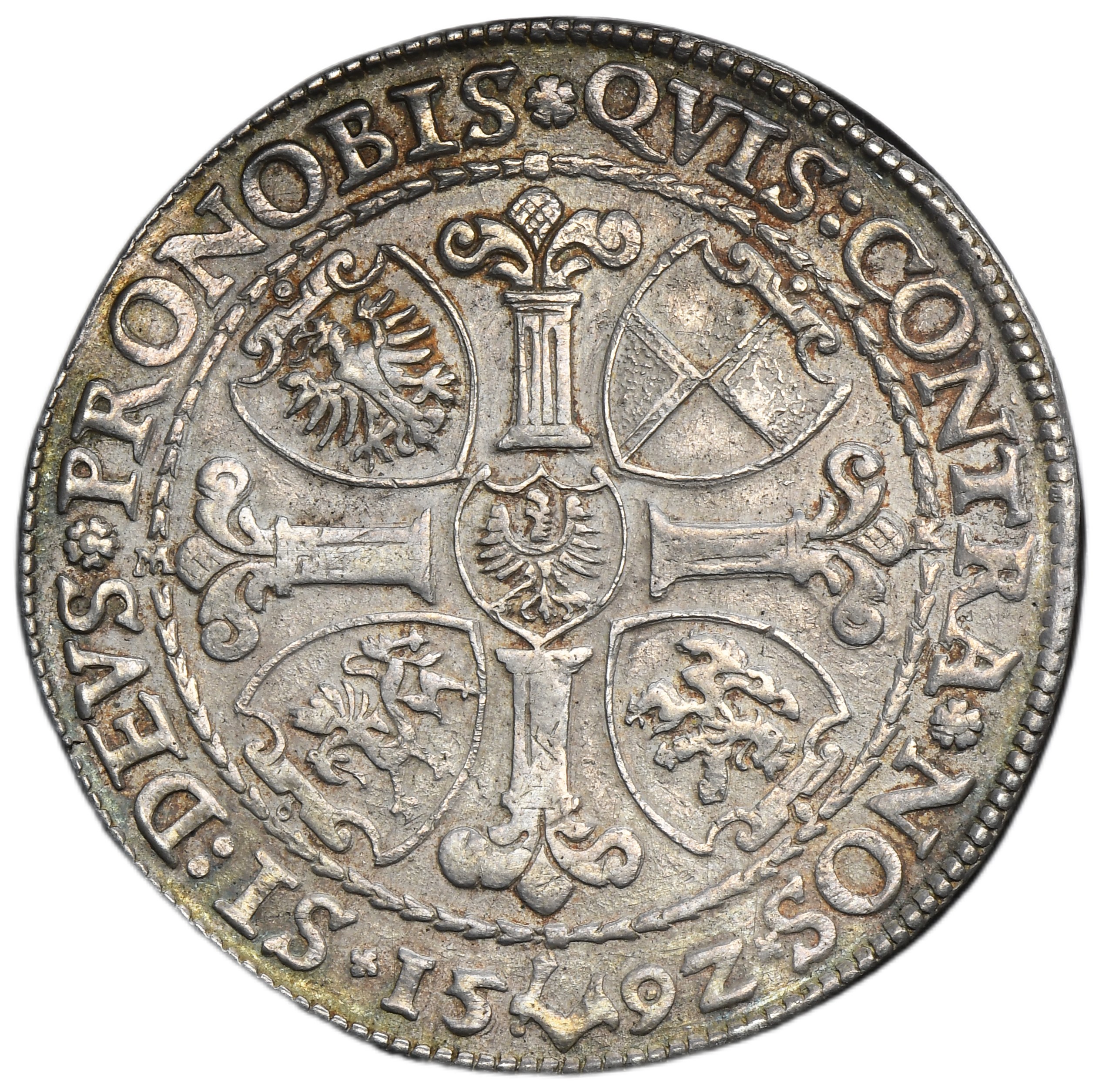
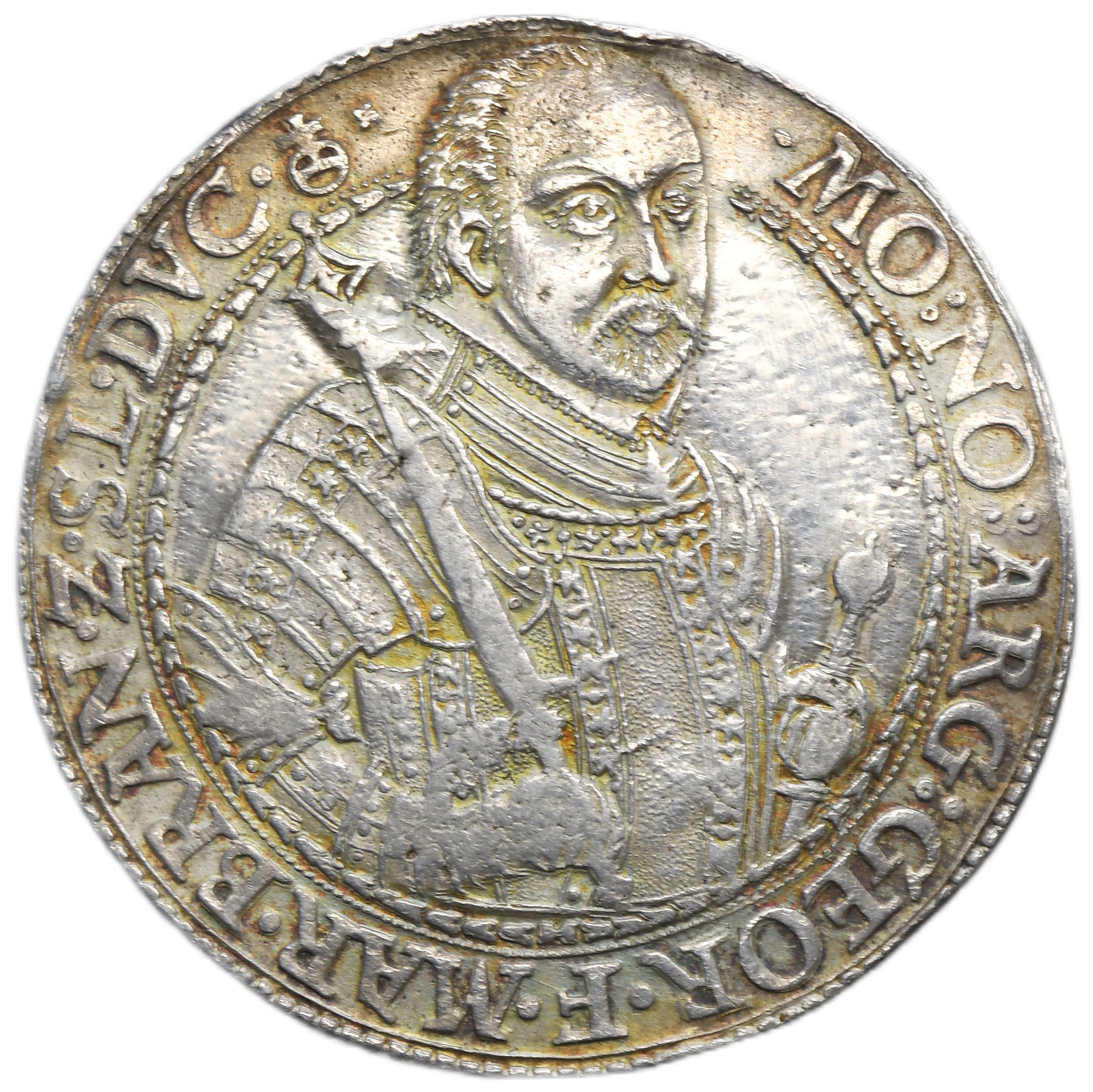
Rare and impressive double thaler struck for Georg Friedrich I of Hohenzollern (1539–1603), Margrave of Brandenburg-Ansbach and Bayreuth and Duke of Jägerndorf. He was one of the most distinguished members of the Silesian branch of the House of Hohenzollern, playing a significant role in strengthening Protestantism and fostering the economic development of his territories. The coin was struck at the Jägerndorf (Krnov) Mint, one of the principal minting centres of Upper Silesia under Hohenzollern rule.
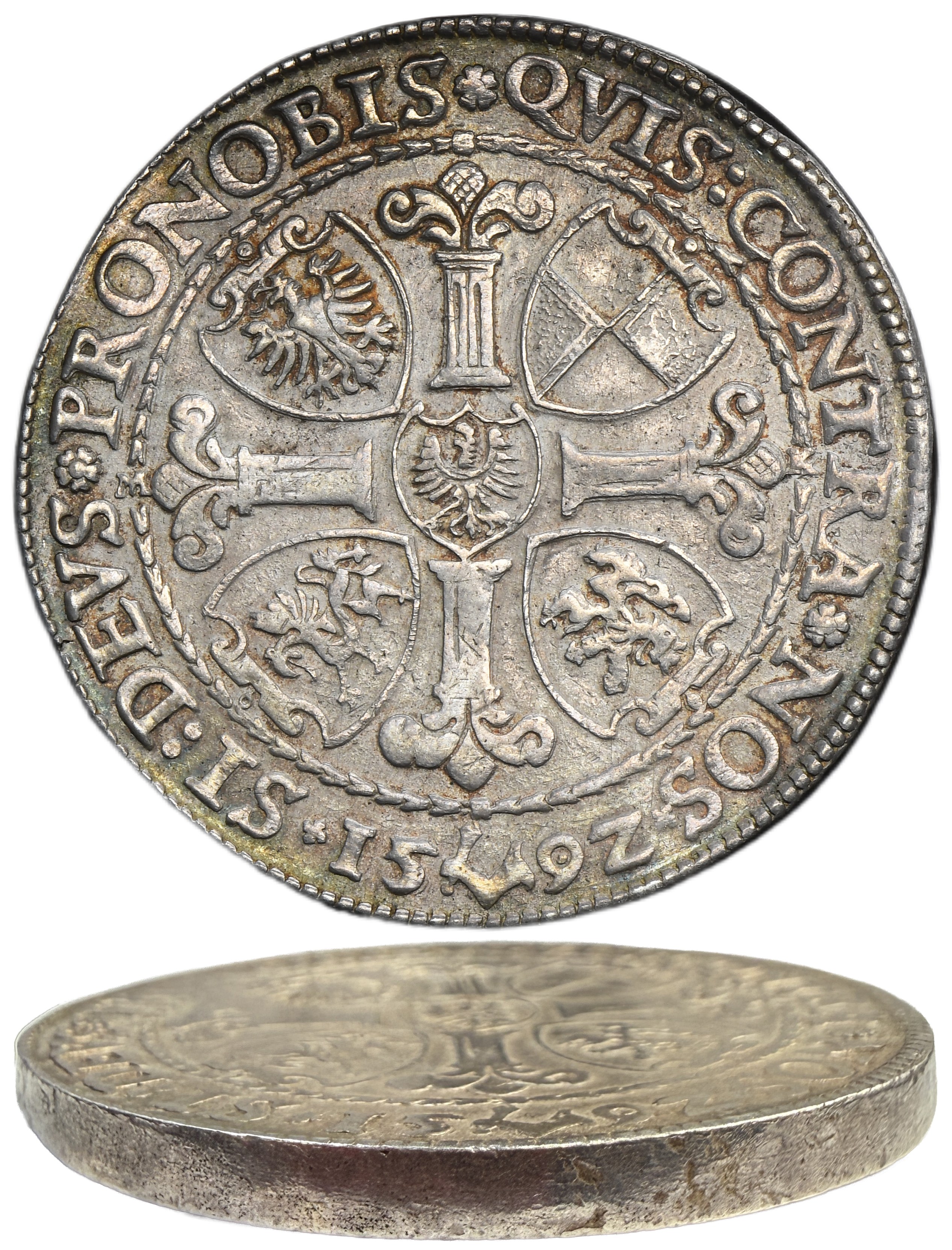
The reverse bears the Latin inscription "SI DEUS PRO NOBIS, QUIS CONTRA NOS" ("If God is for us, who can be against us?"), a quotation from St. Paul's Epistle to the Romans (Romans 8:31). This biblical motto was widely adopted by Protestant rulers during the sixteenth century as an expression of faith and divine protection.
George Frederick's double thalers rank among the most prestigious and artistically accomplished silver issues of Renaissance Silesia. Struck to the Imperial double-thaler standard, with a weight of approximately 57.6 grams, they are regarded as some of the most important numismatic issues of the Duchy of Jägerndorf, admired for their exceptional craftsmanship, rich heraldic symbolism, and outstanding historical significance.
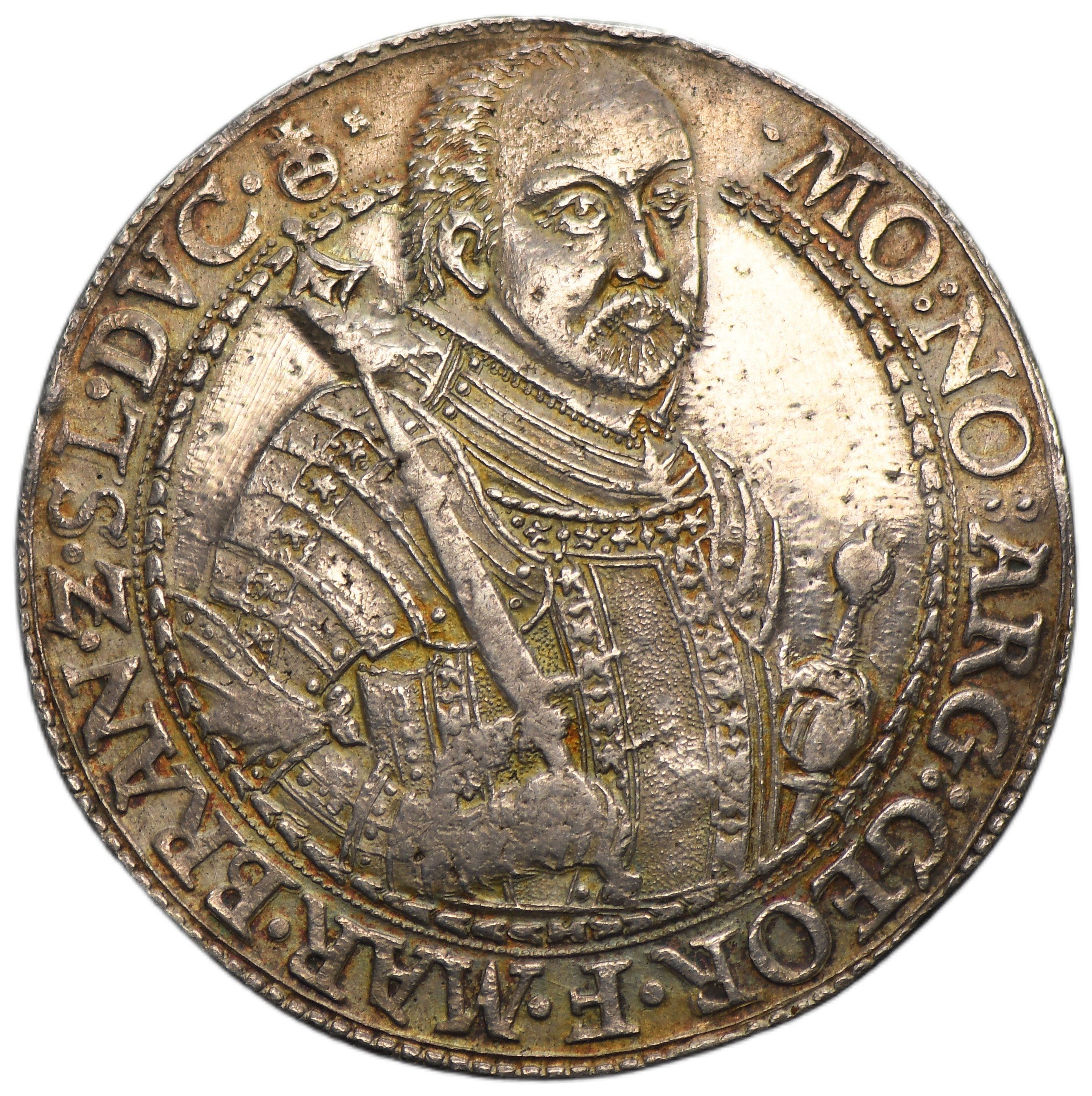
Obverse: bust of the prince in richly decorated armor, with a mace and scepter - symbols of his power and dignity
MO NO ARG GEOR F MAR FRAN Z SL DVC
Reverse: an impressive heraldic composition with the coats of arms of Brandenburg, Hohenzollern, Pomerania, Burgraviate of Nuremberg and the Silesian eagle in the center, arranged around a decorative heraldic cross
SI DEVS PRO NOBIS QVIS CONTRA NOS
Diameter 46 mm, weight 58.35 g