


Size: 14 x 9 cm
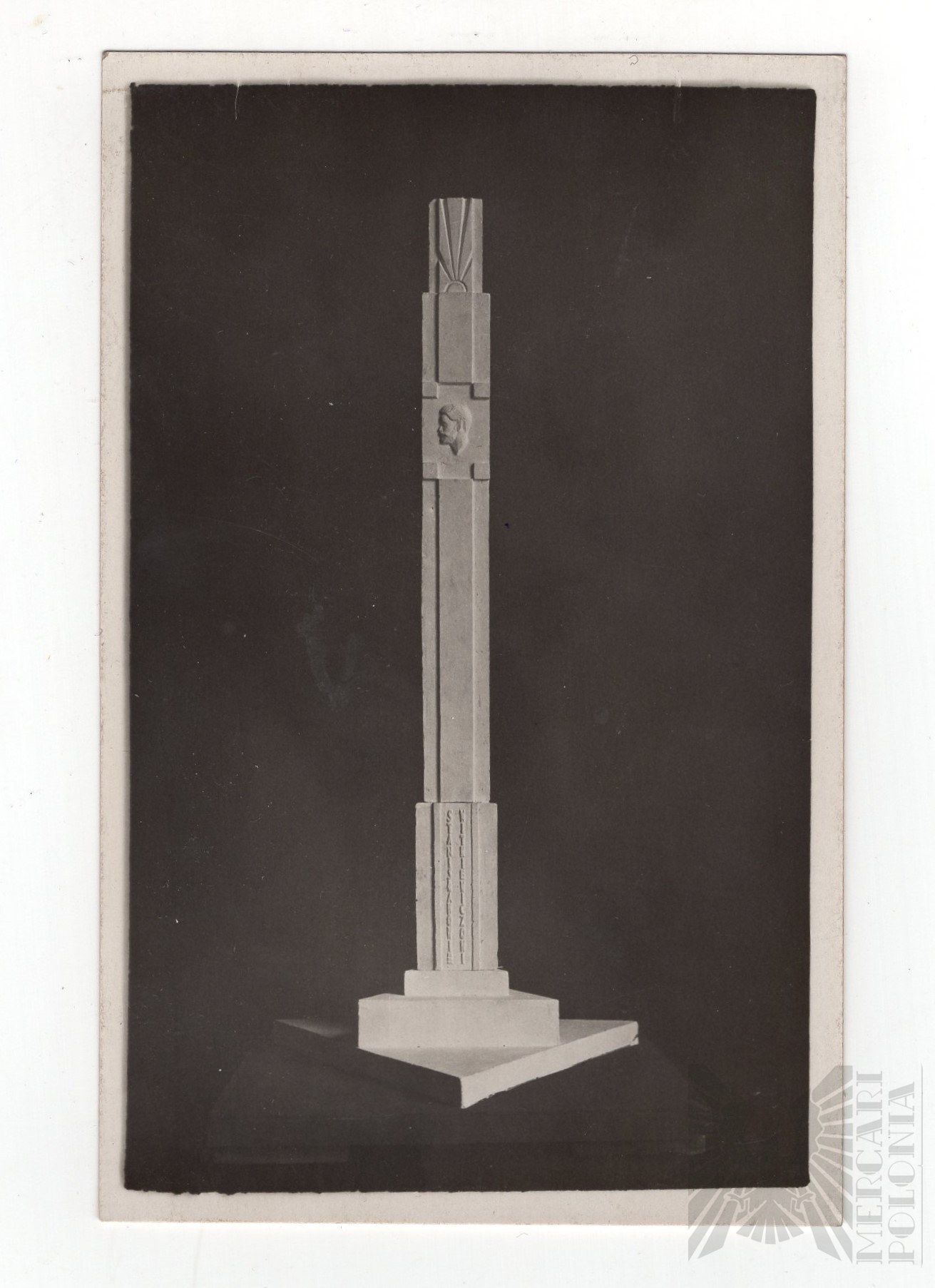
Photo of an unrealized monument to Stanislaw Witkiewicz (1851-1915) from the interwar period designed by an unknown artist.
The design of the Stanislaw Witkiewicz monument is distinguished by its austere vertical form, which combines modernist simplicity with subtle references to the Zakopane style. The soaring column, set on a dynamically planned, asymmetrical base, brings to mind the monumental pillars and totemic forms known from Podhale architecture.
The central part of the monument features a stylized bust of Witkiewicz, blended into the body of the structure, which gives the whole the character of a tribute monument, in which the figure of the creator of the Zakopane style is literally "inscribed" in the monumental structure. In the upper part of the column one can see geometric ornaments, inspired by traditional highland woodcarving, reminiscent of characteristic motifs found in Witkiewicz's architecture - such as the finials of wooden buildings and rhythmic ornaments.
The sculptural design of the lower part of the monument suggests the influence of the School of Wood Industry in Zakopane, where young artists experimented with transforming traditional patterns into modern forms. The entire composition is marked by a minimalist but symbolic character, which may refer to the permanence and timelessness of Witkiewicz's ideas. Simplicity, verticality and economy of detail build a strong monumental impression, emphasizing the spiritual dimension of the art and architecture of the creator of the Zakopane style.
-
Stanislaw Witkiewicz (May 21, 1851 in Poszawsz - September 5, 1915 in Lovran) - Polish painter, architect, writer, art theorist and critic, considered the creator of the Zakopane style, which became the national style in Polish wooden architecture. He studied painting at the Academy of Fine Arts in St. Petersburg and in Munich.
As an artist he became famous for his landscapes and genre scenes inspired by the Tatra Mountains and highland culture. His architectural activity focused on adapting traditional Podhale forms to modern needs - an example is the famous "Koliba" villa in Zakopane. Witkiewicz was also an active publicist, promoting the idea of revival of national art.
He died in 1915 in Lovran (today's Croatia), where he was treated for tuberculosis; his ashes are buried in the Pęksowy Brzyzek cemetery in Zakopane. Father of Stanislaw Ignacy Witkiewicz (Witkacy).
Condition as in photos.







Nesen skatītās
Piesakies, lai redzētu lotu sarakstu
Iecienītākie
Piesakies, lai redzētu lotu sarakstu