


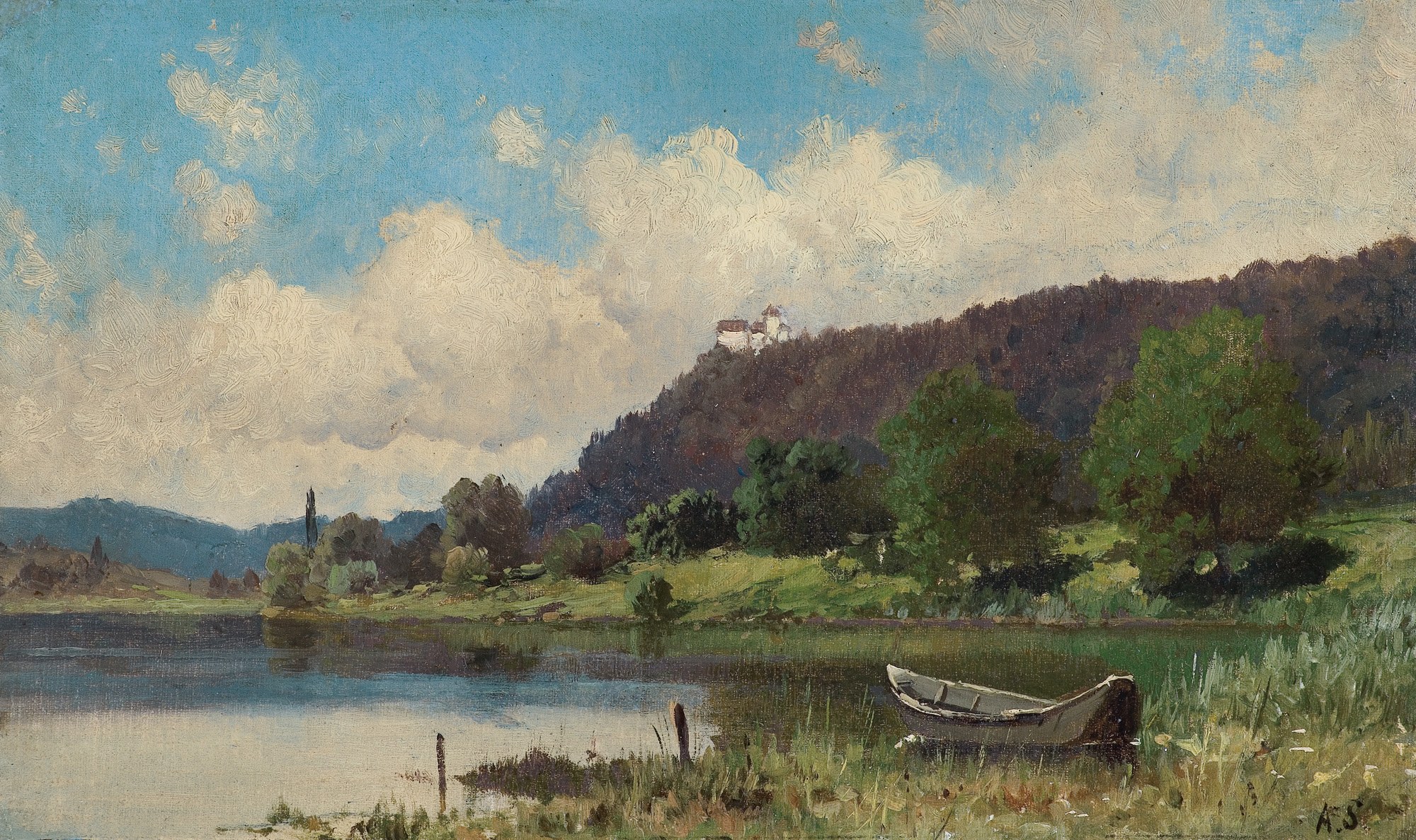
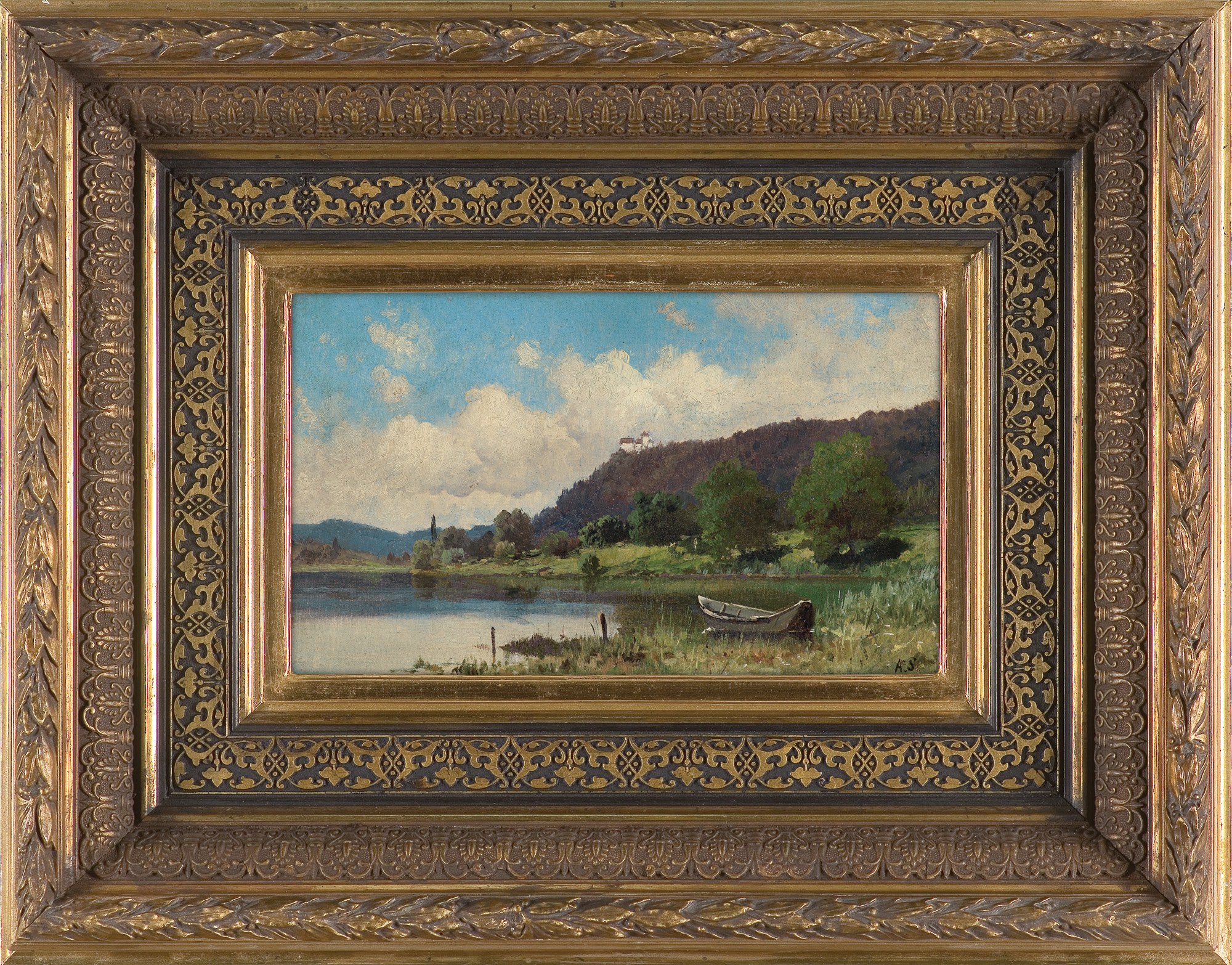
16.5 x 27.4cm - oil, canvas glued on cardboard
Signed p.d.: A.S.
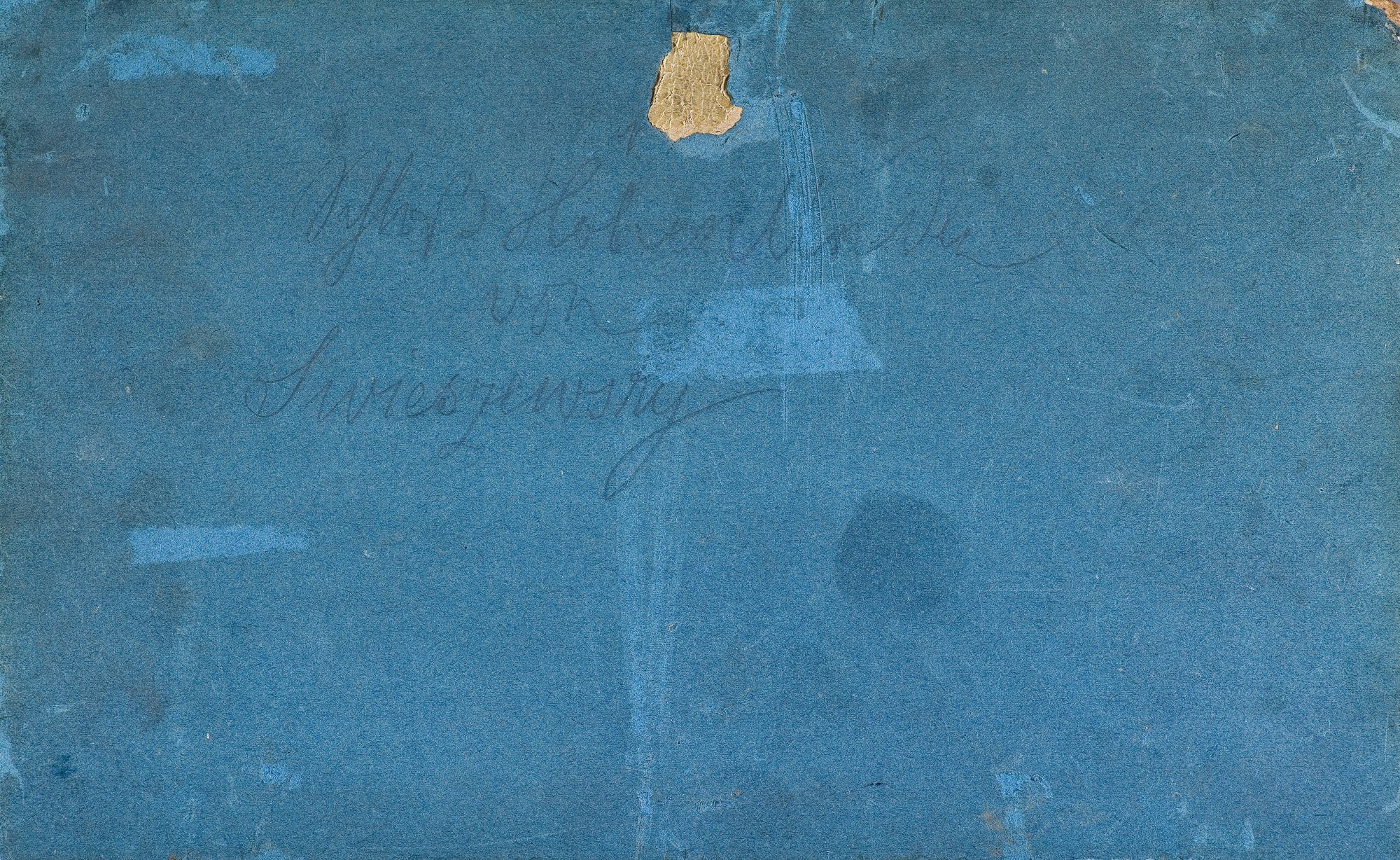
On the reverse (in pencil): [...]loß Hohenl[...] | von | Swieszewsky
Aleksander Swieszewski was a landscape painter, one of the representatives of the Polish art colony in Munich. He began his study of painting at the Warsaw School of Fine Arts as a student of Christian Breslauer. In 1863 he fought in the January Uprising; after its fall, he went to Munich and studied at the Academy there under Professor Fritz Bamberger. He traveled extensively - he was in Italy and France, went to the Tyrol and Switzerland. In 1873 he settled permanently in Munich. However, he often passed through to the country; he enjoyed visiting the Tatra Mountains. During his travels, he made studies and painterly sketches from nature, which he later used for paintings already finished in his studio. He was most fond of painting mountain landscapes, often illuminated by the rays of the setting sun. He also depicted seaside landscapes and gardens with ancient ruins. The artist exhibited in many European cities, as well as at home; at the Zachęta Gallery in Warsaw and the Society of Friends of Fine Arts in Cracow (in 1864-1895 almost annually). His paintings enjoyed undying critical acclaim and success with the public. In 1881, one of his landscapes was bought by Ludwig II, King of Bavaria himself. After the artist's death, an exhibition of his creative legacy was held at Munich's Kunstverein - in April 1896. At that time, wrote a Munich critic, "one could see how dedicated he was to art. Each study shows how he was able to render with great technical skill the noble, deeply felt nature [...] all pervaded with poetic charm." (quoted by H.Stępień, M.Liczbińska, Artyści polscy w środowisku monachijskim w latach 1828-1914. Materiały źródłowe, Warsaw 1994, p. 97).













Nesen skatītās
Piesakies, lai redzētu lotu sarakstu
Iecienītākie
Piesakies, lai redzētu lotu sarakstu