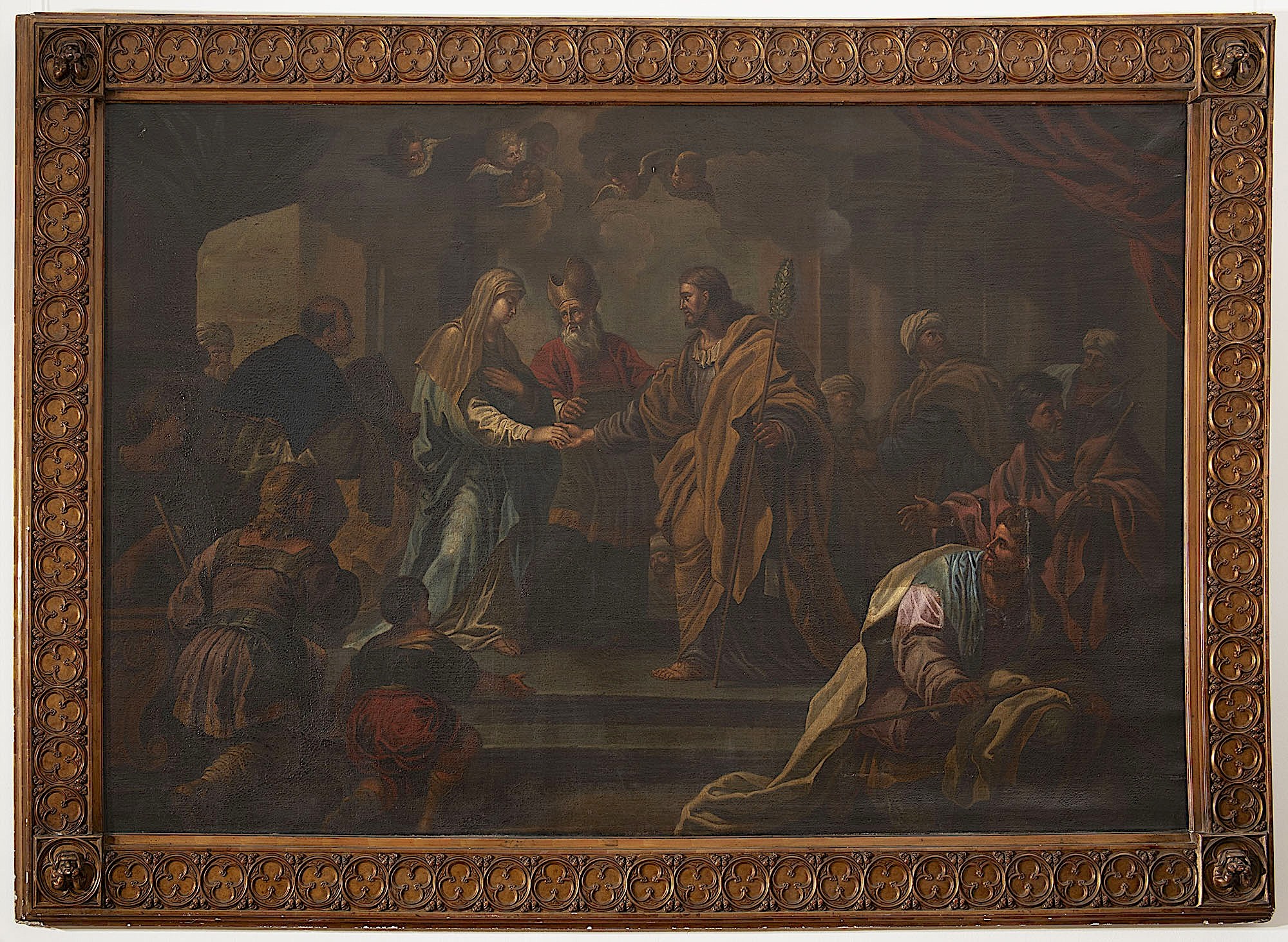
This monumental oil on canvas, measuring an impressive , is a remarkable exemplar of Neapolitan High Baroque painting from the second half of the 17th century. Closely associated with the vibrant stylistic circle of Luca Giordano (1634–1705), the work captures the theatrical grandeur, dynamic light effects, and painterly fluidity that defined Neapolitan art during this golden era.
The painting portrays the sacred narrative of The Marriage of the Virgin (Sposalizio della Vergine), a beloved subject in Counter-Reformation iconography derived from the Apocryphal Gospels and Jacobi de Voragine's Golden Legend.
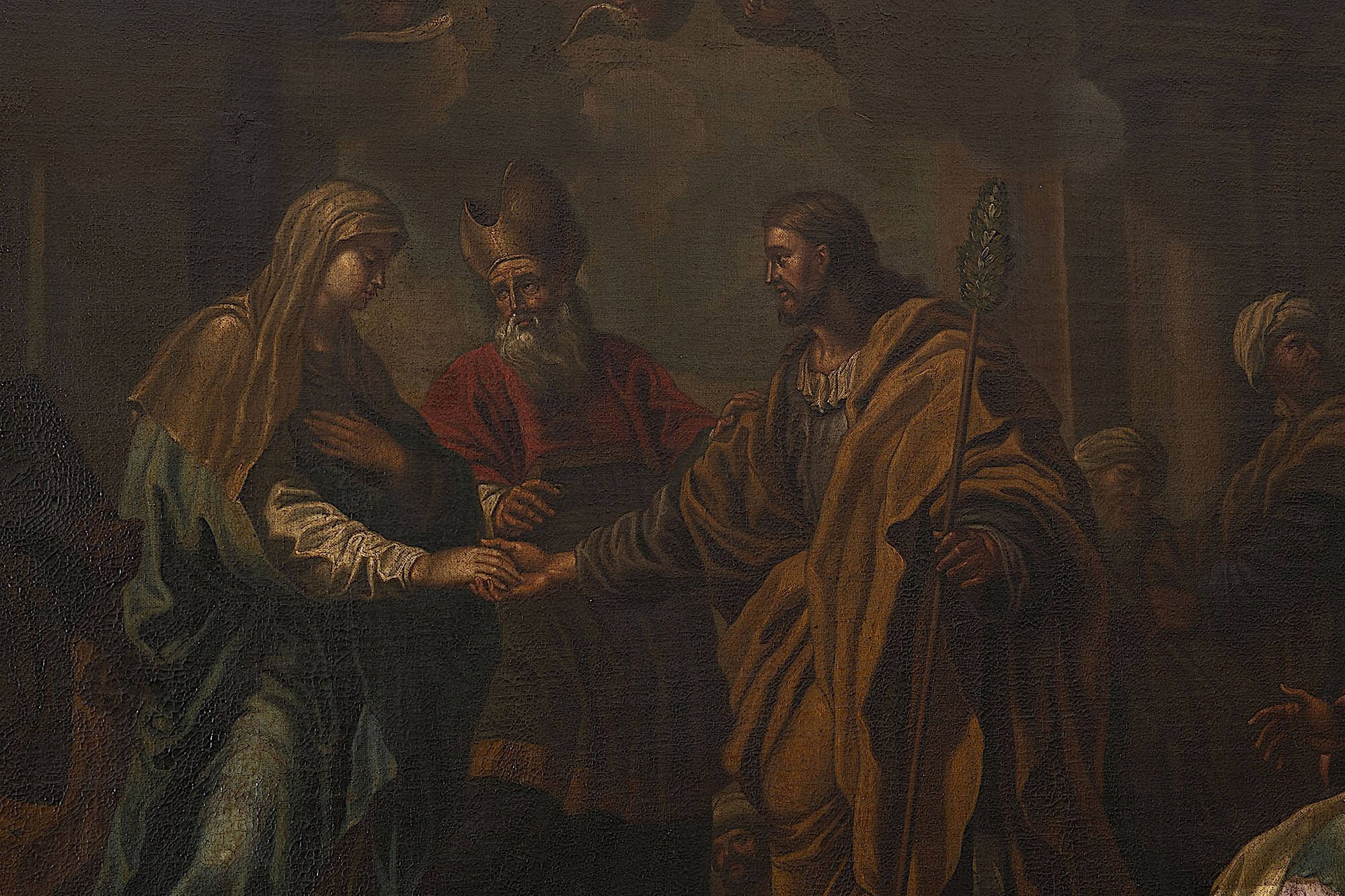
At the spatial and spiritual heart of the composition, the Virgin Mary, draped in classic blue and ochre robes, joins hands with Saint Joseph in holy matrimony. Standing between them, the High Priest—distinguished by his sacerdotal mitre and deep crimson vestments—officiates the ceremony with solemn authority. Saint Joseph holds his iconic flowering staff, the divine sign confirming his selection as Mary’s betrothed.
The main sacred trio is surrounded by an animated assembly of onlookers, turbaned figures, and disappointed suitors in dramatic, foreshortened postures. Hovering above in the celestial realm, winged cherubim emerge from ethereal clouds, bestowing divine grace upon the earthly union.
Luca Giordano, nicknamed Fa Presto for his extraordinary speed and virtuosity, was the dominant artistic force in late 17th-century Naples, Spain, and Florence. His studio attracted numerous talented pupils and followers who disseminated his fluid, luminous style throughout Europe. This canvas displays the high level of execution and dramatic flair characteristic of Giordano's immediate circle and workshop collaborators. Oil on Canvas 190 x 124 cm