


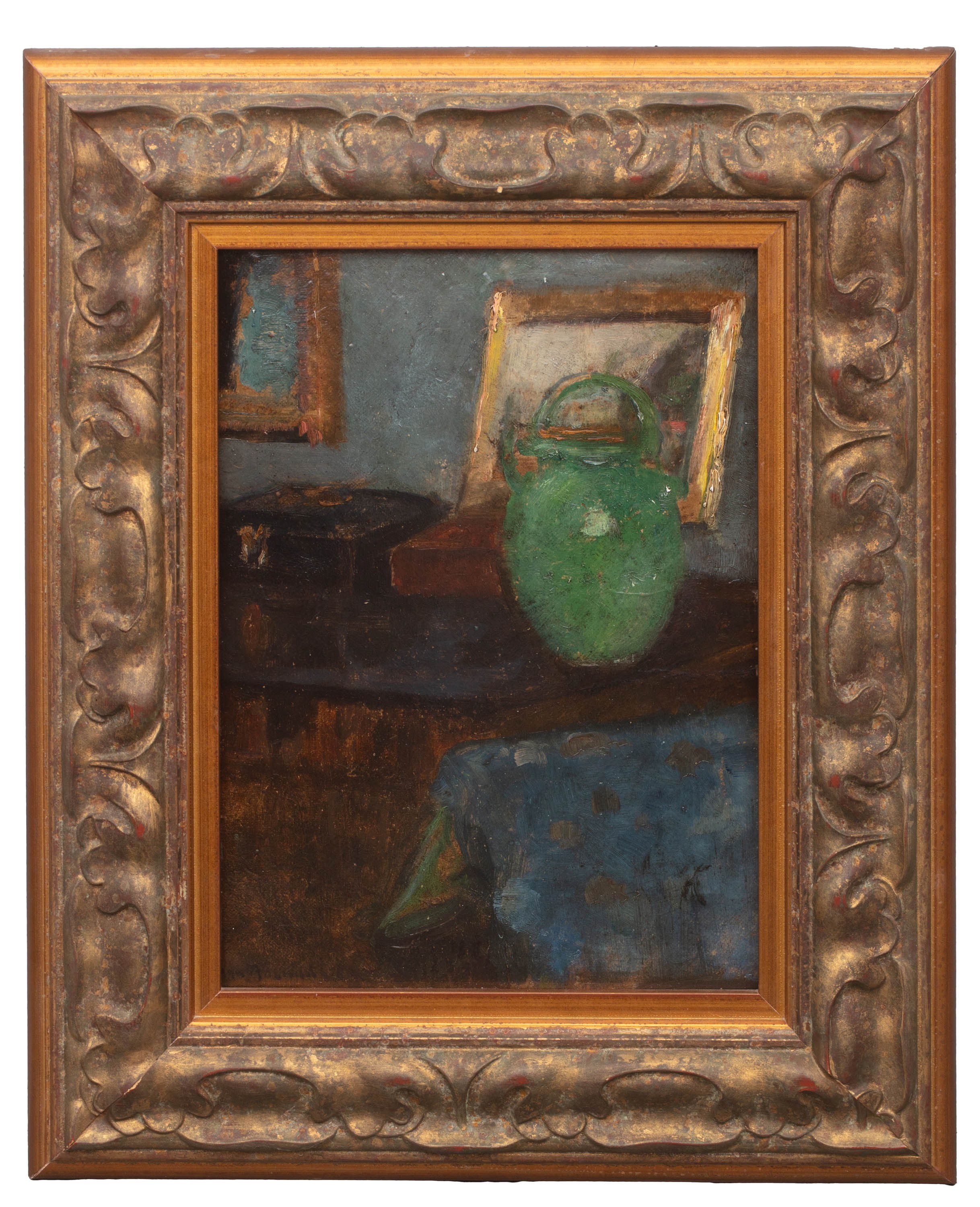
oil, cardboard, 35 × 25.5 cm
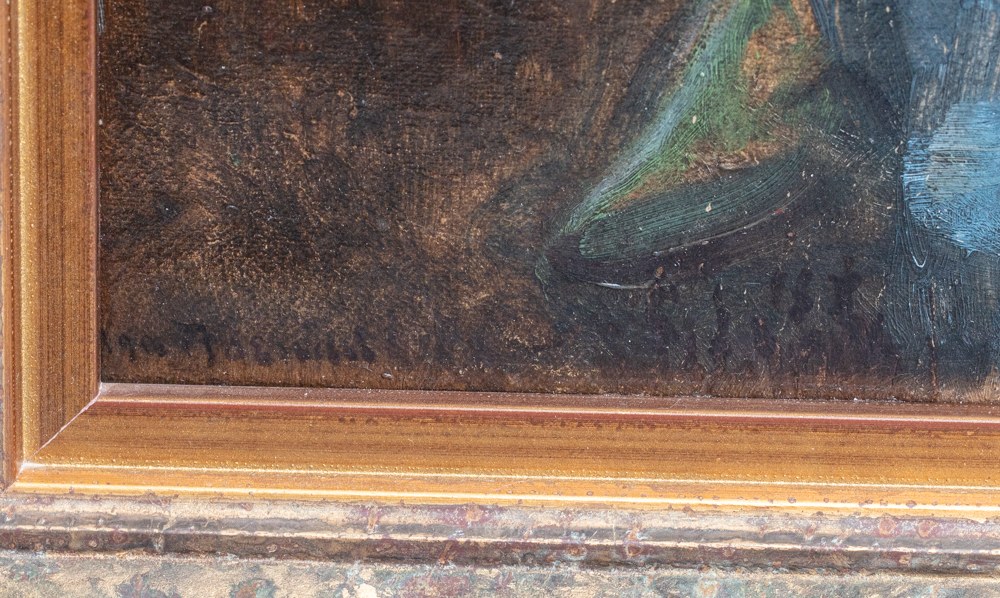
Signed l. d.: "Olga Boznańska"
Provenance:
- collection of Maria and Janusz Wolanin
- Collection of Ursula and Piotr Hofman
Exhibited:
- "Szymon Mondzain and the Ecole de Paris. Polish avant-garde painting of the second half of the
20th century. Collection of Ursula and Piotr Hofman," 22.02.2015-22.04.2015, Palais
Abbotsford - Department of Modern Art of the National Museum in Gdańsk
Reproduced:
- Ewa Bobrowska-Jakubowska "Artyści Polscy we Francji", DIG, Warsaw 2004, (ill. 5), nlb
- "Collection of Ursula and Piotr Hofman," ed. U. Hofman, Warsaw, 2013, p. 75
- "Collection of Ursula and Piotr Hofman," ed. U. Hofman, Warsaw, 2018, p. 77
Although Boznańska is primarily associated with her outstanding portrait paintings, still lifes also have an important place in her work. The artist began to reach for this theme as early as her Munich period, inspired by the works of the Dutch masters of the 17th century, which she viewed and copied in the Old Pinakothek, drawing on the best traditions of the genre. She also educated herself by studying the works of famous French painters - the 18th-century Jean- -Siméon Chardin and Henri Fantin-Latour. "It has been customary - and rightly so - to associate Boznanska's name with portraiture, while other paintings of hers have so far been overlooked: landscapes, flowers or interiors, and above all still lifes. It is difficult to determine today how many paintings of such subjects can still be found by small collectors, because, as already mentioned, eyewitnesses told of the artist's generosity, who bestowed gifts not only to friends, but often to strangers who came to her studio asking for support. (...) Boznanska's landscapes, her still lifes, flowers, as well as street scenes (...), contain a lot of expressive content and are most deserving of attention, enriching the artist's oeuvre with a whole separate chapter." Helena Blum, "Olga Boznańska. An Outline of Life and Work," Krakow 1964, pp. 74-76. " [...] She [Boznańska] gives inanimate objects, without taking them off the ground at all, a certain visionary ethereality, allowing us to see in them images of things represented, acquiring, however, at the same time, some kind of misty airiness, making them visions falling on the canvas, as if a mirror reflection. [...] She transfers the impressionistic soulfulness to non-animated things. Her fruits and cups (hanging in the main salon of the exhibition) seem like specters of fruits and cups, so permeated are they by the impressionistic softness of her thought and sight, a softness to us translucent, exquisite and full of poetry, making Olga Boznanska's still life we would never hang in the dining room between decorative paintings, but would give it an honored place in the studio of a poet or writer." Antoni Radomir, Salon of Krakow, "Voice of the Nation," Krakow 1898, no. 29, [quoted in:] H. Blum, "Olga Boznańska," Warsaw 1974, p. 27.











Nesen skatītās
Piesakies, lai redzētu lotu sarakstu
Iecienītākie
Piesakies, lai redzētu lotu sarakstu