


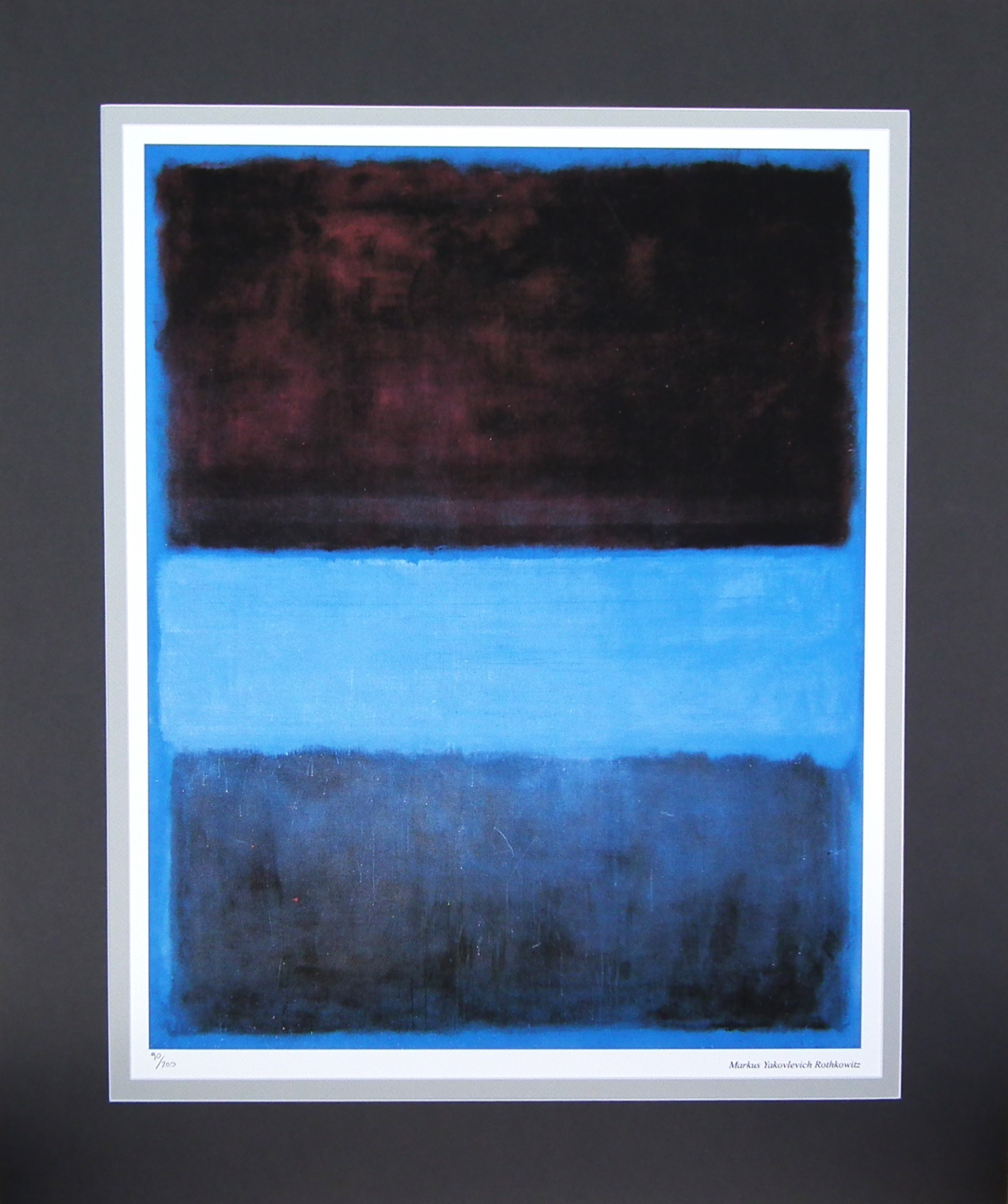
Lithograph, Handmade Arches paper, dimensions: 57 x 46 cm in light passe-partout, 73 x 62 cm in passe-parout frame, limited edition, licensed by SPADEM PARIS, hand numbered in pencil 90/200, signed from plate p. d.,drystamp SPADEM PARIS l.d., (Société de la Propriété Artistique et des Dessins et Modelèles-the French equivalent of ZAIKS). Original certificate.
Mark Rothko,owner of Marcus Rothkowitz Americanpainter, representative of color field painting.
Rothko'swork tothis day is a symbol of art that speaks offreedom and consequences, transcending all aesthetic and genre frameworks. His paintings focused on simple emotions - canvaseswere usually filled with few intense colors, with few details. Mark Rothko's works are among the most recognizable in theworldamong abstract works. Andat the same time probably one of the most controversial (next to the works of Jackson Pollock).
The artist himselfhas repeatedlystressed that hestrivesto make his canvases help people define their ownfeelings. He wanted to literallydraw the viewer into the painting, he wanted togive hima totalexperience, toevoke a strong and unambiguous emotional reaction - ecstasy,joy, despair, devastation, resignation, etc. Rothko professed faith in colors, he knew that, properly combined, they canactivate areas in the brain responsible for evokingmemories,dreams and fears (today these issues are dealt with by abranch of science called neuroaesthetics).
"Rust and Blue," one of Rothko's most famous paintings, consists of three main colors: rustyorange, deep blue and darker, almost black tones at the bottom. A rusty rectangle set against an intense blue background dominates the painting, creating a contrast between warm and cool. This juxtaposition of warm and cold colorscanevoke a sense of tension or harmony,dependingon the viewer, andthe experience of interacting with the painting is meant tobe primarily personal.
Rothko isalready somewhat of an icon, a cult figure, that anything that came out of his hand is expensive.Addto this the rapidly diminishingavailability of paintings, which are disappearing from the market in private and public collections, and the fact thatRothko's style isunmistakable. Contrary to popular opinion that such athing could bepainted even by a child, Rothka's works are insanely difficult tocopy so as toconvey the hard-to-grasp vibration of colors and their mesmerizing power.
Today Mark Rothkois described as the mostexpensivepainter of the post-war period. The minimum price for which his works are sold at auctions exceeds $20 million. The record was set in 2014, when a Russian collector bought painting No. 6 for $186 million, makingRothko one of the top sevenmostexpensivepaintings ever sold (alongside Leonardo da Vinci, Paul Cézanne and Paul Gauguin, among others).










