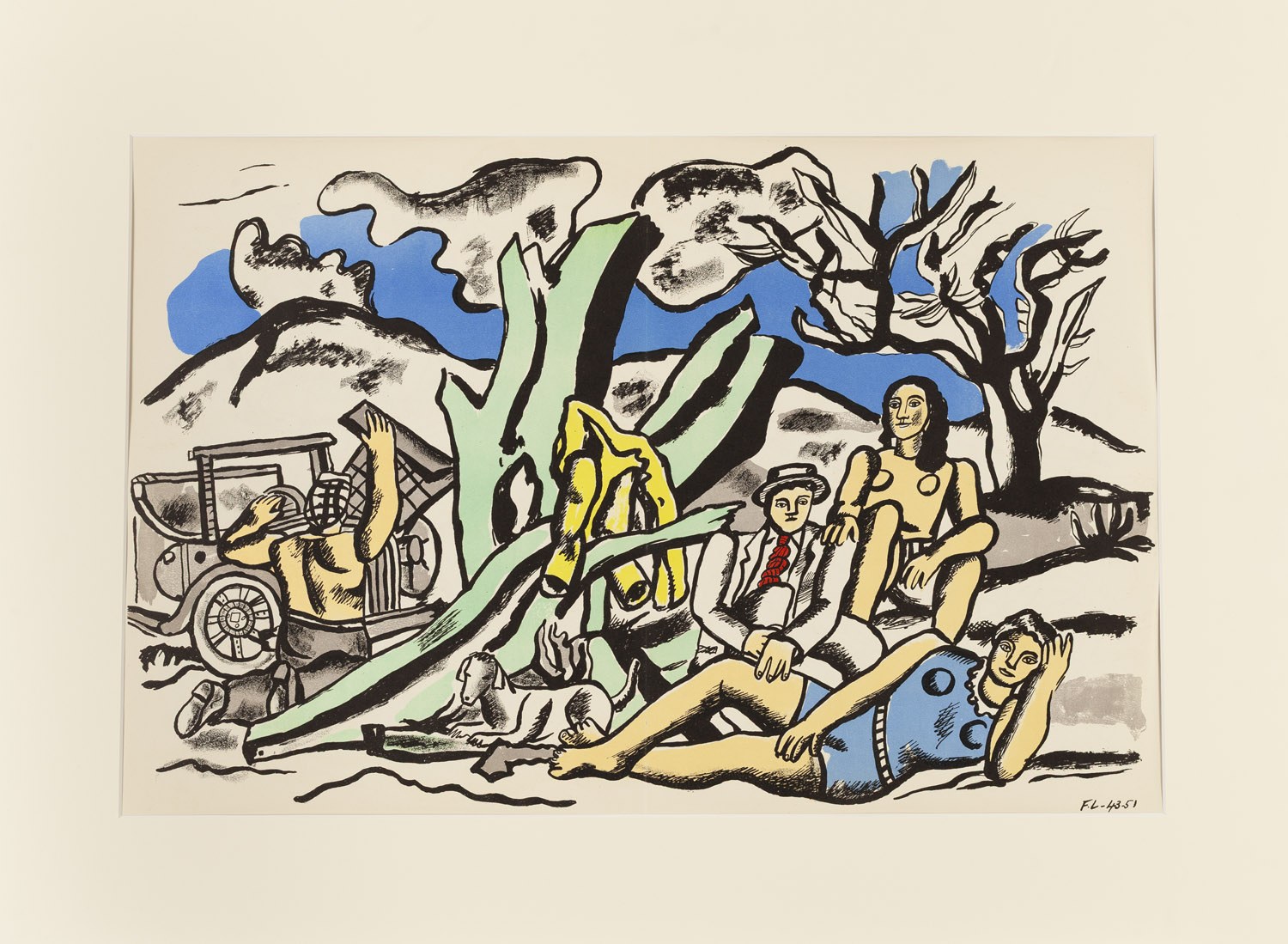
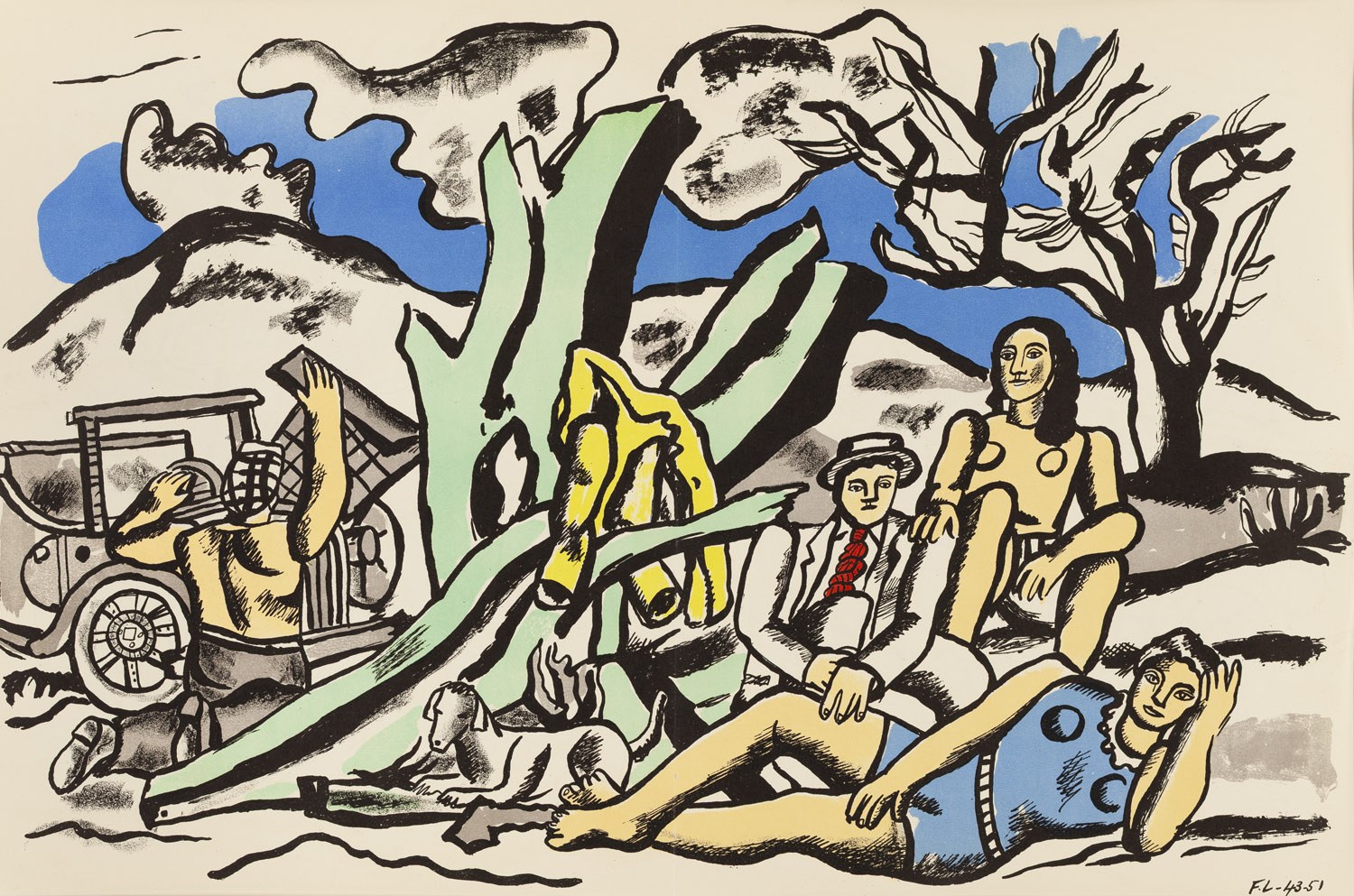
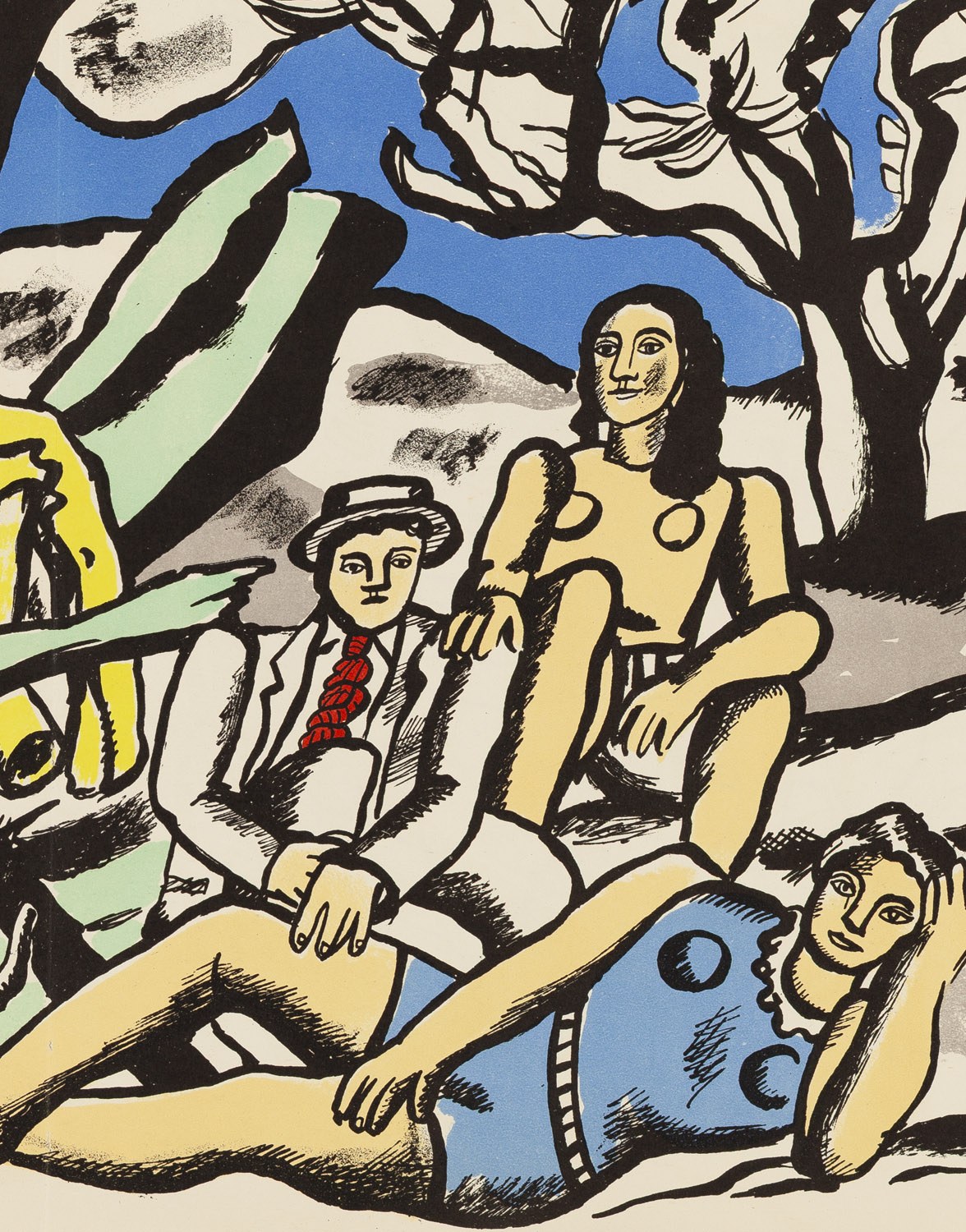
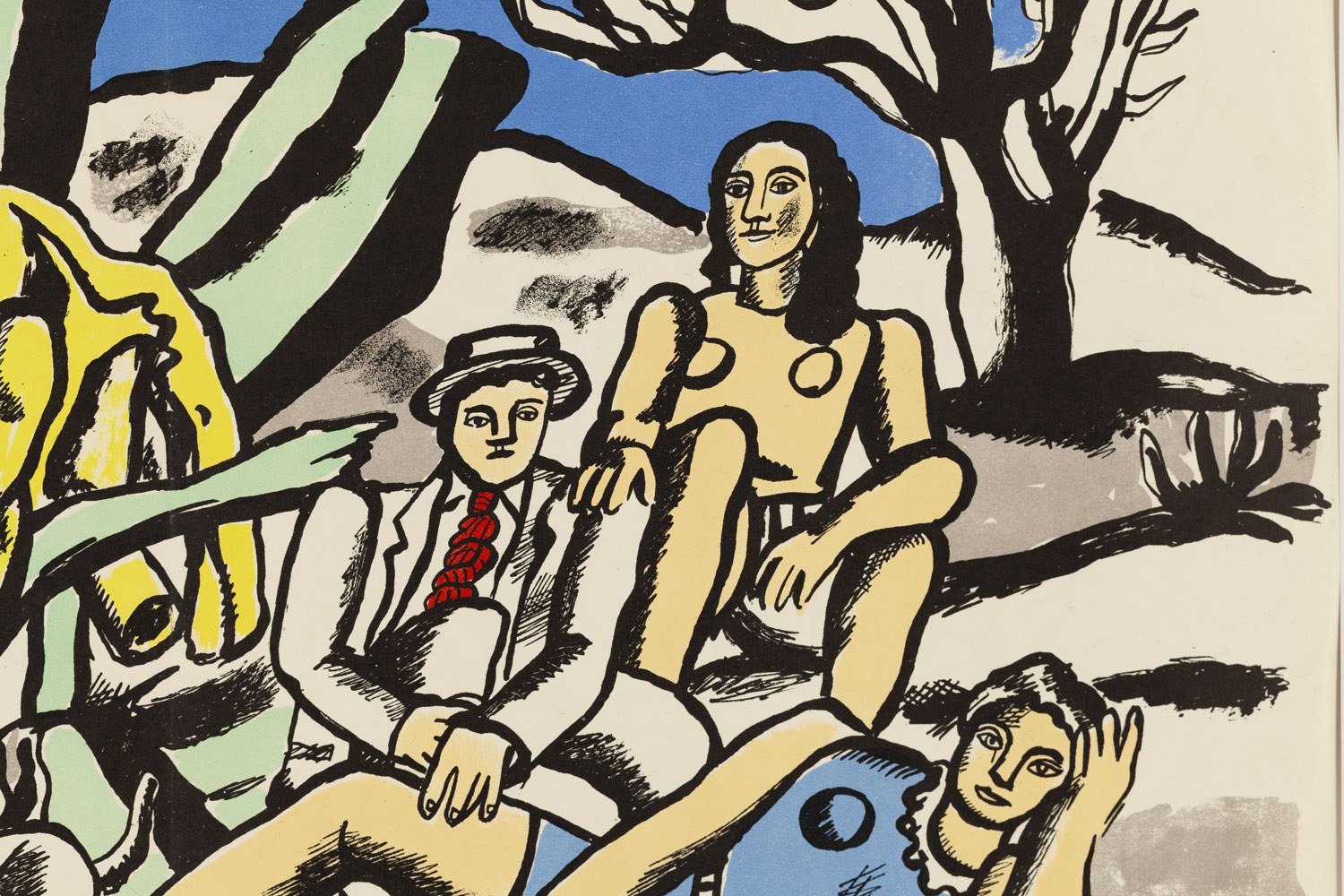
Dimensions: 34.5 x 52 cm (inside the mat)
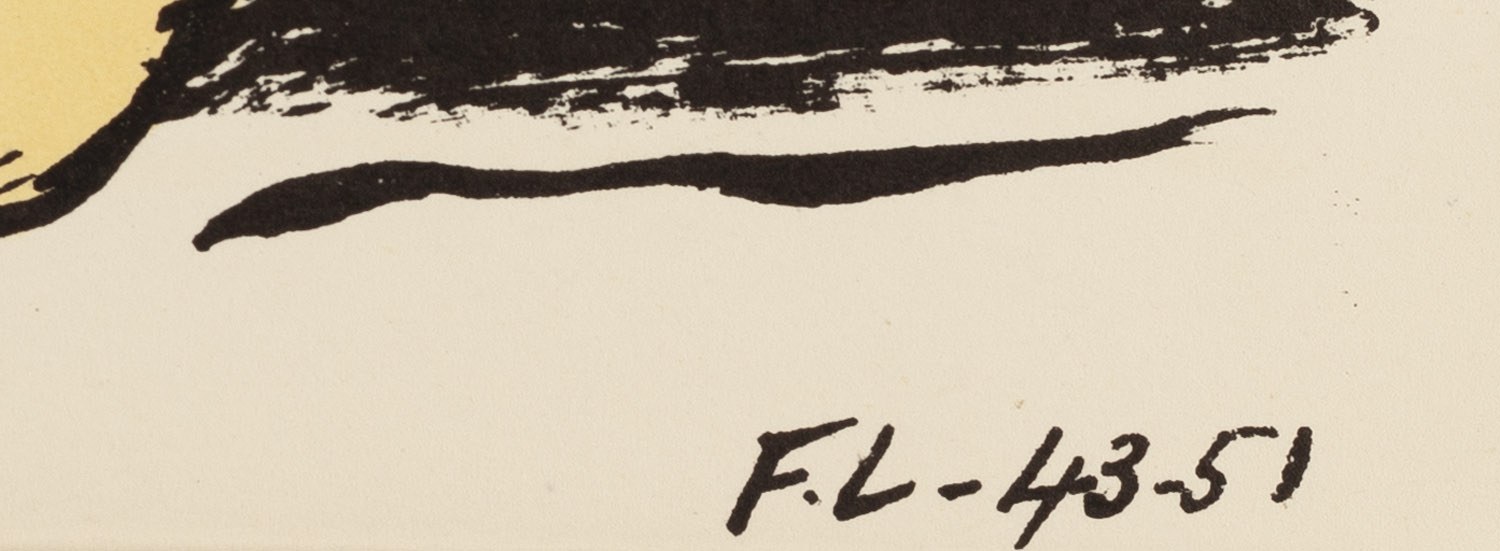
signed and dated on the stone: 'F.L-43-51'
The work comes from a special issue of the Parisian art magazine "Verve" (Vol. VII, No. 27/28), published by Tériade (Stratis Eleftheriadis), which is widely regarded as one of the most important issues of the magazine. To this day, it is regarded as an editorial masterpiece and a valuable collector’s item, as it contains original prints created by the most outstanding artists of that era: They were printed at the famous Parisian studio Mourlot Frères, which guaranteed the highest quality of colors.
Condition
work in a passe-partout
Biography
In the 1920s, he was the dominant artistic figure of the era. From 1910, in response to Cubism, he painted nearly monochromatic compositions composed of geometrized, cylindrical, simplified forms, easily recognizable in their distinctive realism. He built expressive compositions from them, initially associated with the cult of technical civilization, machines, and industry, and later more generally with the everyday life of ordinary people. A hallmark of his works is the interplay of strong, fluid contour lines that tightly enclose the depicted forms, with patches of pure color. Around 1924, the artist became interested in architecture and mural painting: he created decorative compositions, often of monumental scale. He collaborated with the pioneers of Purism: Pierre Jeanneret and the architect Le Corbusier. He designed theater sets, textiles, stained glass, and mosaics; he practiced sculpture and applied graphics; and he worked in film and ceramics. He was a talented educator, theorist, and popularizer of art.