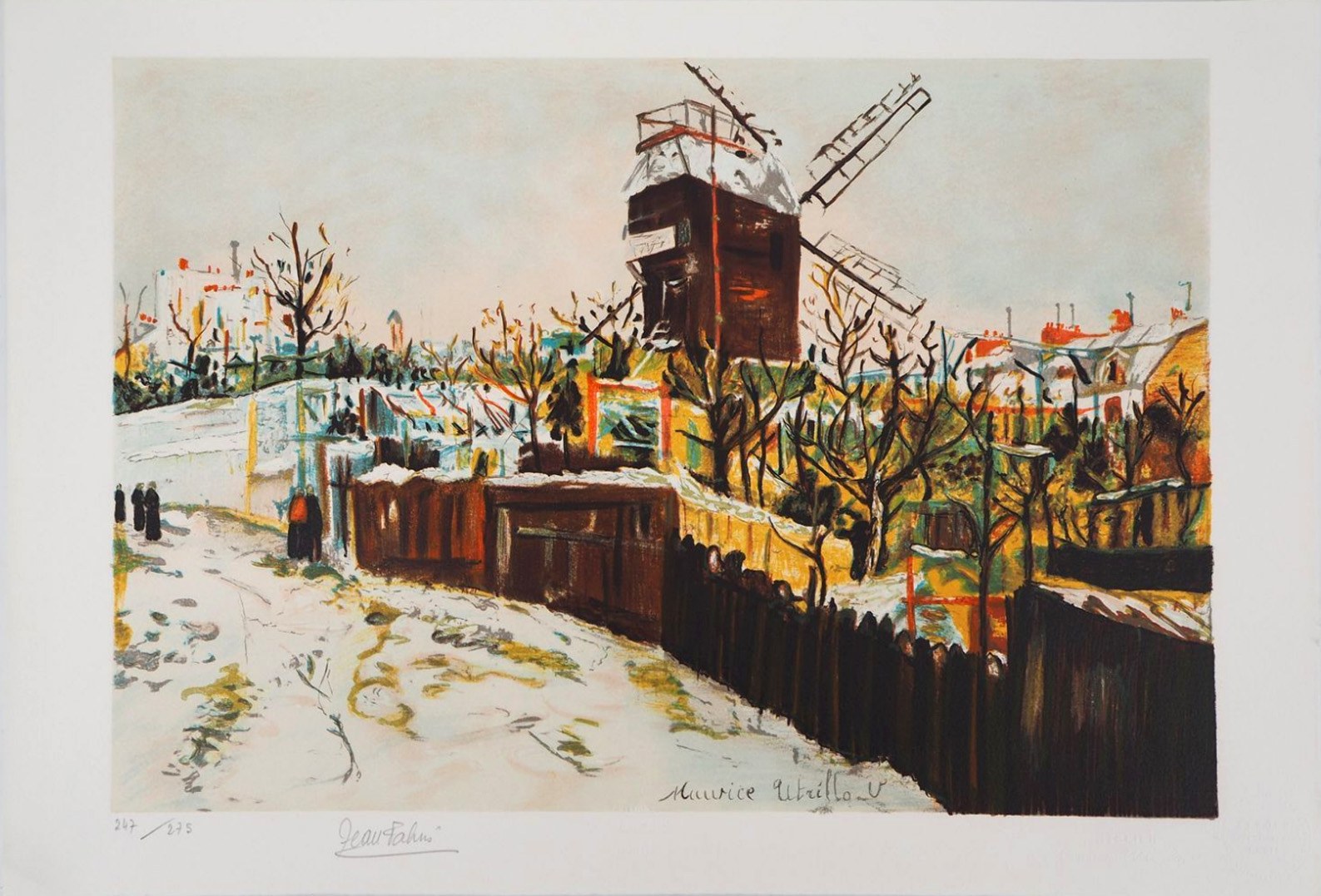
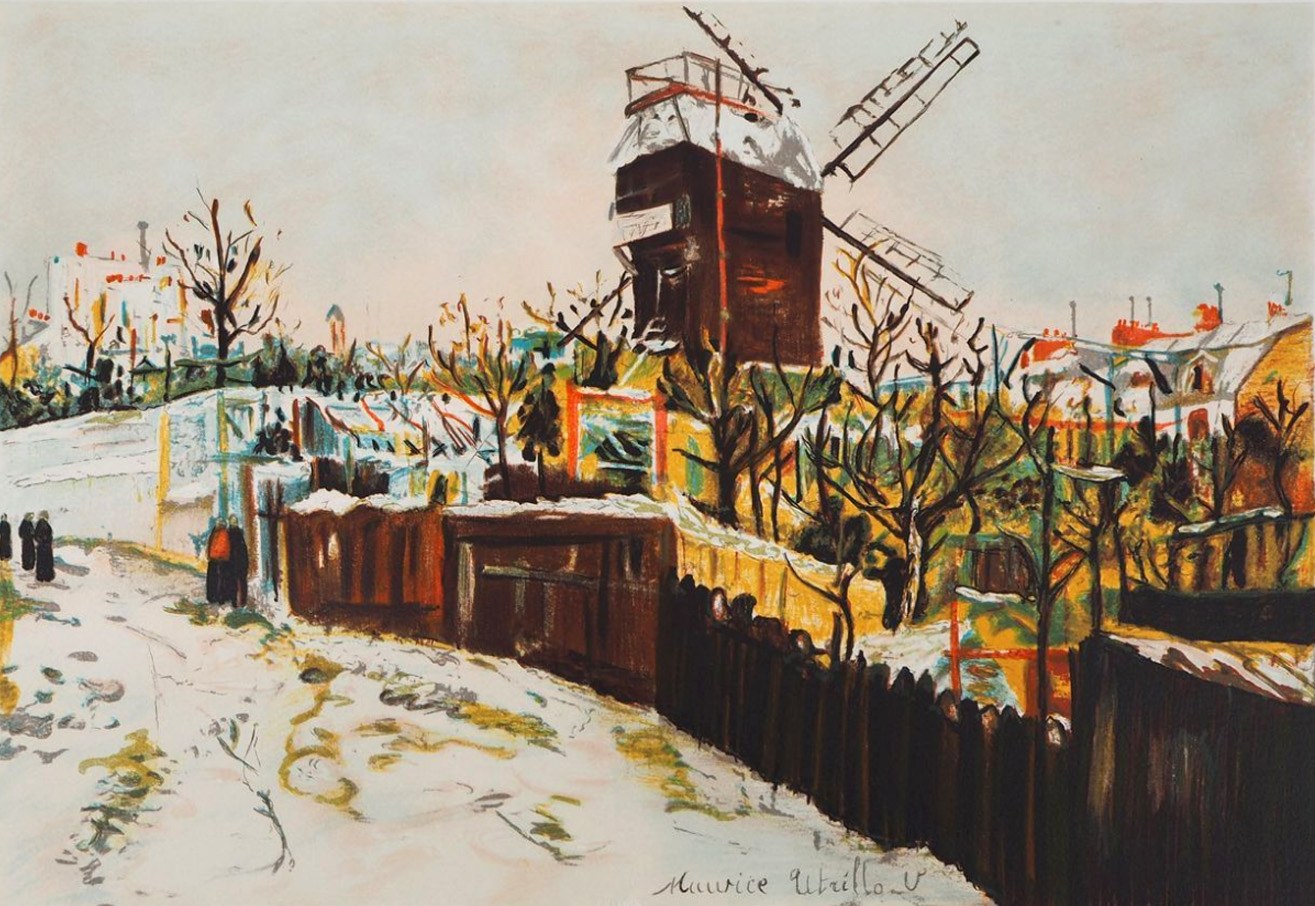
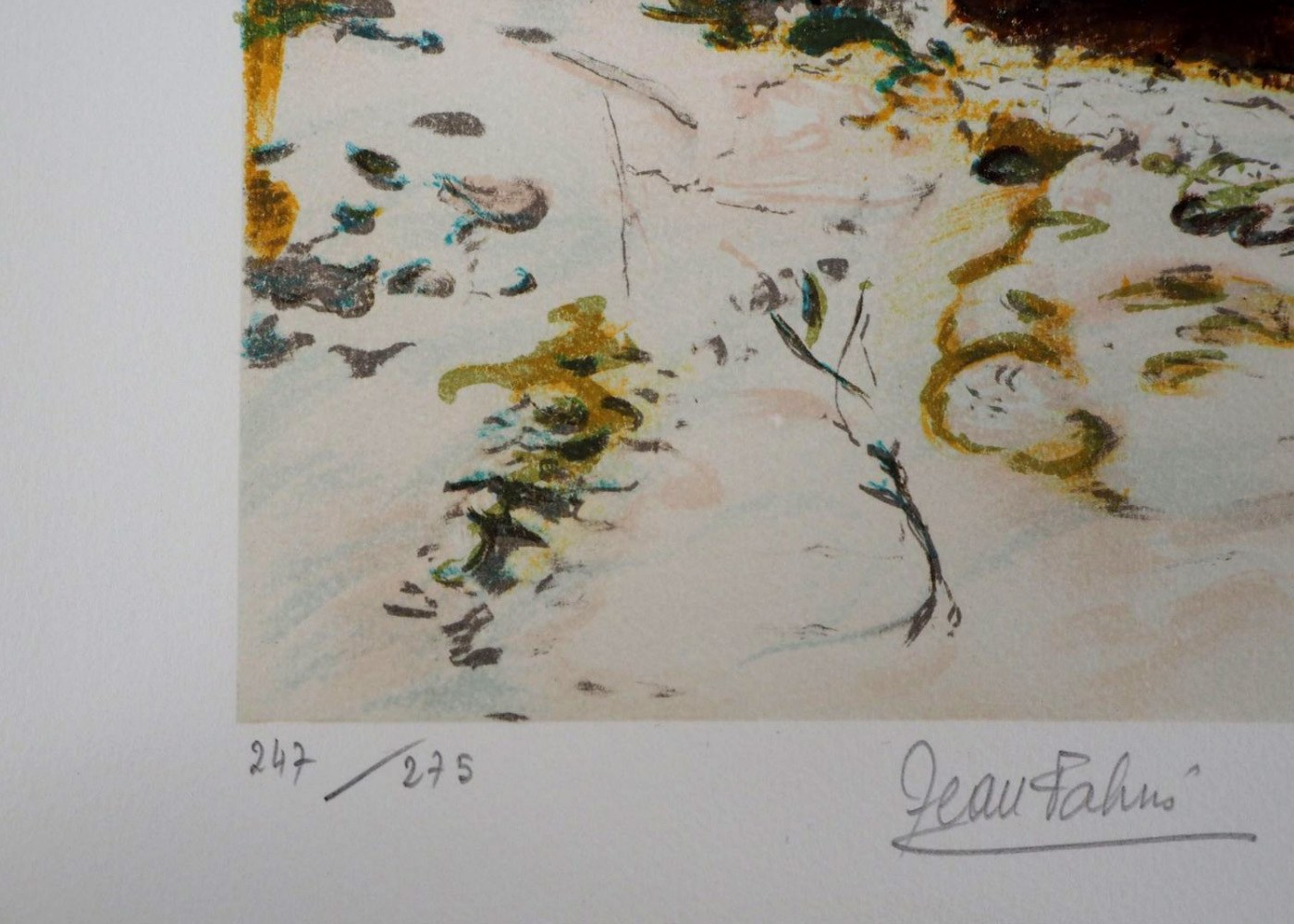
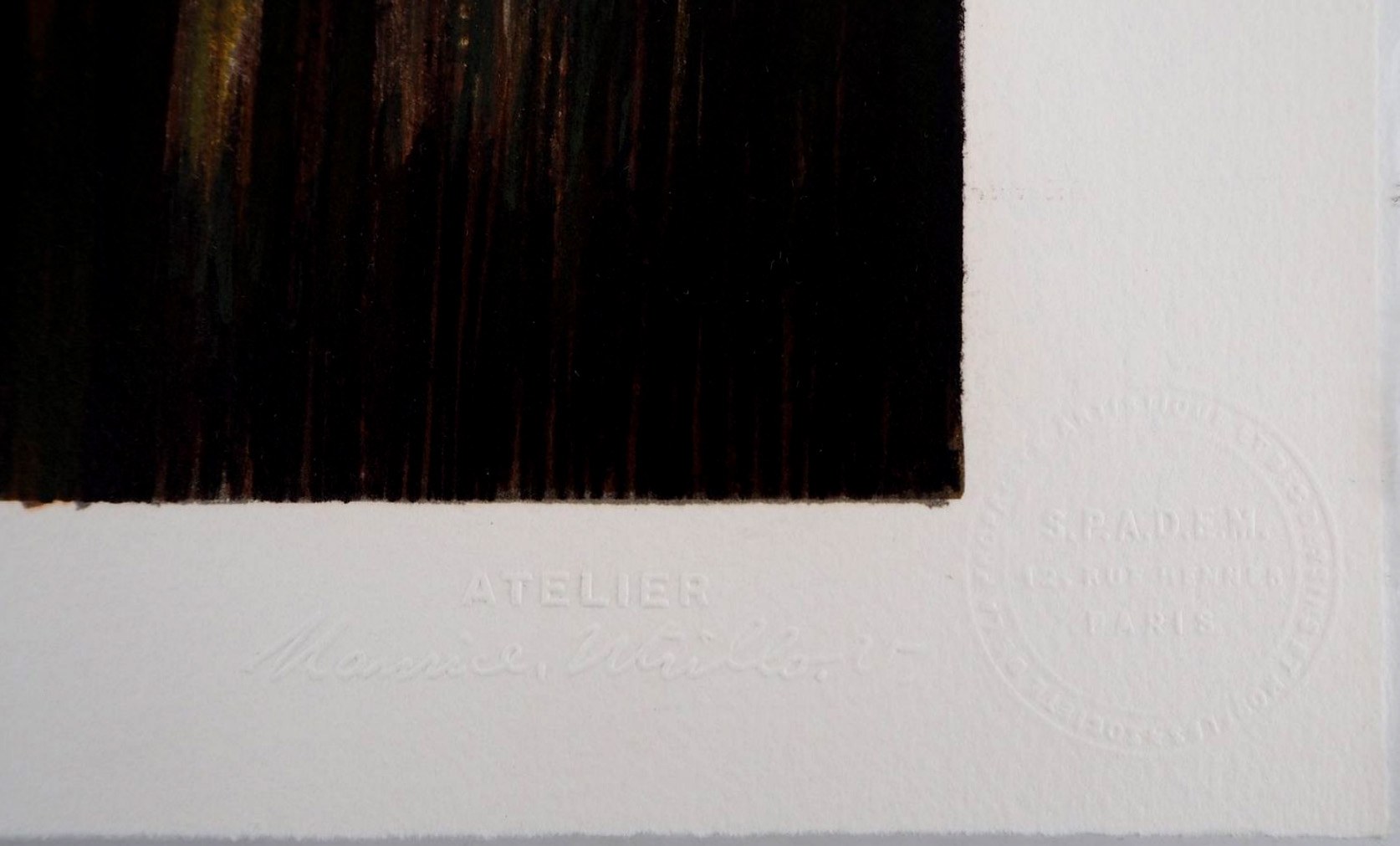
Color lithograph on Arches vellum paper. Dimensions: 56 x 38 cm
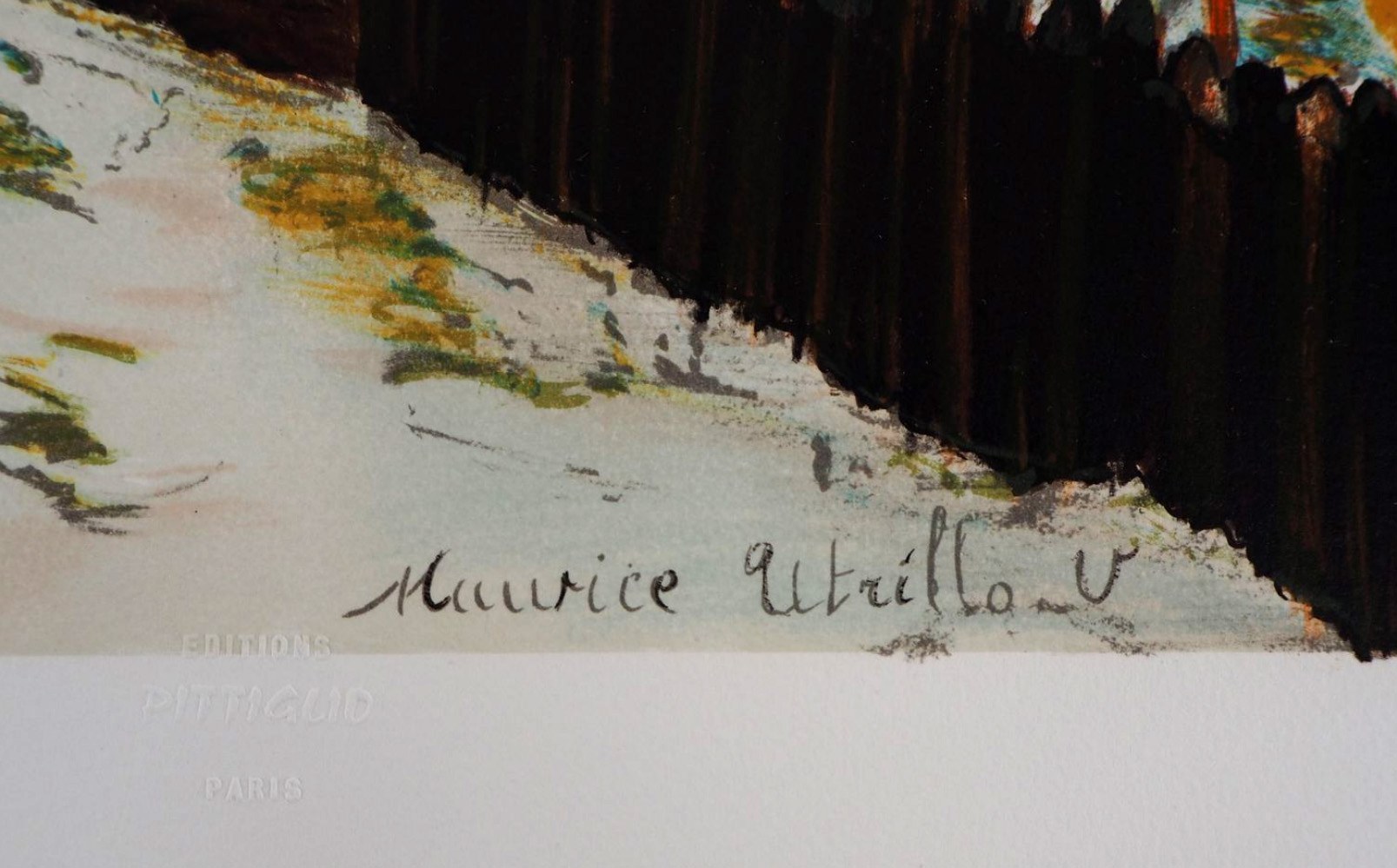
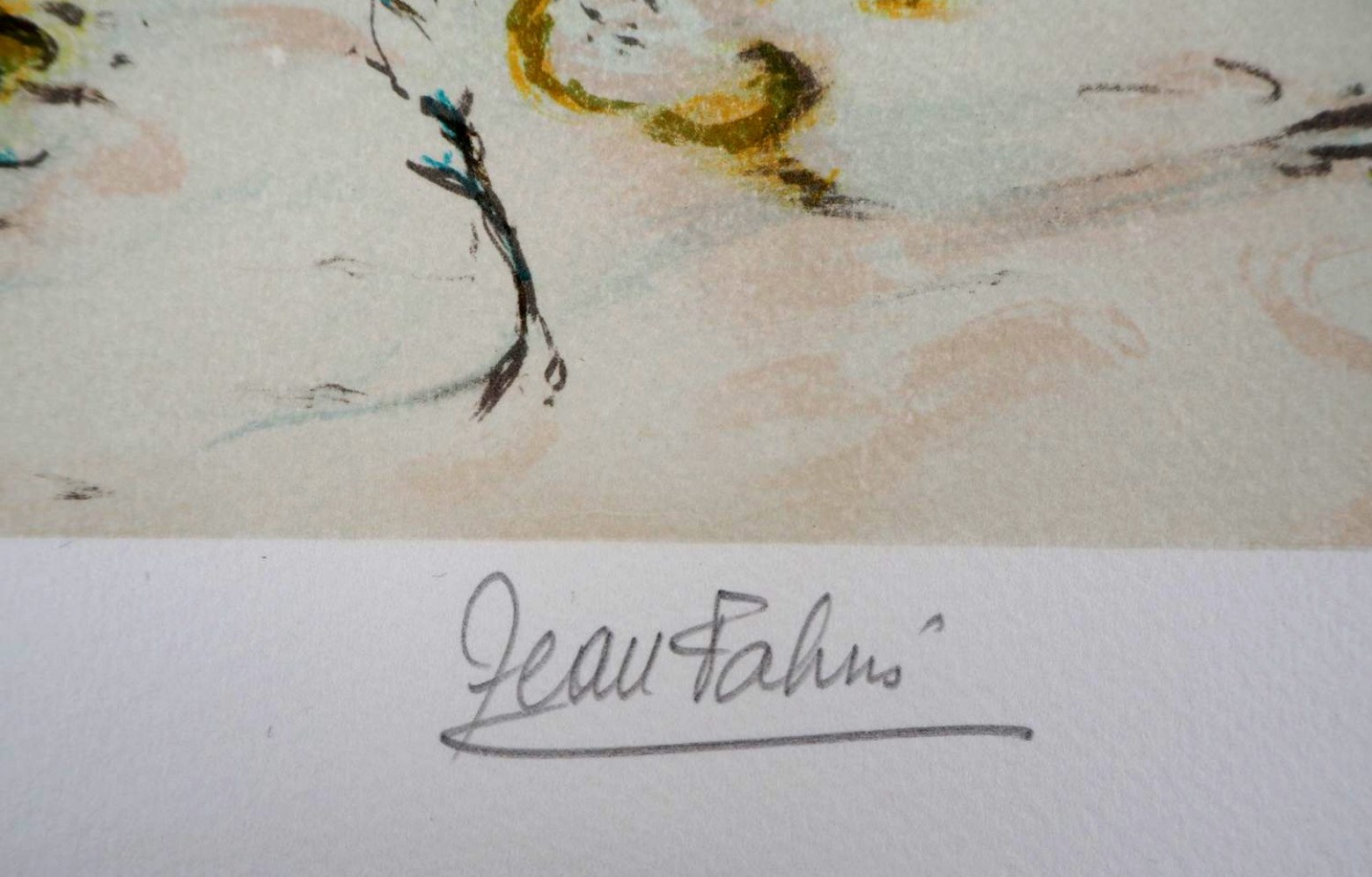
Signed on the plate: Maurice Utrillo V; lower left in pencil: 247/275
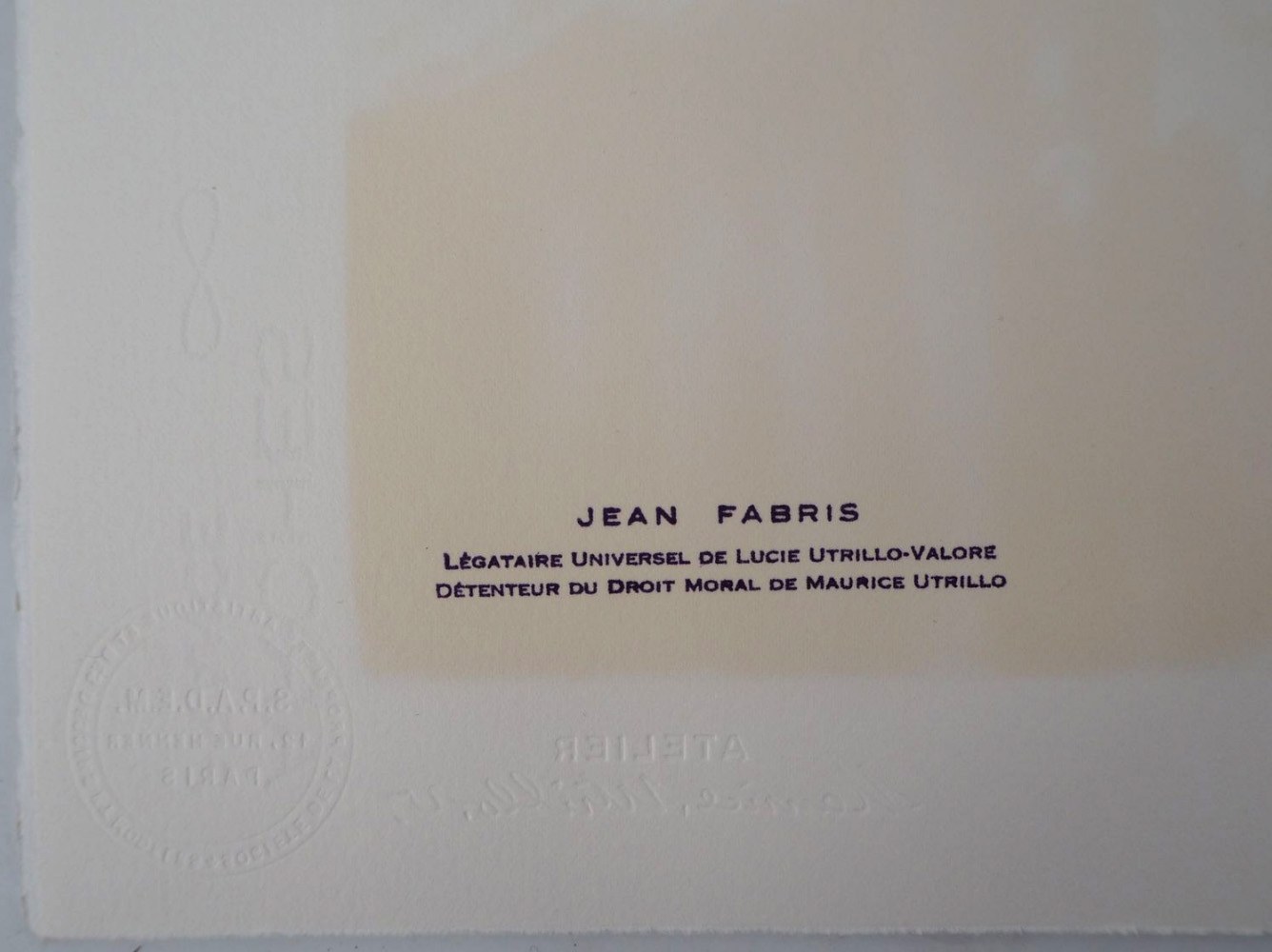
Signed in pencil by Jean Fabris, authenticated by his seal on the reverse
Certified with the S.P.A.D.E.M. dry seal, as well as the dry seal of the Maurice Utrillo studio.V
(Jean Fabris, French art historian and secretary to the painter’s widow)
In the 19th century, 30 mills operated on Montmartre Hill, serving various purposes—they ground grain and pressed grape harvests into wine. The mills of Montmartre also ground limestone into gypsum, stones, and onions for use in perfumery. At the top of Rue Lepic, there were over a dozen of these mills. Only two have survived to this day: the Blute-fin from 1662 and the Radet from 1717. These two mills, combined into one, make up the site known as “Moulin de la Galette.”
In 1809, the mills were purchased by the Debray family. A “galette” was a grain roll sold by the owners—usually served with a glass of milk. The roll became so famous that the place where it was produced was named after it. In 1830, milk was replaced by wine—mainly local wine from Montmartre—and the Moulin de la Galette was transformed into a cabaret.
Parisians visited Montmartre to enjoy simple pleasures in what was then a rural part of the city. Over a glass of wine and fresh bread, they could relax and feast their eyes on the magnificent panorama of the city and the Seine stretching out from the hill.
Maurice Utrillo, born Maurice Valadon (1883–1955)—a French painter and printmaker, a representative of the École de Paris.
He was the illegitimate son of the artist and model Suzanne Valadon. At the age of 7, he was adopted by the Catalan art critic Miguel Utrillo y Molina. An alcoholic from childhood, he was a vagabond drifting between the taverns of Montmartre and sobering-up stations and hospitals for the mentally ill.
He began painting as part of therapy to combat alcoholism at the age of 18. By 1903, he had already painted hundreds of views of the Parisian suburb of Montmagny. His early paintings reveal the influence of Camille Pissarro and Alfred Sisley (the so-called Montmagny period). In 1909, one of his paintings was exhibited at the Salon d’Automne. Around this time, he stopped painting outdoors in the Impressionist style and began painting from postcards. He focused on depicting white buildings using glue, plaster, and white paint. It was during this time that he created his most outstanding paintings (the so-called “White Period,” 1908–14). The next phase of his work is characterized by bright colors, a greater emphasis on line, and a new subject: women walking down the street with their backs to the viewer (the so-called “cloisonné period,” 1914–20). After 1920, he created multicolored paintings, though these were of lesser artistic merit (the so-called “Color Period”).
In 1912, he participated in an exhibition of French art in Munich. In 1913, he held his first solo exhibition. In 1924, as a result of his progressive alcoholism, he was imprisoned and attempted suicide. In 1928, he was awarded the Legion of Honor. In 1935, he married Lucie Valore, a French actress who had previously been friends with his mother.
He was an exceptionally prolific painter. During World War I alone, he painted 1,200 oil paintings. The posthumous catalog of his works lists over 3,500 paintings. The artist’s main subject became the urban landscape (narrow, impoverished streets, Parisian alleys, gray walls, small towns, and provincial churches). He also painted portraits and still lifes. Occasionally, he worked in set design: in 1926, he created sets for Sergei Diaghilev’s Ballets Russes, and in 1948, he collaborated with the Opéra Comique in Paris. He died of pneumonia.