


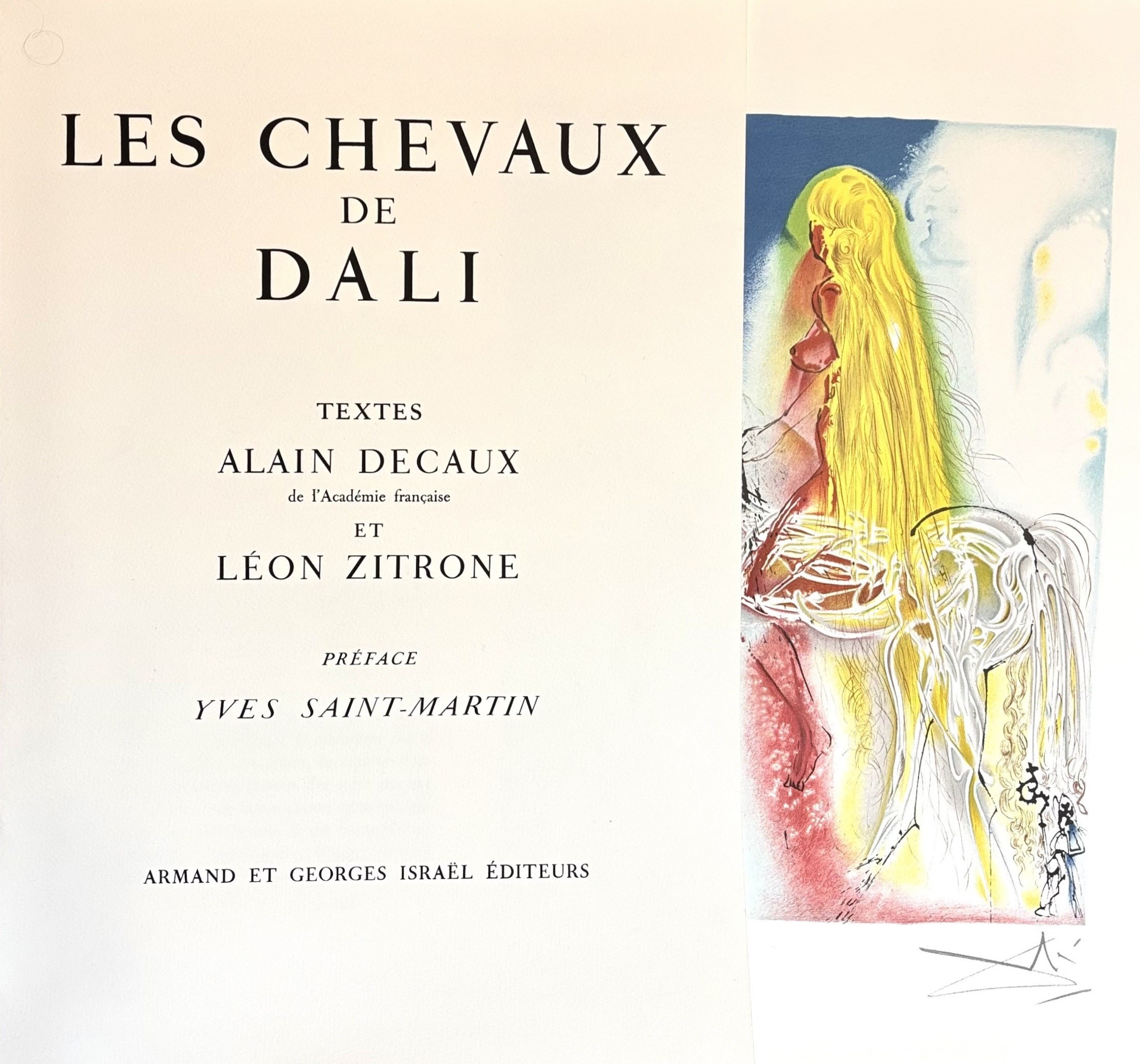
Color lithograph, dimensions: 56 x 36 cm; Velin d'Arches cotton paper produced in the Vosges in Arches, made on the presses of the master printer Jobin.
Lithograph made according to the lithographic process of printing, one drawing per color, one color per press pass,
Signature under the composition p.d.
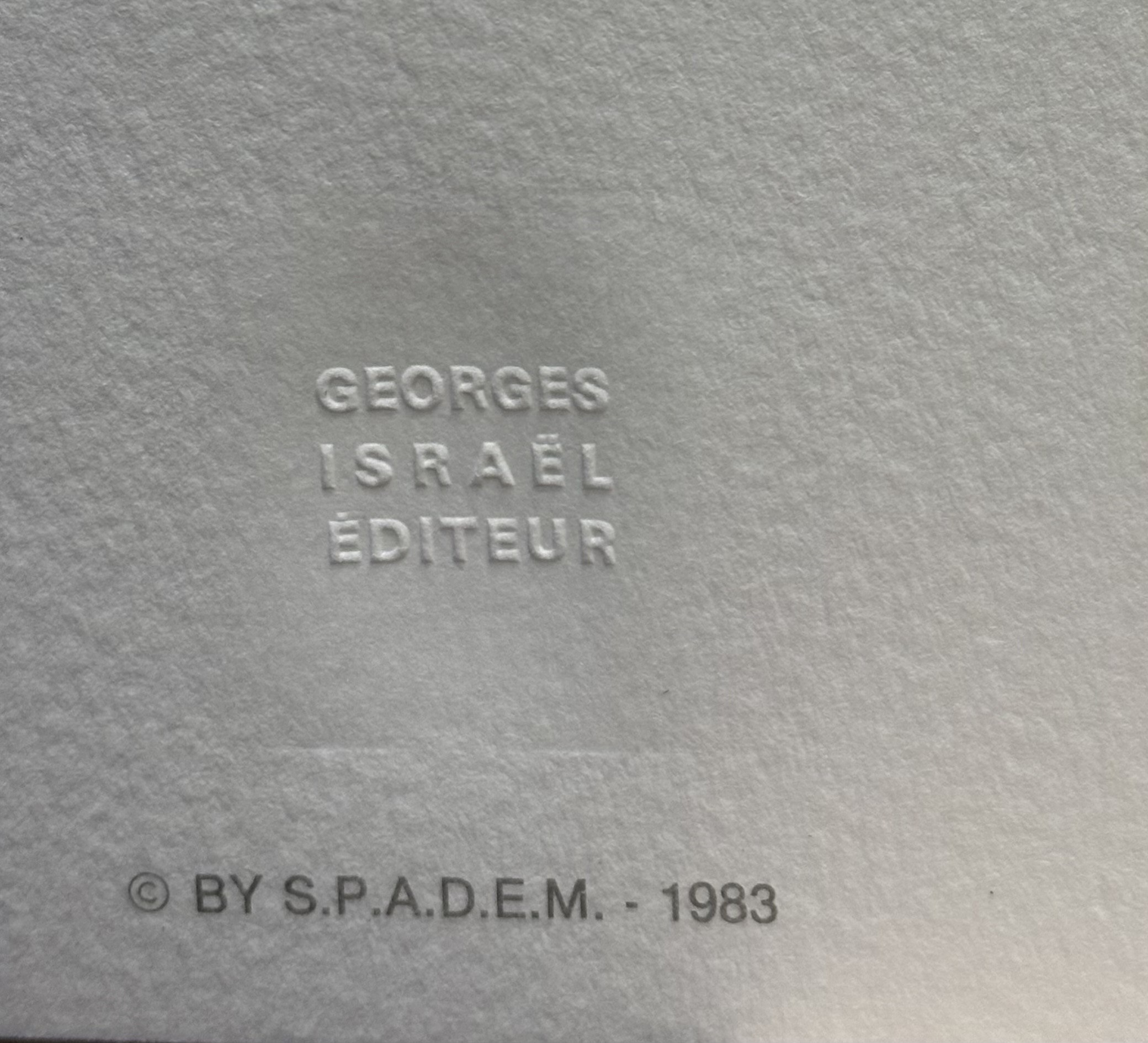
Publisher's dry stamps - Armand Georges Israel.
On lithograph typographically: l.d. "BY SPADEM 1983" and p.d. title of composition. Original certificate.
Limited edition issued with the permission of Salvador Dali under his personal control.
The Dalinian Horses series is listed in the official catalog of Salvador Dali's graphic works published by Albert Fields.
Dalinian Horses.
The series Dalinian Horses. includes 18 lithographs with a horse as the main motif,with thefollowing works: Neptune (Neptune); Pégase (Pegasus); Le Cheval de Troie ( TheTrojanHorse);Bucéphale(Bucephalus); Le Chevalier Romain (The Roman Cavalier); Le Centurion (The Centurion); Le Cheval de Caligula (Caligula's Horse); Le Cheval de Triomphe (TheHorse of Triumph); Saint Georges(SaintGeorge); La Licorne (TheUnicorn);Le ChevalierChrétien(The Knight ofChristianity); Lady Godiva; Le Cheval de Course (The Race Horse); Le Cheval de Labeur (The Work Horse); Le Picador (The Picador); DonQuichotte ou l'Élogede la Folie (Don Quixote - Praise ofMadness);Le Cheval de la Mort (TheDeath Horse); Le Cheval de Printemps ( The SpringHorse).
Salvador Dali's series of works known as Dalinian Horses is a quintessential example of Dali's fascination with the symbolism of the horse. Horses were one of the motifs frequently used by Dali in various works, as they represented for him strength, freedom, elegance and the spiritual dimension of man.
Dali often referred to figures from Greek and Roman mythology, such as Pegasus and the horses of Helios pulling the chariot of the Sun. For him, the symbolism of the horse was universal and multidimensional. Also evident in Dalinian Horses; are references to medieval art and the Spanish heritage from which he came.
As one of the leading Surrealists, Dali transformed familiar motifs into unusual, often bizarre forms. In Dalinian Horses; horses are depicted in an unrealistic way - their silhouettes elongate, blurring the boundaries between reality and dream. In this way, Dali explored the limits of imagination and the subconscious.
The Dalinian Horses series was executed in various techniques, including lithography and printmaking, which allowed the artist to experiment with different styles and effects. This allowed him to fully show the dynamic and dramatic
of the figure of the horse. In Dali's series, horses are not ordinary animals - they often hover above the ground, alluding to transcendence and the spiritual dimension of life. Their silhouettes are sometimes imbued with anxiety, while remaining majestic. In Dali's work, the horse is a symbol of strength, but also of ambivalent emotions: freedom and wildness, and at the same time subjugation and oppression.
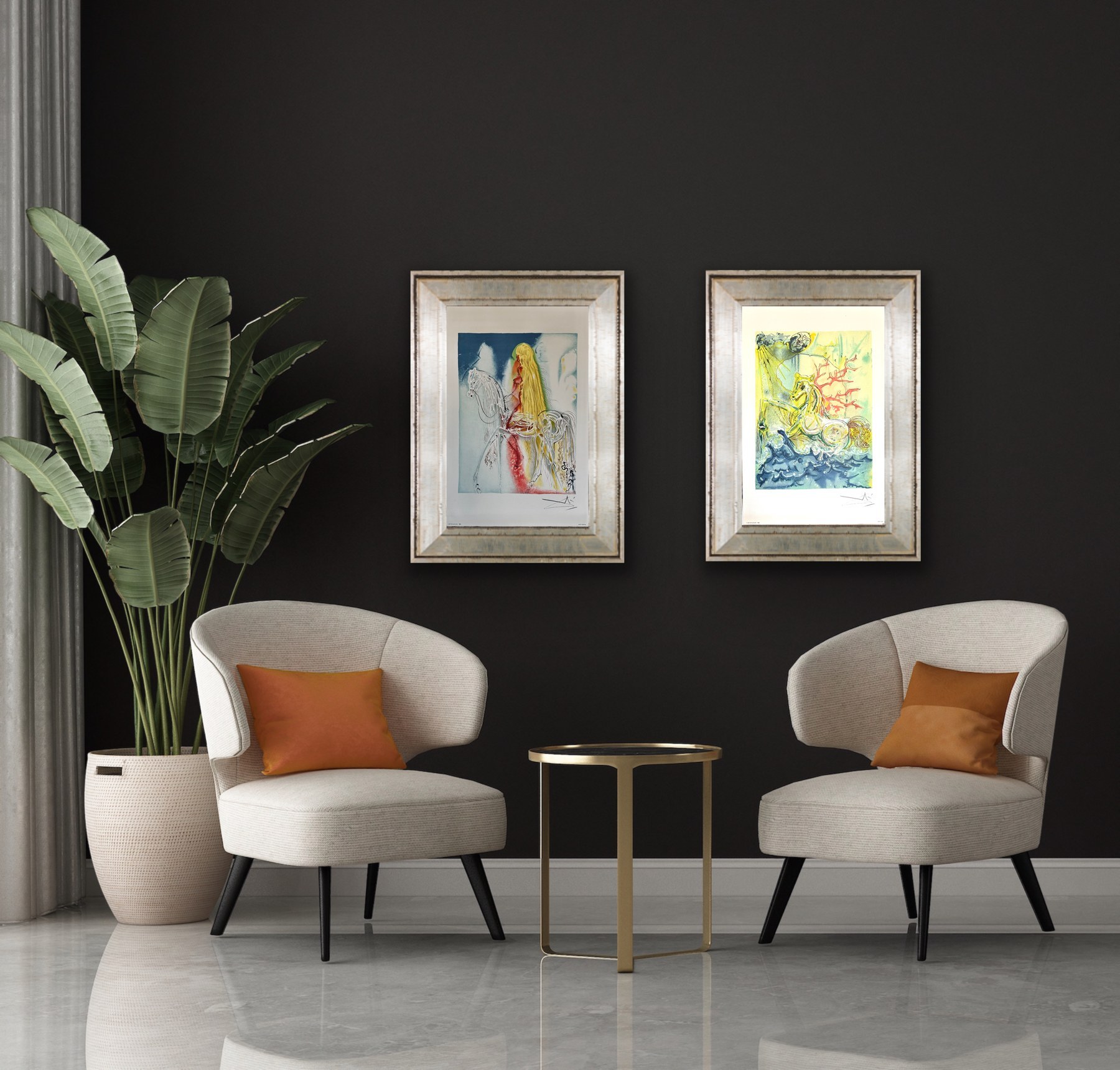
The frames shown in the visuals are for illustrative purposes and do not constitute a commercial offer.










