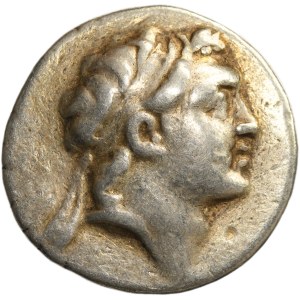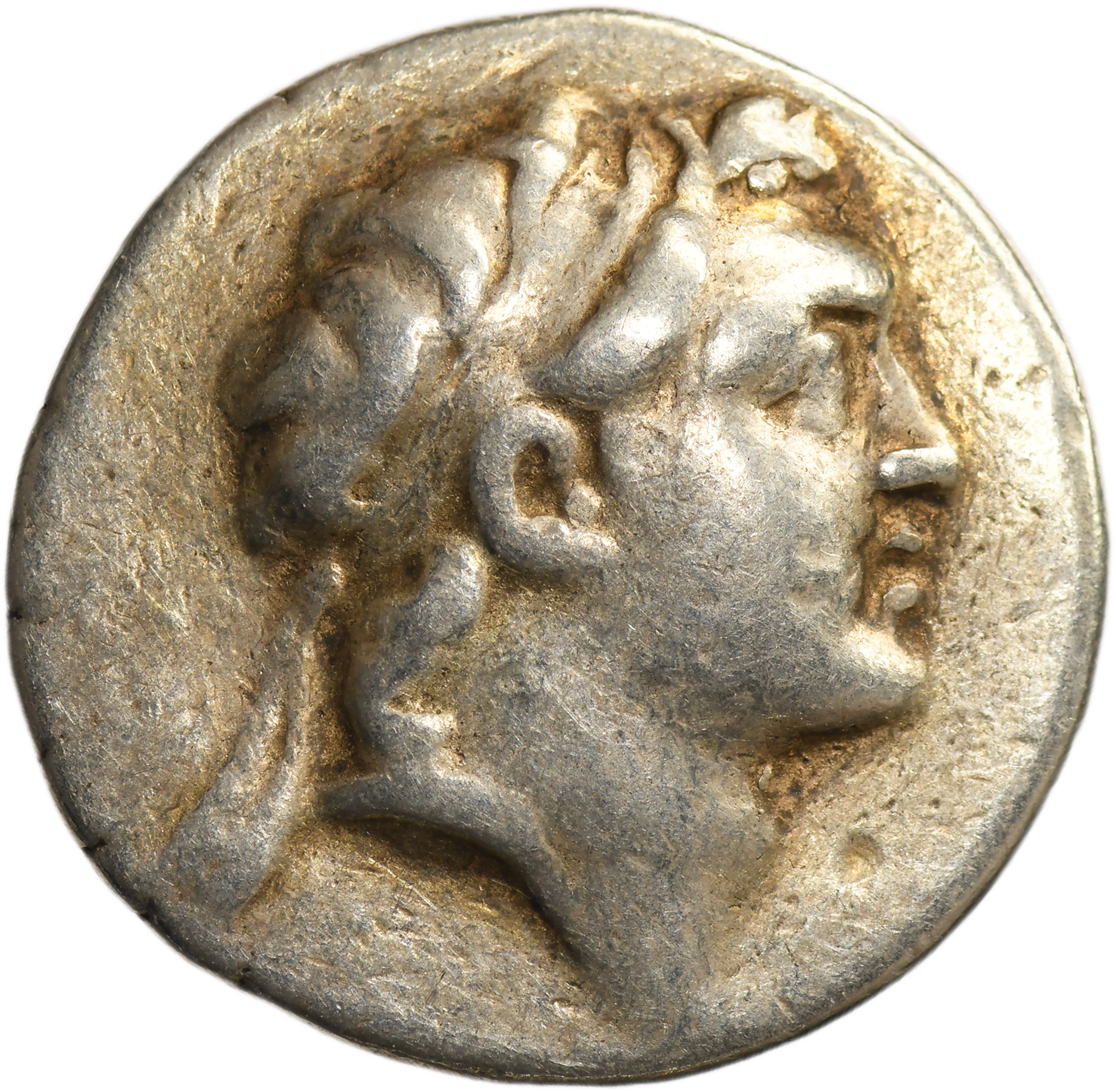


Silver drachm of Ariarathes IV Eusebes (220–163 BC), struck at the mint of Eusebeia, dated to 188–187 BC. The coinage of this ruler represents an important example of Hellenistic issues in Cappadocia, combining local traditions with strong Greek artistic influence.
The obverse features a right-facing head of the king wearing a diadem. The diadem, a symbol of royal authority in the Hellenistic world, emphasizes his status as a sovereign monarch and the legitimacy of his dynasty.
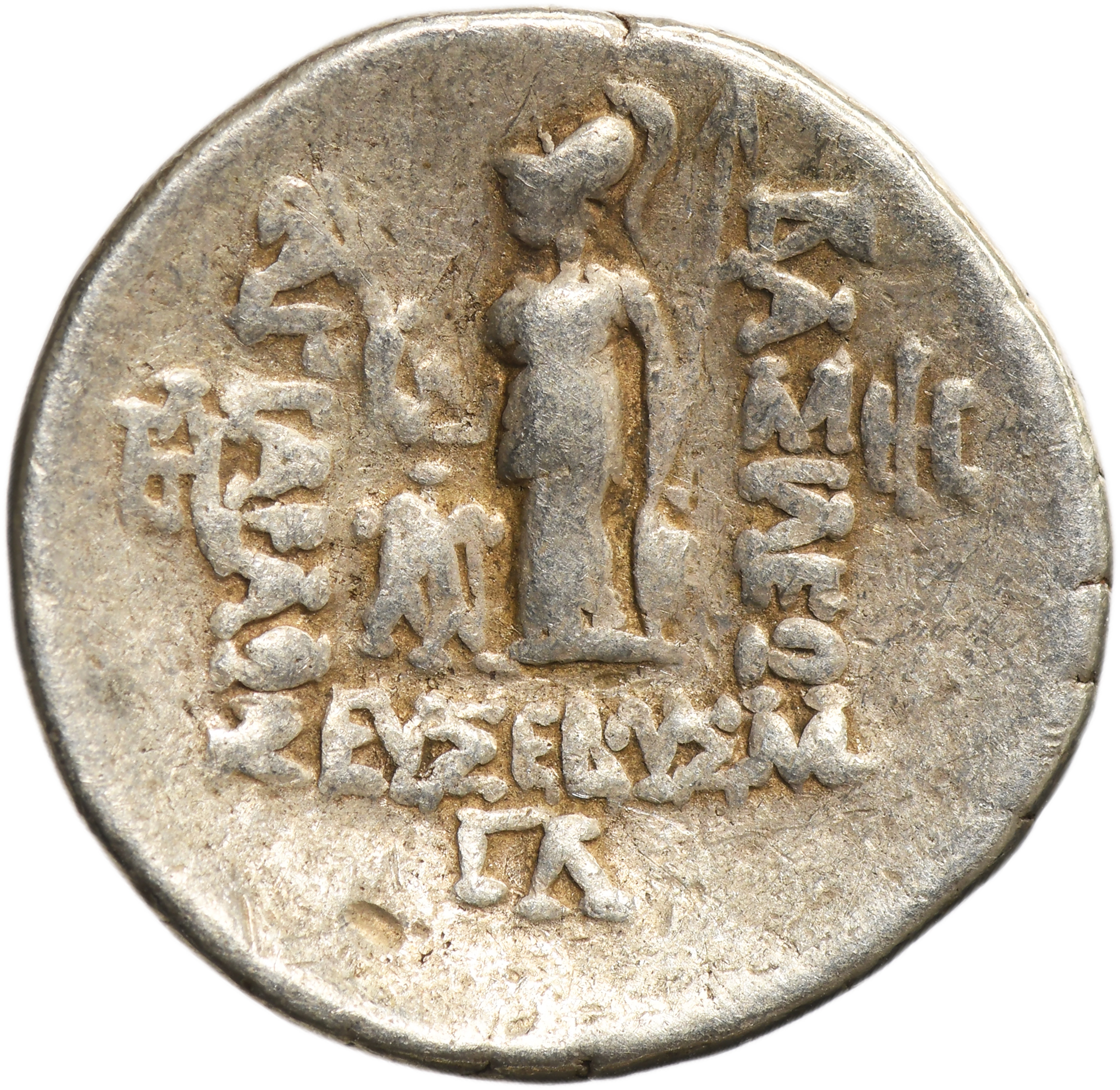
The reverse depicts Athena standing left, holding a spear and a statuette of Nike, with the legend BAΣIΛEΩΣ APAIAΘOV EVΣEBOYΣ, monograms in the fields, and ΓΑ below. Athena, as the goddess of wisdom and warfare, symbolizes both strategic skill and military power, while Nike directly represents victory.
The legend BAΣIΛEΩΣ APAIAΘOV EVΣEBOYΣ (“of King Ariarathes the Pious”) highlights both the ruler’s name and his epithet Eusebes, meaning “pious,” reinforcing his ideological image as a protector of religion and order.
Greece
Cappadocia, Ariarathes IV Eusebes (220-163 BC), Drachm 188-187, Eusebeia mint
Obverse: diademed head right
Reverse: Athena standing left, holding Nike in right hand, resting left on shield set on ground behind her, spear behind, monograms in fields, ΓΑ below
BAΣIΛEΩΣ APAIAΘOV EVΣEBOYΣ
Diameter 17 mm, weight 4.2 g