


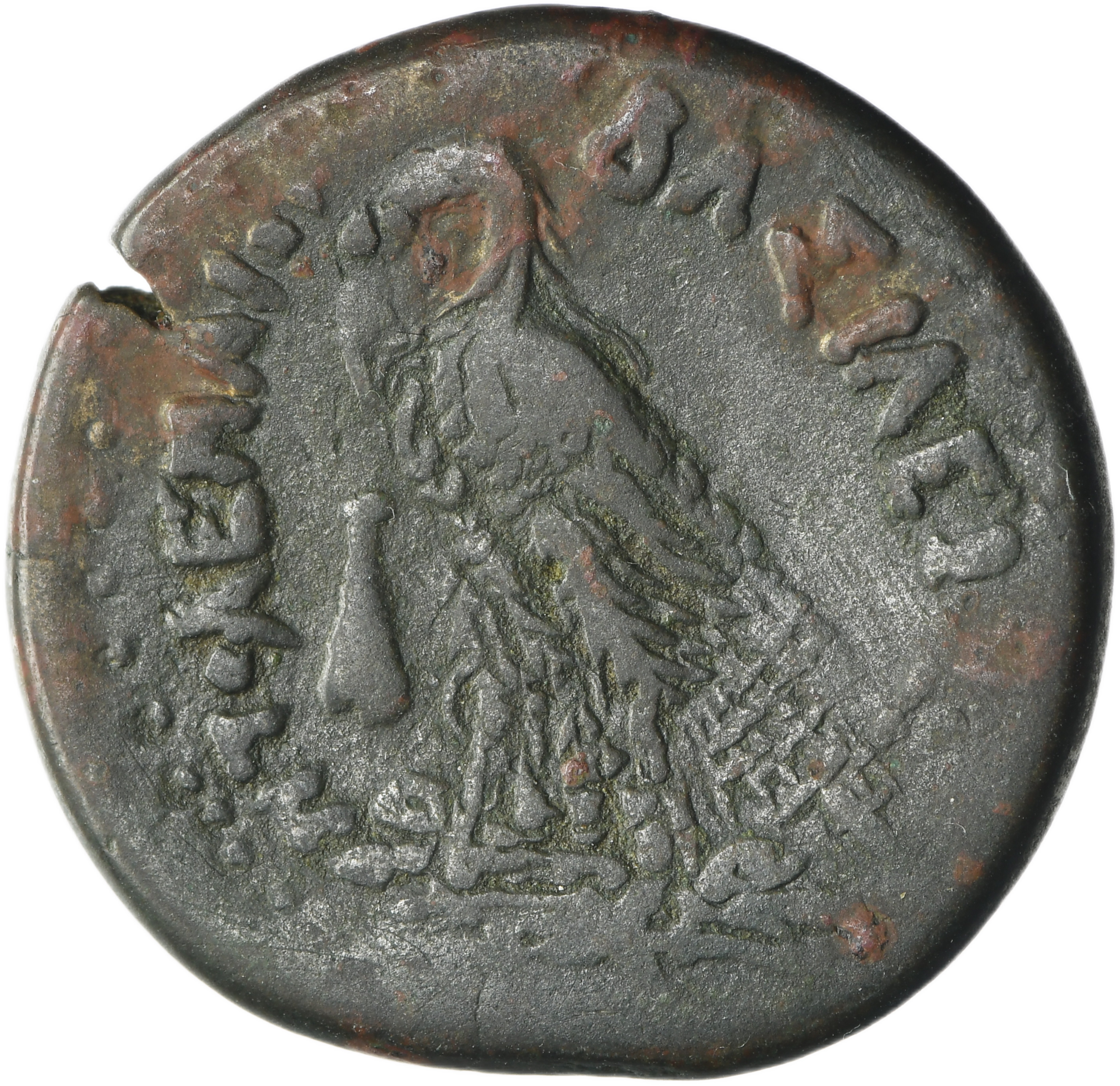


Bronze coin of Ptolemy III Euergetes (246–222 BC), belonging to the coinage of the Ptolemaic dynasty in Egypt, one of the most powerful states of the Hellenistic world. Ptolemaic coinage is distinguished by its characteristic iconography and consistent ideological program emphasizing the divine and political foundations of royal power.
The obverse features a right-facing head of Zeus wearing a diadem. Zeus, as the supreme deity of the Greek pantheon, symbolized authority, power, and divine legitimacy, and his image was widely used in Ptolemaic coinage as a propagandistic element.
The reverse depicts an eagle standing on a thunderbolt, with the legend ΠΤΟΛΕΜΑΙΟΥ ΒΑΣΙΛΕΩΣ and a club in the field. The eagle, an attribute of Zeus, is one of the most characteristic symbols of the Ptolemaic dynasty, representing power, divine protection, and continuity of rule. The thunderbolt reinforces the association with Zeus, while the club may refer to Heracles, emphasizing strength and heroic qualities.
The legend ΠΤΟΛΕΜΑΙΟΥ ΒΑΣΙΛΕΩΣ (“of King Ptolemy”) identifies the issuer and follows the standard formula of Ptolemaic coinage, reinforcing royal authority and sovereignty.
Coins of Ptolemy III belong to the important issues of the period of the greatest expansion and power of the Ptolemaic state, combining clear symbolism with strong propagandistic meaning.











