


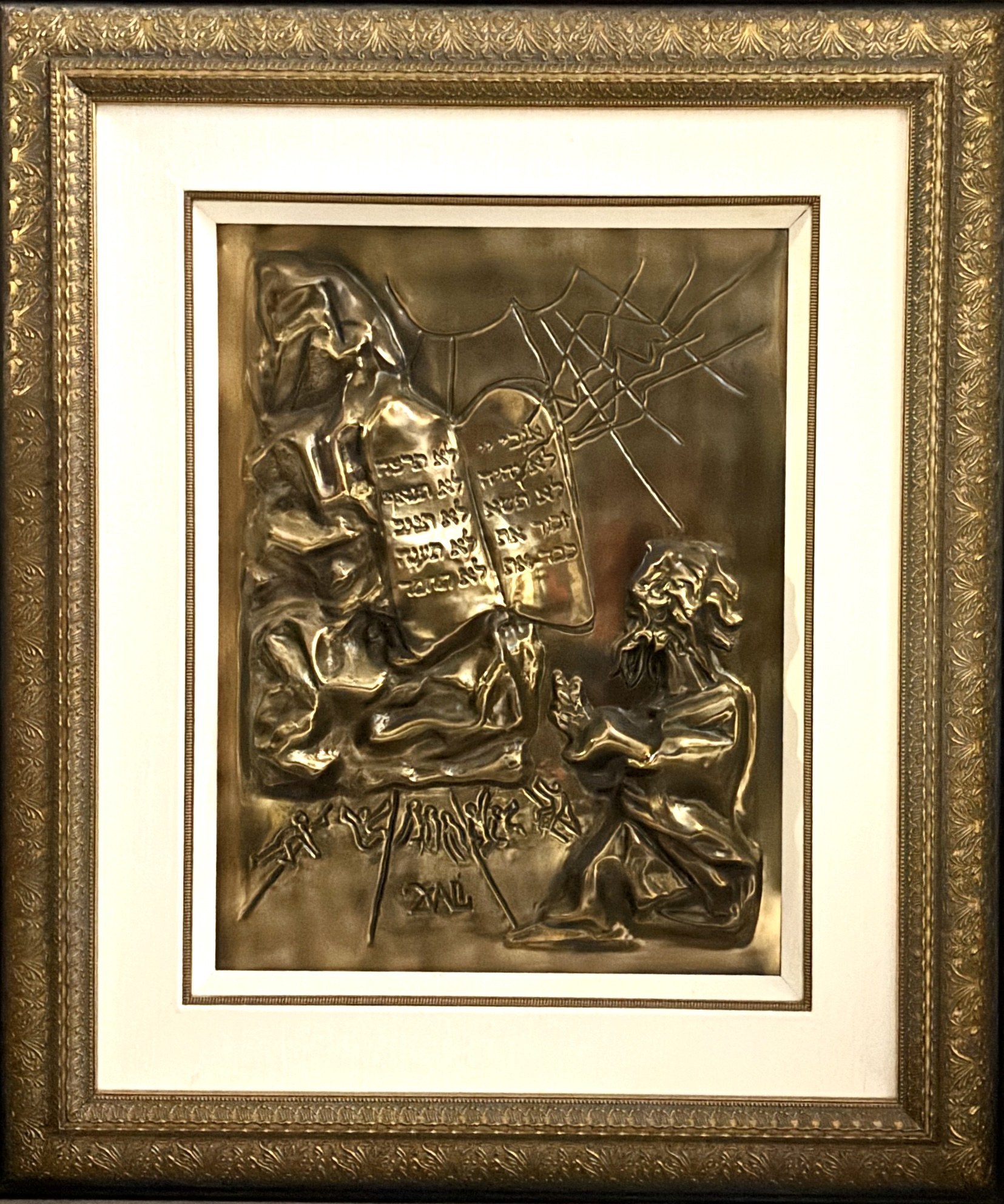
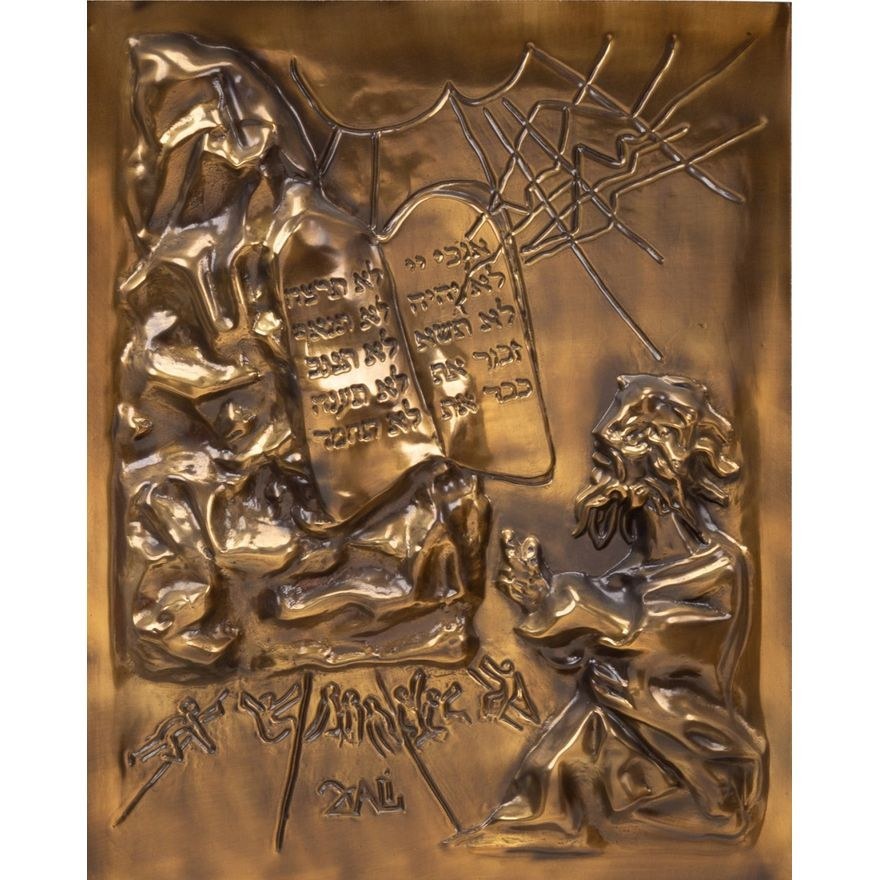
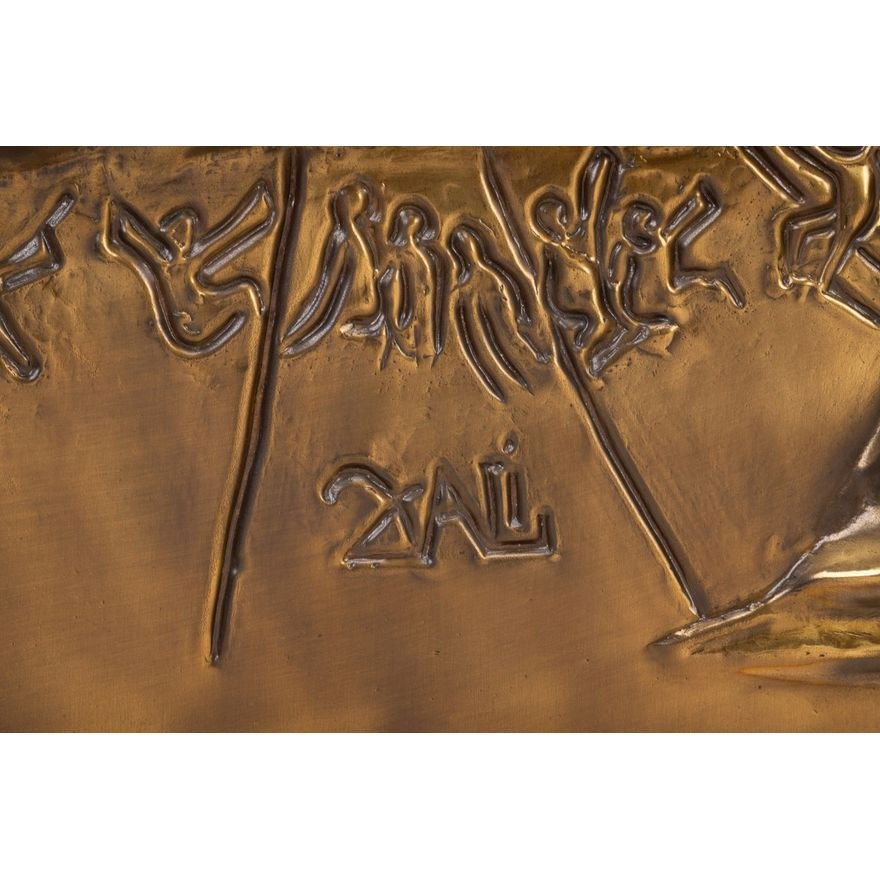
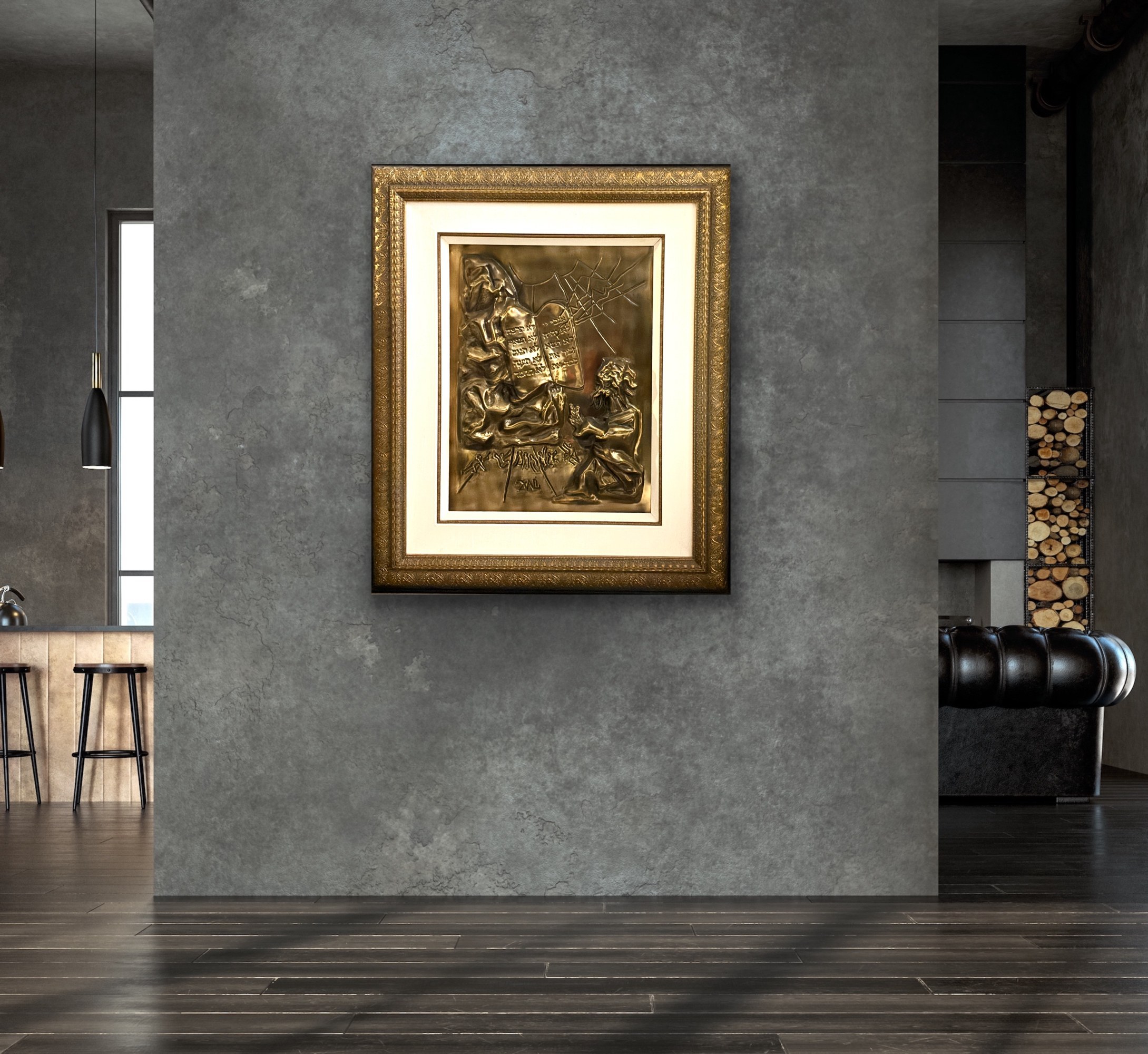
Bas-relief (bas-relief); hand-patinated bronze; embossed signature of the author "Dali"
Edition 95/195; relief dimensions: 65 x 50 cm
Framed in a relief-relief, gold-finished frame, 102 x 87 cm; Viennese-style passe-partout with a wide chamfer (4 cm) finished with a relief-relief gold slip; the edges of the frame are made of black wood.
The frame is characteristic of so-called "museum framing"), applied to luxury objects published in Honolulu. Original American certificate.
Publisher: Center Art Galleries, Honolulu, Hawaii, USA (in cooperation with Levine & Levine Publishers - New York.
References: Robert Descharnes, Nicolas Descharnes: "Salvador Dalí: The Hard and the Soft" (2004).
Provenance:
- Center Art Galleries
- Houston auction house
- private collection, Poland
Literature: exhibition catalog "Dali 100 Years"; Salvador Dali Archives - Frank Hunter; Brana Fine Art., California 2004; (reproduction and description) p.270
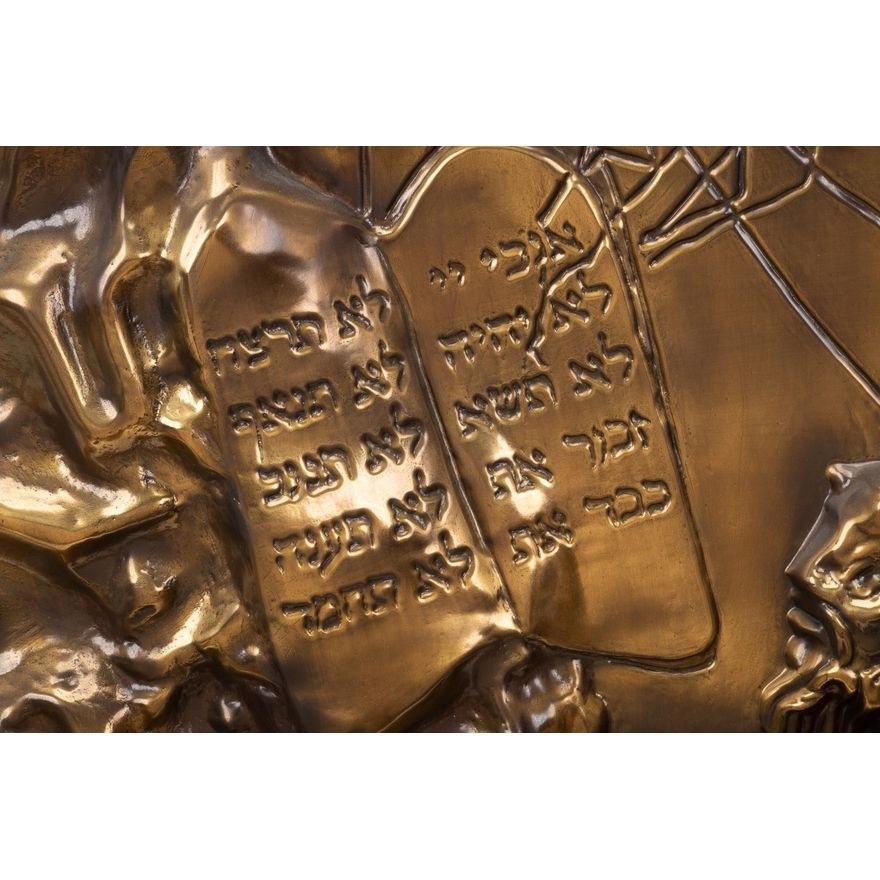
The bas-relief was based on an original plaster model made by Dali. The artist created the figure of Moses as dominating Mount Sinai to symbolize the power of the divine law. The work depicts Moses at the crucial moment of receiving the Decalogue. The figure of the prophet is depicted in Dali's characteristic "flowing" style. Geometric lines symbolizing divine light are visible above Moses. Real Hebrew letters are visible on the tablets, which alludes to Dalego's fascination with mysticism, religion and the history of the Jewish people (particularly intense in the 1960s and 1970s, when he created, among other things, the Aliyah series).










