


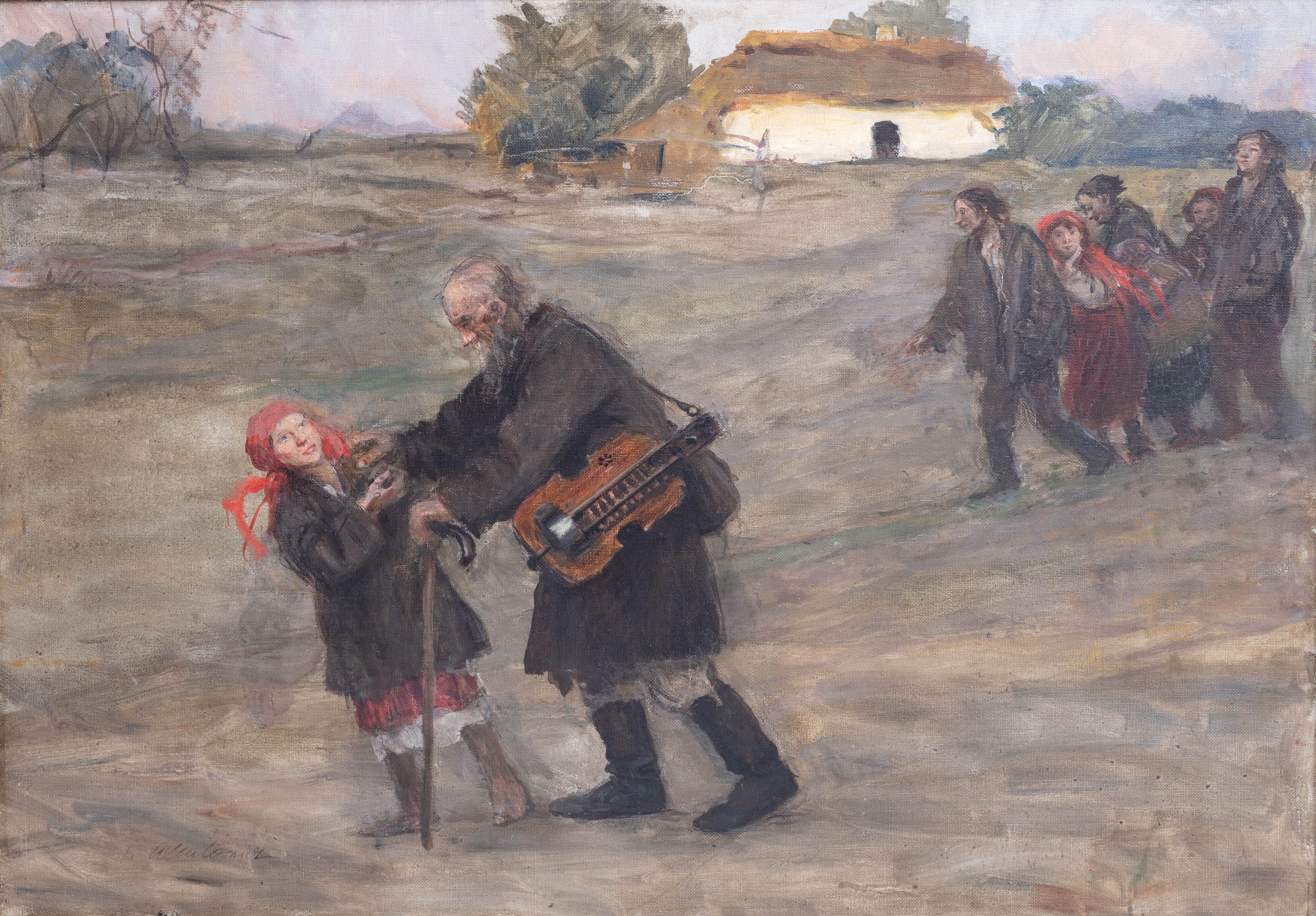
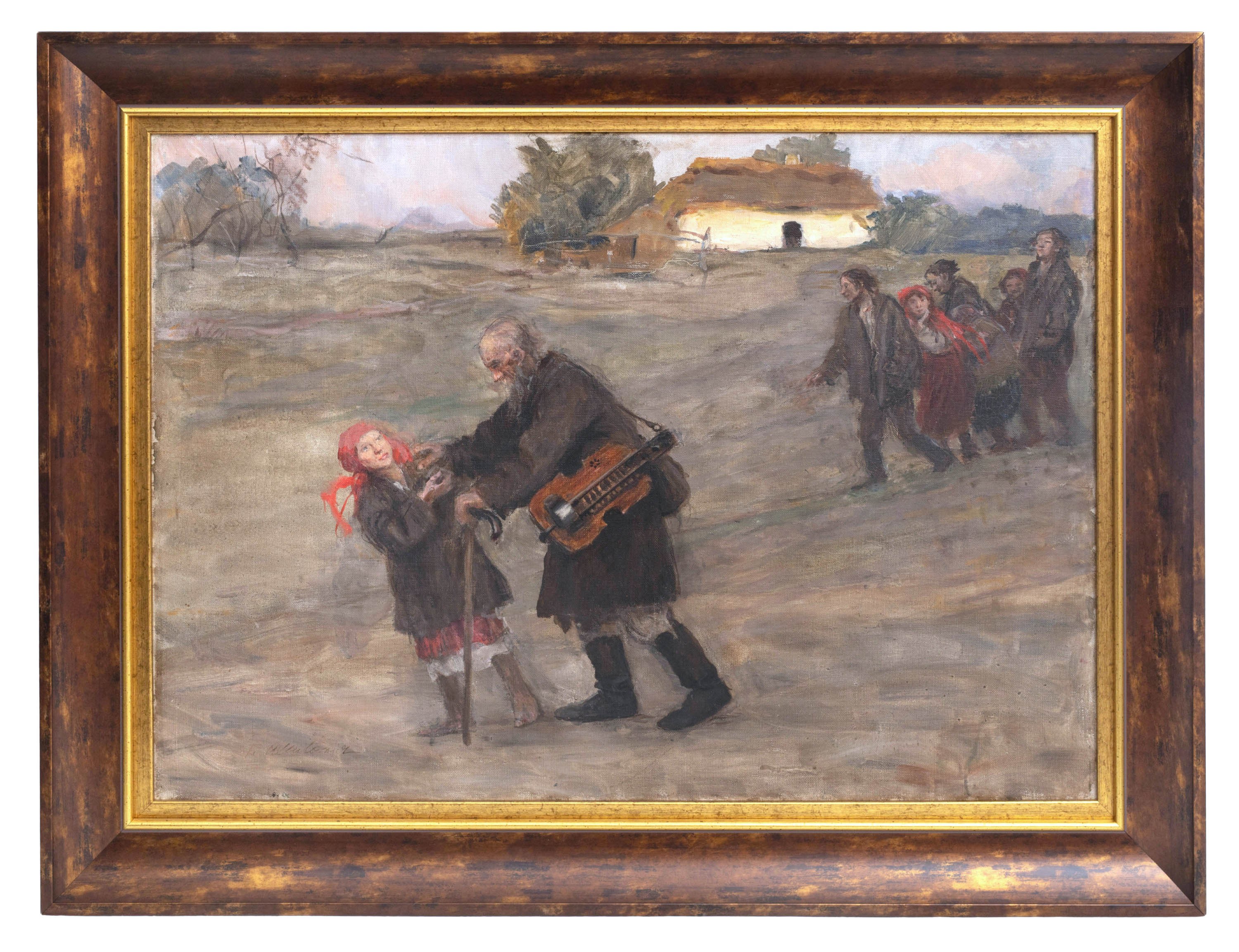
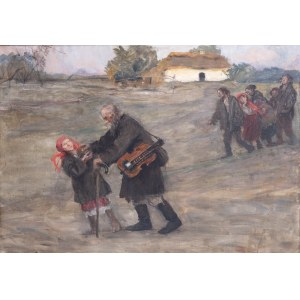
oil on canvas, 49.5 x 69 cm
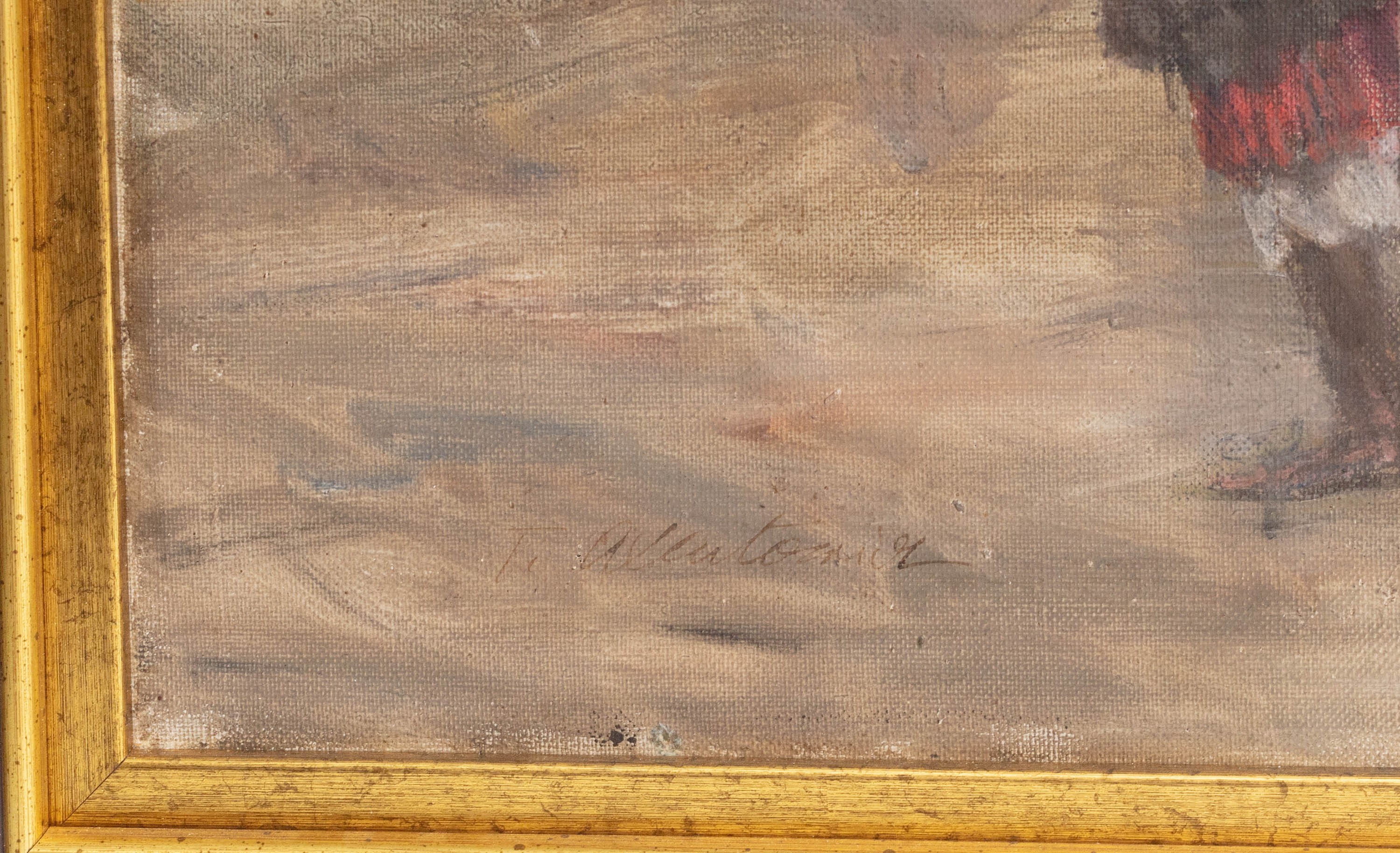
signed lower left: “T. Axentowicz”
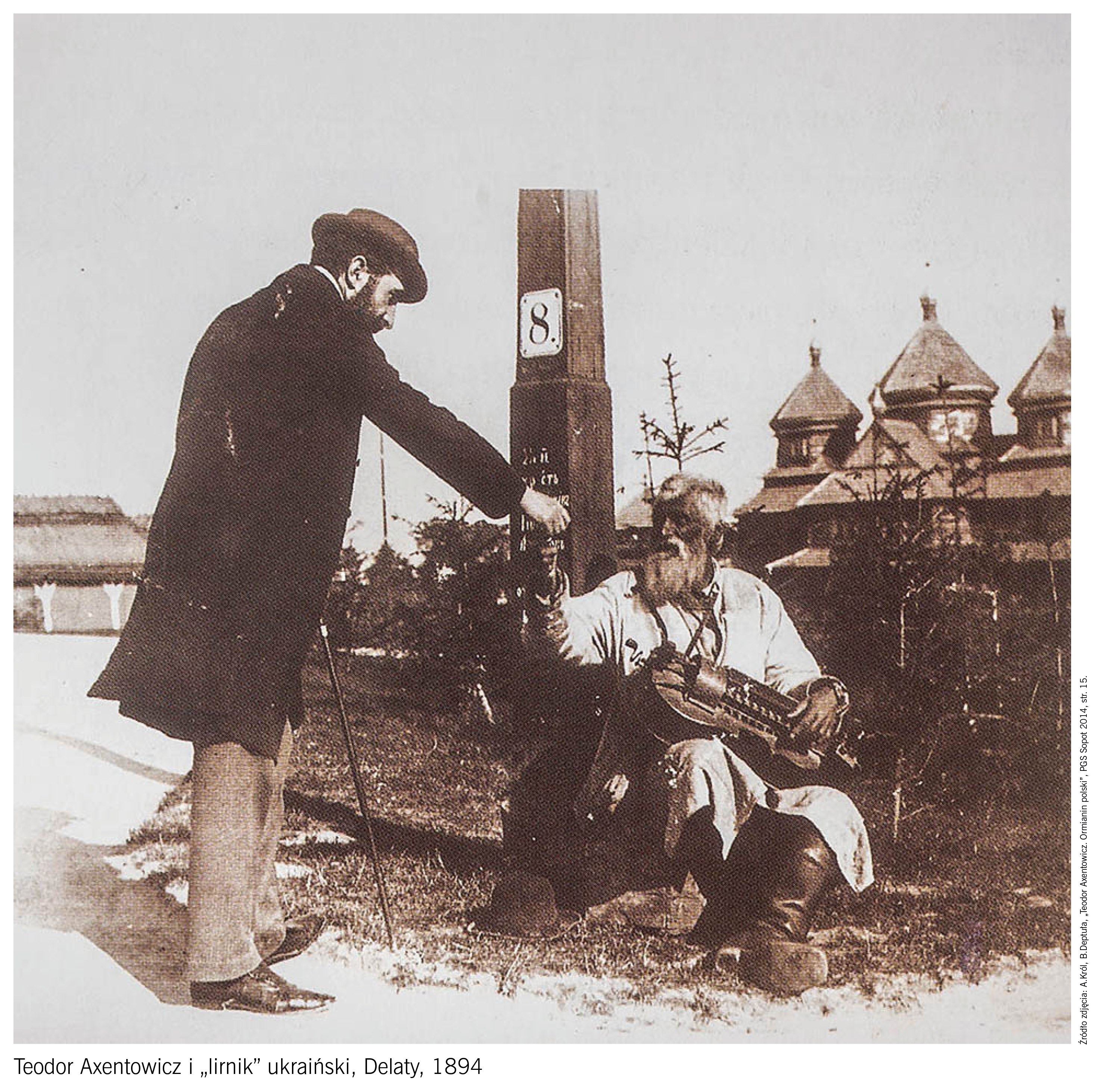
Teodor Axentowicz first depicted the figure of a lyre player—an old man with a long, gray beard and a lyre—in one of the sections of his monumental “Racławice Panorama” in 1894. Waldemar Okoń described this figure as follows: “In the group of figures praying for victory beneath the cross, next to the old man —a Confederate soldier—the figure of the ‘dida’ lyre player was placed, kneeling at the head of this group, which, given the scale of the work and its accompanying national-patriotic contexts, is undoubtedly a form of immortalizing a tradition that lasted throughout the 19th century.” (Waldemar Okoń, “National Allegories: Studies in the History of 19th-Century Polish Art,” Wrocław 1992, p. 18, cited in: A. Król, B. Deptuła, “Teodor Axentowicz: The Polish Armenian,” PGS Sopot 2014, p. 60). Axentowicz returned to the figure of the wandering folk singer many times. He often depicted him as a loner wandering through a winter landscape (notable among these is a painting from around 1900: “The Lyre Player and the Girl” (oil on cardboard, 60.5 × 49.8 cm; from the collection of the Borys Voznytsky Lviv National Art Gallery), as well as sitting under a tree in the company of a young girl or a child.










Nesen skatītās
Piesakies, lai redzētu lotu sarakstu
Iecienītākie
Piesakies, lai redzētu lotu sarakstu